Key takeaways
- Most stoppages on injection moulding machines trace back to hydraulics, toggle wear or gearbox problems, all closely linked to lubrication.
- Hydraulic oil must be clean, cool and of the right viscosity; servo and proportional valves are very sensitive to contamination.
- Toggle clamps rely on central lubrication systems; blocked lines and the wrong grease consistency cause rapid bushing wear.
- All-electric machines need correct greases on ball screws, linear guides and bearings.
- Extruder gearboxes carry high thrust loads and benefit from synthetic gear oils and oil analysis.
Plastics plants run injection moulding machines and extruders around the clock, often with tight cycle times and high quality demands. A stoppage on one machine can delay an entire customer order. Most unplanned stoppages trace back to three areas: the hydraulic system, wear in the toggle clamp mechanism, and gearbox problems on screw drives and extruders. All three are closely linked to lubrication. This guide explains how to lubricate each area. See also our plastics and rubber industry page.
Machine types and their lubrication needs
| Machine type | Main lubrication points |
|---|---|
| Hydraulic injection moulding | Hydraulic system, toggle or hydraulic clamp, tie bars, screw drive |
| All-electric injection moulding | Ball screws, linear guides, toggle, bearings, belt drives |
| Hybrid machines | Combination of both |
| Single- and twin-screw extruders | Gearbox and thrust bearing, motor bearings, downstream equipment |
| Blow moulding | Hydraulics, clamps, guides |
Hydraulic systems
Most injection moulding machines use hydraulics for injection, clamping, ejection and core pulls. Many modern machines use proportional or servo valves and variable-speed pumps, which are sensitive to dirt. Clean, cool hydraulic oil of the right viscosity is the foundation of reliable operation.
- Use the hydraulic oil grade and type specified by the machine maker, typically an anti-wear ISO VG 46 or 68 oil.
- Keep oil temperature within the maker’s range, often around 40–50 °C; check coolers and cooling water.
- Set a cleanliness target, for example ISO 4406 17/15/12 or cleaner for servo and proportional systems.
- Filter new oil when filling, and use offline filtration if targets are not met.
- Fit desiccant breathers on reservoirs.
- Monitor with oil analysis: particle count, water, viscosity and oxidation.
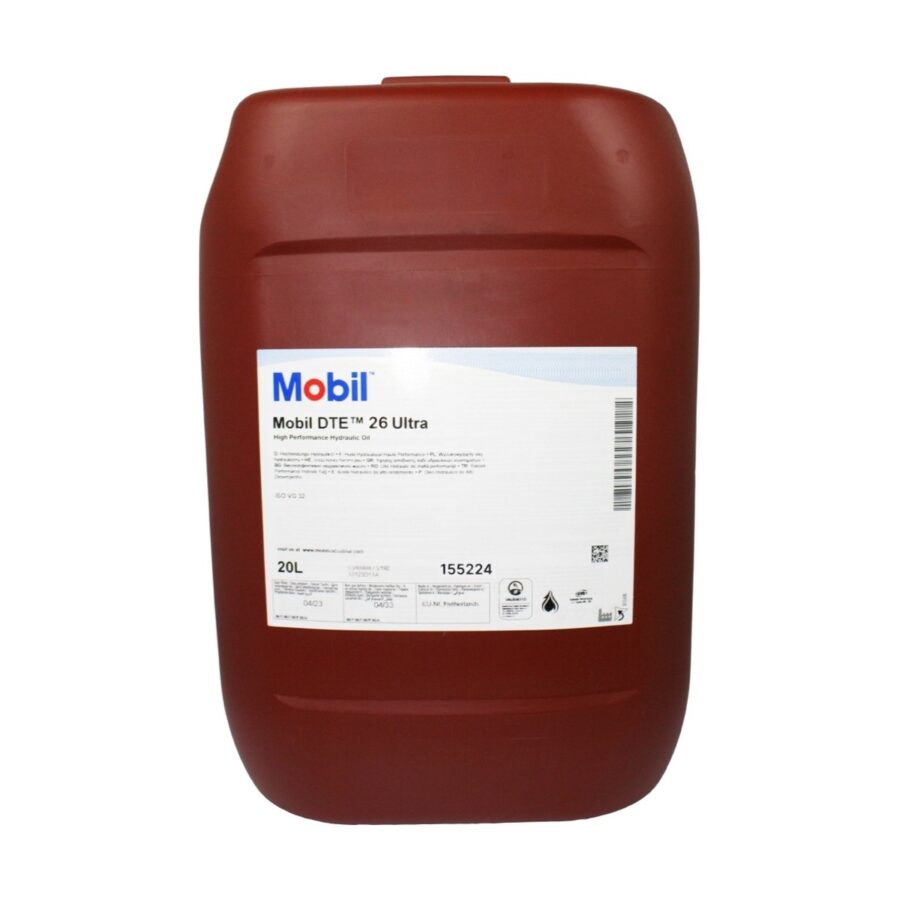
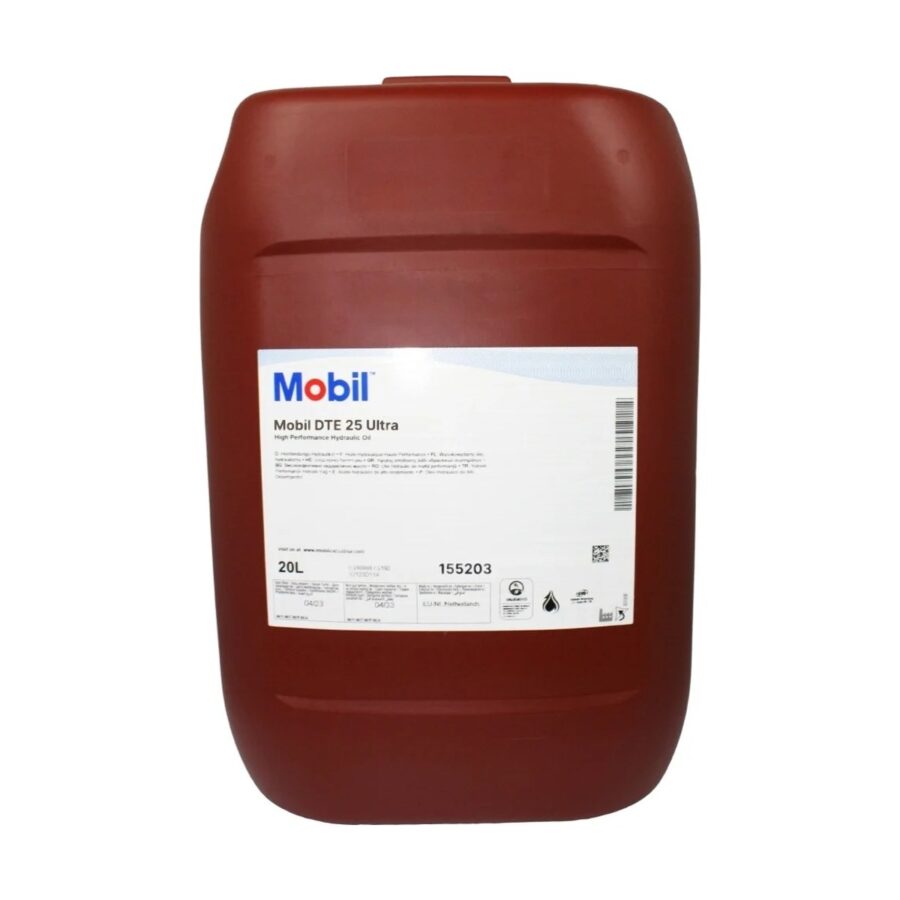
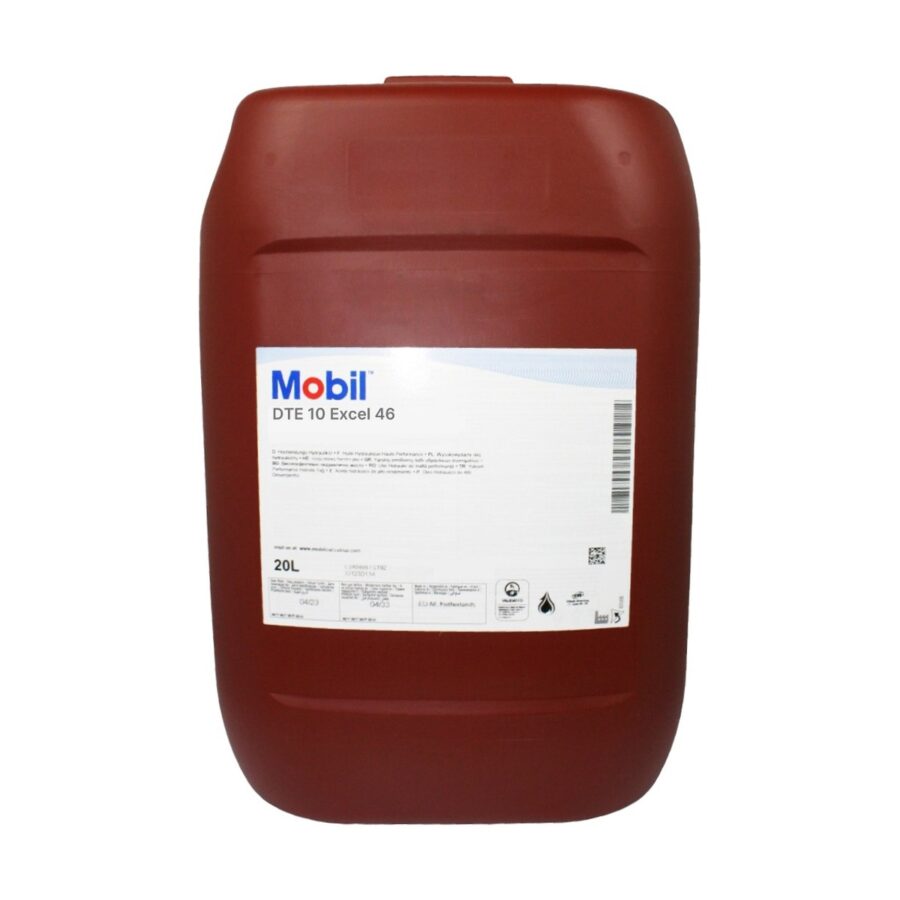
Mobil DTE 25 Ultra (ISO VG 46) and Mobil DTE 10 Excel 46 are common choices. DTE 10 Excel’s high viscosity index helps in hot workshops where oil temperatures swing between start-up and full production. See DTE 10 Excel vs DTE 20 Ultra and VG 32 vs 46 vs 68 in hot climates.
Why does hydraulic oil temperature matter?
If hydraulic oil runs too cold, viscosity is high and the machine can be sluggish and inconsistent. If it runs too hot, viscosity drops, internal leakage increases, cycle times become unstable and the oil oxidises faster. Many quality problems, such as variation in shot size or clamp force, can be linked to oil temperature. In GCC plants, cooling water temperatures rise in summer, which can push oil temperatures up; check cooler performance before the hot season.
Toggle clamps and central lubrication
Toggle clamp mechanisms have many pins and bushings that move under high load every cycle. They are usually lubricated by a central system that delivers small amounts of grease or oil at regular intervals. When delivery fails, bushings wear quickly, the clamp loses parallelism and mould damage can follow.
- Use the lubricant consistency specified by the maker; soft greases such as NLGI 0 or 00 are common for central systems (e.g. Mobilux EP 0 or EP 004 where approved).
- Check that every point receives lubricant: look for fresh lubricant at the pins.
- Check the reservoir level and refill with the correct product only.
- Inspect lines for breaks and blockages.
- Check the cycle settings of the lubrication pump.
Tie bars, platens and guides
Tie bars and platen guides need a thin, controlled film of lubricant to prevent wear and stick-slip. Excess lubricant attracts dust and can contaminate mouldings, especially in clean-room or medical production. Use the maker’s recommended product and keep surfaces clean.
All-electric machines
All-electric machines replace hydraulics with servo motors, ball screws and linear guides. Ball screws and linear guides need greases with good load capacity and low wear, often specified by the machine or component maker, and they are frequently lubricated by automatic systems. Correct quantity is critical: too little causes wear, too much causes heat and contamination. High-speed bearings may need greases such as ISOFLEX grades. See ISOFLEX greases guide.
Screw drive gearboxes and extruders
Screw drive gearboxes on injection units and extruder gearboxes carry high torque and large axial thrust loads from the screw. Extruder thrust bearings in particular are critical: a failure can stop a line for days. Use the gear oil grade specified by the maker, often ISO VG 220 to 460. Synthetic gear oils such as Mobil SHC 630 or SHC 634 help in hot plants, extend drain intervals and can reduce gearbox temperature. Sample oil regularly for wear metals and water. See industrial gear oil selection.
Moulds
Moulds have ejector pins, slides, lifters and guide pillars that need lubrication. The lubricant must work at mould temperature, not migrate onto the moulding surface and, for food and medical packaging, often be NSF H1 registered. Apply very small amounts and wipe off excess. Mould release agents are separate products and are not a substitute for lubricating moving mould parts.
Heated zones
Bearings and mechanisms near heated barrels, hot runners or heated rolls downstream of extruders may need high-temperature greases. Measure the temperatures and choose a grease rated for them. See high-temperature grease guide.
Downstream equipment
- Pullers, cutters and winders on extrusion lines: bearings and gearboxes need regular lubrication.
- Robots and pickers: follow the robot maker’s lubrication schedule.
- Granulators and grinders: heavily loaded bearings in dusty conditions need EP greases and good seals.
- Chillers and compressors: maintain their oils as specified.
Oil changes and flushing
Changing hydraulic oil on a moulding machine is more than draining and refilling. The reservoir holds only part of the oil; cylinders, accumulators, lines and valves hold the rest. When the oil is badly degraded or contaminated, or when changing to a different oil type, drain as much as practical, clean the reservoir, replace filters and consider flushing with a small charge of the new oil. Fill through a filter, run the machine and take a sample after a few weeks to confirm cleanliness. Where oil condition is good, oil analysis often shows that a full change is not needed and that offline filtration is enough.
Leaks and housekeeping
Hydraulic leaks on moulding machines waste oil, create slip hazards and can contaminate mouldings and the floor around the machine. Many plants top up machines without recording quantities, so leaks go unnoticed until they become serious. Record top-up volumes per machine, fix leaking fittings and seals promptly, and keep drip trays clean. A machine that suddenly needs more oil than usual is telling you something.
Clean-room and medical moulding
Machines in clean rooms and medical device production need extra care. Lubricants must not contaminate the environment or the product, and the quantities applied to tie bars, guides and moulds must be very small. Some plants use NSF H1 or clean-room-compatible lubricants and document every product used. Check the requirements of your quality system and customers.
Preventive maintenance schedule
| Frequency | Task |
|---|---|
| Daily | Check hydraulic oil level and temperature; check central lubrication reservoir |
| Weekly | Check toggle pins for fresh lubricant; check for leaks |
| Monthly | Check breathers, filters and cooler performance |
| Quarterly | Oil analysis on hydraulics and gearboxes |
| Annually or on condition | Oil changes, filter changes, central system overhaul |
Training operators and technicians
Operators often refill central lubrication reservoirs and top up hydraulic tanks. Show them which product goes where, label every filling point, and keep the right products close to the machines in closed containers, so nobody is tempted to use whatever is nearby.
A worked example: toggle bushing wear
A plastics plant in Sharjah finds excessive wear in toggle bushings on several machines. Investigation shows that the central lubrication reservoirs were refilled with a firmer grease than specified, which did not pump properly through the fine lines. The plant drains and flushes the systems, refills with the specified soft grease, labels the reservoirs and adds a weekly check for fresh lubricant at the pins. Wear rates return to normal.
What are the most common mistakes?
- Refilling central systems with the wrong product.
- Running hydraulic oil too hot in summer.
- Filling hydraulic systems with unfiltered oil.
- Over-lubricating tie bars and guides.
- Ignoring extruder gearbox oil condition.
Frequently asked questions
Why are my toggle bushings wearing fast?
Common causes are insufficient lubricant delivery from the central system, the wrong grease consistency, or contamination.
Which hydraulic oil for injection moulding?
Usually an anti-wear ISO VG 46 or 68 oil, as specified by the machine maker. High-VI oils help where temperatures vary.
What hydraulic oil temperature is ideal?
Typically around 40–50 °C; follow the machine maker’s guidance.
Do all-electric machines need lubrication?
Yes. Ball screws, linear guides, toggles and bearings need correct greases and quantities.
Which lubricant for moulds used for food packaging?
An NSF H1 registered lubricant suitable for the mould temperature, applied in very small amounts.
Conclusion
Reliable moulding depends on clean, cool hydraulic oil, a central lubrication system that actually delivers the right lubricant to every toggle point, correct greases on all-electric drives, and well-maintained gearboxes. Browse our hydraulic oils and gear oils.
Need help applying this to your plant? Send us the equipment details or the product you use now and we will recommend a suitable Kluber or Mobil grade: request a quote and we reply within one business day.