Key takeaways
- Both families are zinc-based anti-wear hydraulic oils; DTE 10 Excel is the higher-performance, high-VI option.
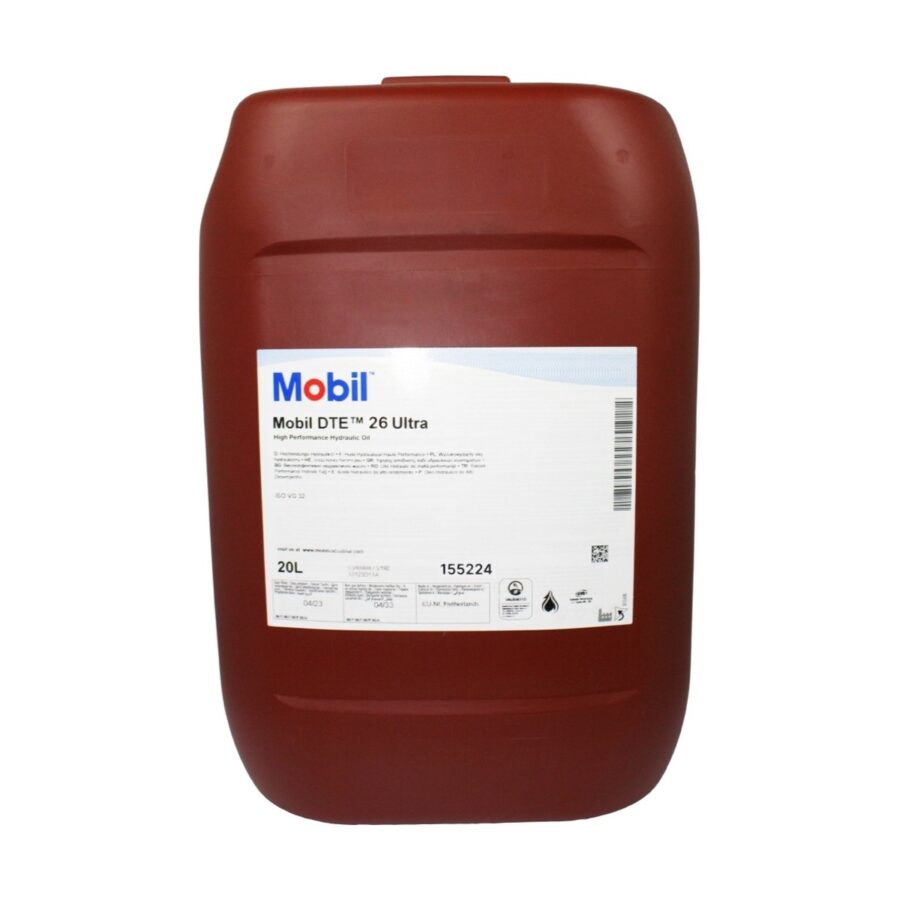
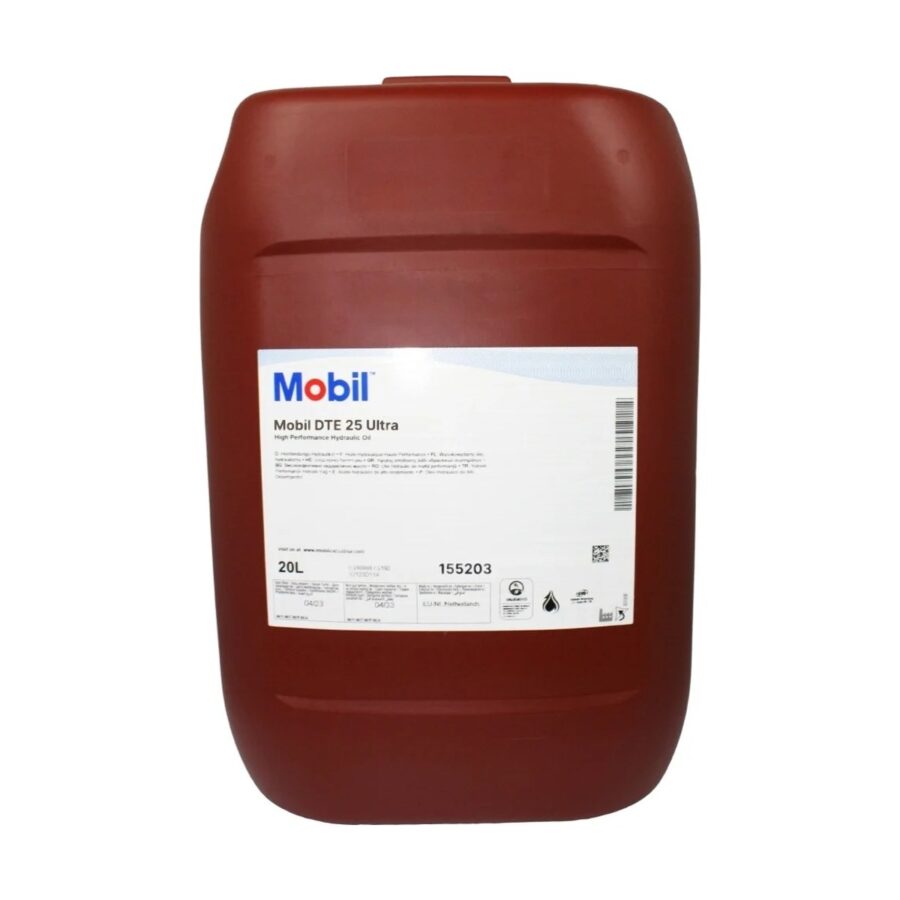
- DTE 20 Ultra names use their own numbers: DTE 24 Ultra = VG 32, DTE 25 Ultra = VG 46, DTE 26 Ultra = VG 68.
- DTE 10 Excel suits demanding, high-pressure systems and wide temperature ranges where long oil life matters.
- DTE 20 Ultra is a reliable, cost-effective choice for general industrial and mobile hydraulics.
- Cleanliness decides hydraulic reliability whichever oil you choose.
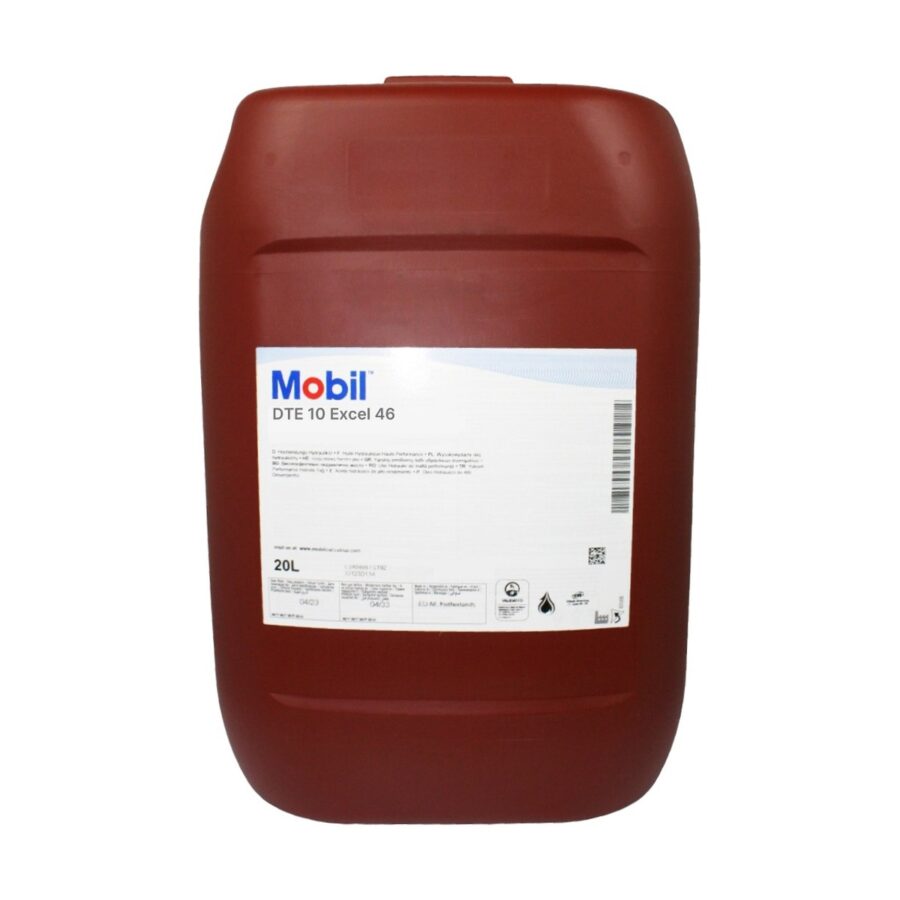
Mobil offers two main anti-wear hydraulic oil families in our catalogue: Mobil DTE 10 Excel and Mobil DTE 20 Ultra. Both protect pumps, valves and actuators in industrial and mobile hydraulic systems, but they are positioned differently. DTE 10 Excel is a high-performance, high viscosity index oil for demanding systems; DTE 20 Ultra is a proven, cost-effective anti-wear oil for general use. This guide compares them, explains how to match grades and shows how to choose for your system.
At a glance
| Mobil DTE 10 Excel | Mobil DTE 20 Ultra | |
|---|---|---|
| Positioning | High-performance anti-wear hydraulic oils | Anti-wear hydraulic oils for industrial and mobile equipment |
| Viscosity index | High (shear-stable) | Conventional mineral |
| Grades in our catalogue | ISO VG 32, 46, 68, 100, 150 | DTE 22, 24 (VG 32), 25 (VG 46), 26 (VG 68) |
| Typical use | Demanding, high-pressure systems; wide temperature ranges; long oil life | General industrial and mobile hydraulics |
| Packs we list | 20 L canister | 20 L canister |
Matching the grades
| ISO VG | Mobil DTE 10 Excel | Mobil DTE 20 Ultra |
|---|---|---|
| 22 | — | DTE 22 Ultra |
| 32 | DTE 10 Excel 32 | DTE 24 Ultra |
| 46 | DTE 10 Excel 46 | DTE 25 Ultra |
| 68 | DTE 10 Excel 68 | DTE 26 Ultra |
| 100 | DTE 10 Excel 100 | — |
| 150 | DTE 10 Excel 150 | — |
DTE 10 Excel names state the ISO VG directly. DTE 20 Ultra uses its own numbering, so confirm the VG on the data sheet before substituting.
Why anti-wear oils?
Most industrial hydraulic pumps, especially vane and piston pumps at high pressure, need anti-wear (AW) hydraulic oils, often described as HM or HLP oils in standards such as ISO 11158 and DIN 51524-2. Both DTE families are zinc-based AW oils. The zinc anti-wear additive forms a protective film on metal surfaces under high contact pressure, which protects pump vanes, pistons and swash plates. Some systems with silver or certain yellow-metal parts need zinc-free oils; check the pump maker’s requirements.
What is Mobil DTE 10 Excel?
DTE 10 Excel oils combine high-quality base oils with a shear-stable viscosity modifier and a zinc-based anti-wear system. The high viscosity index means the oil keeps its viscosity better at high temperatures and flows better at low temperatures, so one grade covers a wider temperature range. Mobil positions DTE 10 Excel for high-pressure, high-output systems, and reports hydraulic efficiency benefits in its testing compared with standard hydraulic oils. The oils are also designed for long life and keep-clean performance, which helps protect valves.
What is Mobil DTE 20 Ultra?
DTE 20 Ultra oils are anti-wear hydraulic oils for industrial and mobile equipment, with good protection against wear, rust and oxidation and good water separation. They are a reliable, cost-effective choice for general hydraulic systems running within normal temperature ranges. Check the data sheet for the OEM approvals and specifications each grade meets.
Which one to choose?
| Situation | Better fit |
|---|---|
| High-pressure systems (e.g. injection moulding, presses) | DTE 10 Excel |
| Wide temperature ranges: outdoor equipment, cold starts and hot running | DTE 10 Excel |
| Long drain intervals wanted | DTE 10 Excel |
| Energy efficiency important | DTE 10 Excel |
| General industrial hydraulics at stable temperatures | DTE 20 Ultra |
| Cost-sensitive systems with regular oil changes | DTE 20 Ultra |
| OEM specifies a particular product or approval | Follow the OEM |
How do you choose the viscosity grade?
- Find the pump maker’s viscosity window: minimum, optimum and maximum viscosity in operation.
- Measure the actual oil temperature in the reservoir and, if possible, at the pump.
- Choose the ISO VG that keeps the viscosity in the optimum range at operating temperature.
- Check the cold start viscosity for equipment that starts cold.
- Pick DTE 10 Excel or DTE 20 Ultra in the matching VG, based on how demanding the system is.
In hot conditions, read VG 32 vs 46 vs 68 in hot climates.
Why does viscosity index matter in the GCC?
Hydraulic systems in the GCC often run with reservoir temperatures well above the 40 °C reference temperature for ISO VG. At 60 °C or more, a conventional VG 46 oil thins considerably, and pumps can lose efficiency and wear faster. A high-VI oil keeps more of its viscosity at those temperatures. Plants often choose either a higher VG grade of a conventional oil, or the same VG in a high-VI oil such as DTE 10 Excel. Measure the temperature and check the viscosity at that temperature on the data sheet.
Keep it clean
Whichever oil you choose, cleanliness decides hydraulic reliability. Most hydraulic failures are caused by contamination: particles, water and air. Filter new oil when filling, fit desiccant breathers, maintain filters, keep the reservoir closed and monitor with oil analysis, including a particle count against the target ISO 4406 code for your system.
Reading hydraulic oil data sheets
| Property | What it tells you |
|---|---|
| Viscosity at 40 °C and 100 °C | Confirms the ISO VG and how viscosity changes with temperature |
| Viscosity index | Viscosity stability over temperature |
| Pour point | Lowest temperature at which the oil flows |
| FZG and pump wear tests | Anti-wear performance |
| Filterability | How easily the oil passes fine filters, including with water present |
| Air release | How quickly entrained air leaves the oil |
| Foam tendency | Resistance to foaming in the reservoir |
| Demulsibility | How quickly the oil separates from water |
| Hydrolytic stability | Additive stability in the presence of water |
Target cleanliness codes
| System | Typical target ISO 4406 code |
|---|---|
| Servo and proportional valve systems | Around 16/14/11 or cleaner |
| High-pressure piston pump systems | Around 17/15/12 |
| General industrial vane and gear pump systems | Around 18/16/13 |
| Low-pressure systems | Around 19/17/14 |
These are typical starting points; follow the component makers’ requirements, which may be stricter.
Air and foaming
Air in hydraulic oil causes spongy operation, noise, higher temperatures and faster oxidation, and in extreme cases cavitation damage in pumps. Common causes are suction leaks, low reservoir level, return lines ending above the oil surface and contamination that spoils the oil’s air release. Good oils release air quickly, but they cannot fix mechanical causes. Check reservoir levels, suction fittings and return line positions if the oil looks foamy or milky and clears from the top when left to stand.
Controlling reservoir temperature
Oil temperature affects viscosity, oxidation and seal life. As a rule of thumb, oil life halves for every 10 °C rise above about 60 °C. Keep coolers clean, check that cooling water or air flow is adequate, keep reservoirs out of direct sun where possible, and avoid unnecessary pressure drops that turn energy into heat. In hot GCC summers, a well-maintained cooler can matter more than the choice of oil.
Changing between them
- Check the OEM requirements and the current oil.
- Drain the system, including cylinders and lines where practical.
- Flush if the old oil is degraded, contaminated or a different chemistry.
- Replace filters.
- Fill with filtered new oil, label the reservoir and record the change.
- Sample after a few weeks.
Filling and top-up practice
New oil is not always clean oil. Drums and canisters can contain particles from filling and transport that exceed the target cleanliness of a high-pressure system. Fill reservoirs through a filter cart or the system’s return filter, never by pouring through an open filler cap. Use dedicated, sealed transfer containers for each oil type, and label them. Keep top-up oil in the same product and grade as the system fill, so the system never becomes a mixture of different oils.
Record each top-up quantity. A rising consumption trend is often the first sign of an external leak, a failing seal or an internal problem, and it costs much less to fix early than after a pump or cylinder failure.
A worked example: an injection moulding shop
A plastics plant in Sharjah runs injection moulding machines with a conventional VG 46 hydraulic oil. In summer, reservoir temperatures rise, cycle times become unstable and pumps wear faster. The plant switches to Mobil DTE 10 Excel 46 after draining and flushing, adds desiccant breathers and sets up particle counting. Viscosity at operating temperature is higher than before, machines run more consistently in summer and oil analysis shows longer oil life.
What are the most common mistakes?
- Assuming DTE 25 Ultra is VG 25 (it is VG 46).
- Choosing a viscosity grade without measuring oil temperature.
- Mixing hydraulic oils of different types.
- Filling new oil without filtration.
- Ignoring water and air contamination.
Frequently asked questions
Can I mix DTE 10 Excel and DTE 20 Ultra?
Avoid mixing different products where possible. If unavoidable, use the same viscosity and plan a change to one product.
Which is ISO VG 46?
Mobil DTE 10 Excel 46 and Mobil DTE 25 Ultra are both ISO VG 46 grades.
Is DTE 10 Excel worth the higher price?
In high-pressure, hot or wide-temperature systems, and where long oil life or efficiency matter, it often is. For general systems at stable temperatures, DTE 20 Ultra is usually enough.
Which grade for a hot climate?
Measure the oil temperature and choose a grade that keeps viscosity in the pump maker’s window. A high-VI oil or a higher VG are common solutions.
How often should hydraulic oil be changed?
Change on condition, using oil analysis, rather than on a fixed calendar.
Can DTE 10 Excel be used in mobile equipment?
Yes, its wide temperature range suits many mobile hydraulic systems. Check the equipment maker’s approval list first.
Conclusion
Mobil DTE 10 Excel is the high-performance choice for demanding, high-pressure and wide-temperature systems; DTE 20 Ultra is the cost-effective choice for general hydraulics. Match the ISO VG to the pump maker’s window at your real oil temperature, keep the oil clean and monitor it. Browse our hydraulic oils.
Need help applying this to your plant? Send us the equipment details or the product you use now and we will recommend a suitable Kluber or Mobil grade: request a quote and we reply within one business day.