Key takeaways
- Spindle bearings run at very high speed factors, so they need greases with low-viscosity base oils and thickeners designed for high speed.
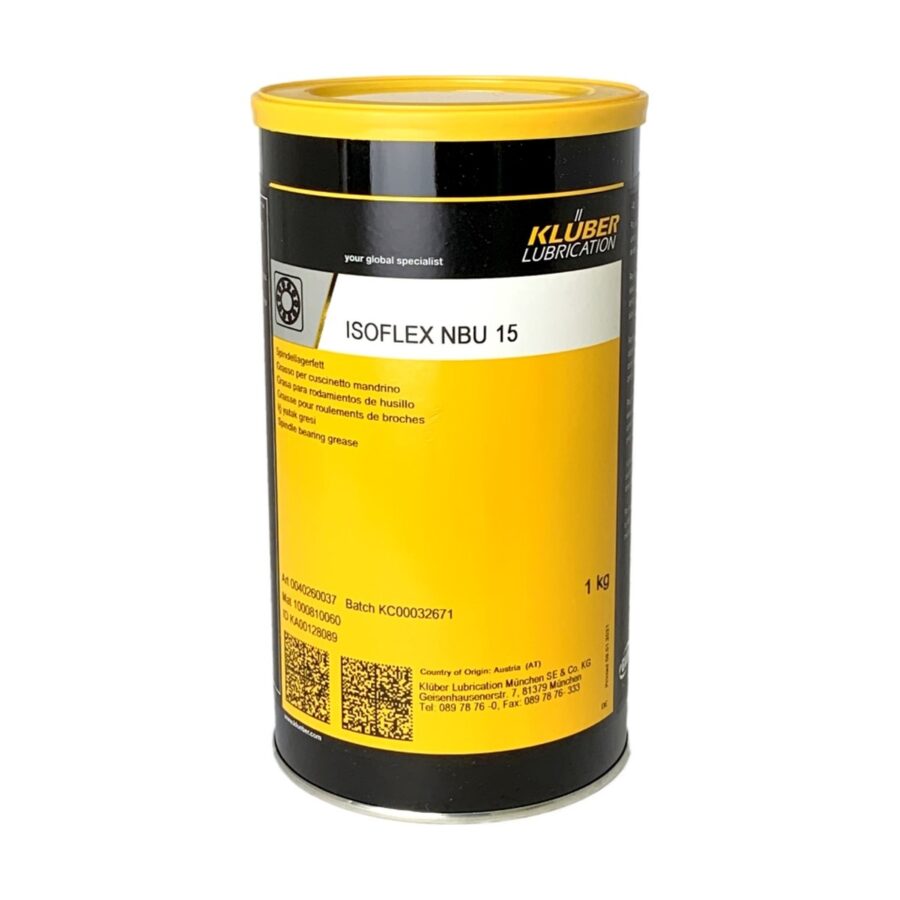
- Kluber ISOFLEX NBU 15 is the widely specified standard spindle grease, rated from −40 °C to 130 °C.
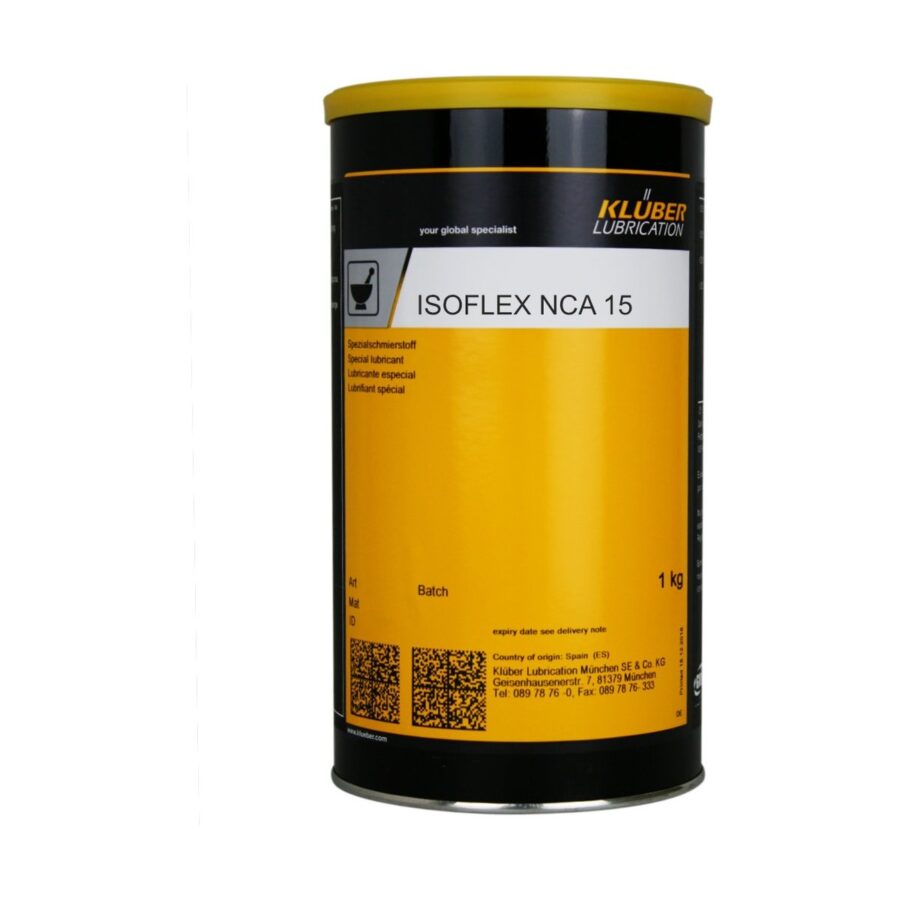
- ISOFLEX NCA 15 is a related grade with a lower minimum temperature (−50 °C to 120 °C) that some spindle and bearing makers specify.
- VARILUB NBU 15/300 lists a speed factor of about 1,000,000 mm/min and a range of −30 °C to 130 °C.
- The correct grease quantity and a proper running-in procedure matter as much as the grease itself.
Machine-tool spindles, grinding spindles and high-speed electric spindles run angular-contact bearings at speeds where ordinary greases overheat. Spindle builders and bearing makers therefore specify dedicated spindle greases, many of them from Kluber. This guide compares the Kluber spindle greases we supply and explains how to choose and apply them. For general bearing greases, see how to choose an industrial grease.
What makes a spindle bearing grease different?
Three properties matter most. First, a low-viscosity synthetic base oil, so that internal friction and heat stay low at high speed. Second, a thickener with very fine, uniform structure, so the grease channels away from the rolling elements quickly and does not churn. Third, high cleanliness, because tiny particles in precision bearings cause noise and wear. The speed capability is described by the speed factor n × dm (rpm × mean bearing diameter in mm).
Kluber spindle greases at a glance
| Grease | Service temperature | Key points | Packs we supply |
|---|---|---|---|
| ISOFLEX NBU 15 | −40 °C to 130 °C | Widely specified standard for high-speed spindle bearings | 50 g tube, 400 g, 1 kg, 25 kg |
| ISOFLEX NCA 15 | −50 °C to 120 °C | Spindle and precision bearings; lower minimum temperature | 50 g tube, 400 g cartridge, 1 kg can, 25 kg |
| VARILUB NBU 15/300 | −30 °C to 130 °C | Barium complex soap; speed factor about 1,000,000 mm/min | 400 g cartridge, 1 kg |
| ISOFLEX PDL 300A | −70 °C to 110 °C | Very low base-oil viscosity (about 7.5 mm²/s at 40 °C); speed factor 1,000,000 mm/min | 1 kg |
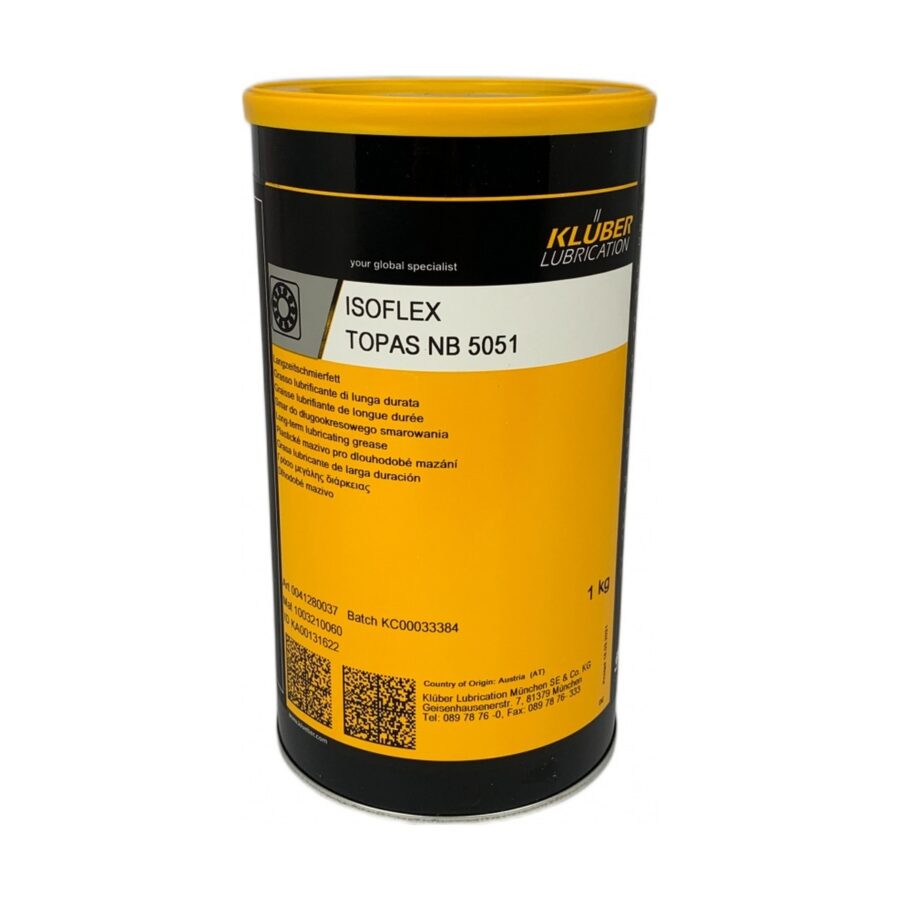
| ISOFLEX SUPER LDS 18 | −50 °C to 120 °C | High-speed, smooth-running grease for small and precision bearings | 370 g, 1 kg, 25 kg |
Values are from the manufacturer’s data as listed on our product pages. Always check the current TDS for your application.
ISOFLEX NBU 15 or ISOFLEX NCA 15: which should I use?
Use whichever grease your spindle or bearing maker specifies; both are established spindle greases. ISOFLEX NBU 15 is the most commonly named in machine-tool manuals and is the usual default for re-greasing spindles at overhaul. ISOFLEX NCA 15 has a lower minimum service temperature and is specified by some makers for particular bearing types. If no grease is specified, discuss the bearing type, speed and operating temperature with us before choosing. Our ISOFLEX greases guide explains the wider family.
When is VARILUB NBU 15/300 or ISOFLEX PDL 300A the better choice?
VARILUB NBU 15/300 is used where a spindle grease with a long service life at high speed is required, and its data sheet lists a speed factor of about 1,000,000 mm/min. ISOFLEX PDL 300A, with a very light base oil and a range down to −70 °C, suits very high speeds with low running torque and precision bearings where minimum friction is the priority. Because it is so light, it is not a general-purpose replacement for NBU 15.
Grease or oil for spindles?
Grease lubrication is simple, clean and maintenance-free between overhauls, so it is used for most spindles up to the grease’s speed limit. Above that limit, oil-air or oil-mist lubrication with spindle oils such as Mobil Velocite takes over. See grease vs oil lubrication.
How much grease does a spindle bearing need?
Spindle bearings need much less grease than ordinary bearings. Overfilling is the most common cause of high running temperatures after a spindle rebuild. Bearing makers usually give a fill quantity as a percentage of the free space inside the bearing, often in the range of about 10–30 % for high-speed angular-contact bearings. Use the exact quantity in the spindle or bearing maker’s instructions and apply it with a syringe or calibrated dispenser, distributing it evenly between the rolling elements.
What is spindle running-in and why does it matter?
After greasing, the grease must be distributed and excess pushed out of the rolling path. Running-in does this in steps: the spindle is run at a low speed until the temperature stabilises, then the speed is increased in stages, pausing if the temperature rises too quickly. Skipping running-in can cause temperature peaks that damage the grease and bearing. Follow the spindle builder’s procedure; typical procedures take from about one to several hours.
- Fill each bearing with the specified quantity of grease.
- Run at a low speed and record bearing temperature.
- Increase speed in steps only after the temperature stabilises.
- Stop and allow cooling if the temperature exceeds the limit set by the spindle maker.
- Record the final stable temperature at maximum speed as a baseline for condition monitoring.
How should spindle grease be stored and handled?
Keep spindle grease clean. Use small packs, such as 50 g tubes or 400 g cartridges, so that each pack is used quickly. Close containers immediately, keep them in a cool store and use clean tools. In GCC workshops, heat and dust are the main risks. See grease storage and shelf life.
How do GCC workshop conditions affect spindle grease?
Workshops and machine shops in the region can be hot and dusty, especially where doors are open to loading areas. Both conditions shorten spindle grease life. Heat raises the baseline spindle temperature, and dust contaminates grease during rebuilds. Rebuild spindles in a clean, air-conditioned area if possible, keep grease containers closed, and use fresh small packs. Check the spindle’s thermal behaviour after a rebuild against the baseline recorded during running-in.
What causes spindle bearing failures related to grease?
- Overfilling, which causes high temperatures and grease breakdown.
- Wrong grease type, for example a general grease with too thick a base oil.
- Contamination during assembly from dirty tools, gloves or containers.
- Skipping or rushing the running-in procedure.
- Mixing greases when topping up or rebuilding without cleaning.
- Coolant ingress through damaged seals or air purge failure.
Most of these are process errors rather than grease failures. A written spindle rebuild procedure with the grease type, quantity and running-in steps prevents most of them.
What information should you keep for each spindle?
| Record | Why |
|---|---|
| Bearing type and size | Sets the grease quantity and speed factor |
| Grease name and batch | Traceability if problems occur |
| Fill quantity per bearing | Repeatable rebuilds |
| Running-in steps and temperatures | Baseline for condition monitoring |
| Date of rebuild and running hours | Plan the next overhaul |
Do electric spindles and motor spindles need different greases?
Motorised spindles combine the motor and spindle in one unit and often run at very high speeds with heat from the motor windings. The spindle maker usually specifies the grease and fill quantity precisely, and some use special greases or oil-air lubrication. Follow the maker’s instructions exactly, because rebuilding a motorised spindle with the wrong grease can lead to rapid failure.
How do you choose when no grease is specified?
Older or rebuilt spindles sometimes have no clear grease specification. In that case, collect the bearing type and size, maximum speed, operating temperature, orientation (horizontal or vertical) and sealing arrangement. With these, calculate the speed factor and compare it with the speed factor given on each grease’s data sheet, leaving a margin. Then check the temperature range and the fill quantity recommended by the bearing maker. Send these details to us and we will suggest suitable Kluber spindle greases and the pack size that suits the rebuild.
Should you keep spare grease with spare spindles?
Yes. If spare spindles or bearing sets are kept in the store, keep the matching grease in small packs alongside the rebuild instructions. This avoids a rushed rebuild with whatever grease is available. Check the shelf life on stored grease before use, and replace packs that are past the date recommended by the manufacturer or that show oil separation, hardening or contamination. A clean, correct, fresh grease in the right quantity is the basis of every reliable spindle rebuild. Write the grease name on the spindle’s identification tag so the next technician uses the same product.
Frequently asked questions
Can I use a general bearing grease in a spindle?
No. General greases have base oils that are too thick for spindle speeds and will overheat. Use a dedicated spindle grease specified by the spindle or bearing maker.
Is ISOFLEX NBU 15 compatible with ISOFLEX NCA 15?
They are different formulations. Do not mix greases in precision bearings; clean bearings fully before changing grease type.
How long does spindle grease last?
Many grease-lubricated spindles run until the next overhaul without relubrication. Life depends on speed, temperature, sealing and fill quantity.
Which pack size is best for spindle rebuilds?
Small packs such as 50 g tubes or 400 g cartridges keep the grease clean and fresh for workshop use.
Conclusion
For most machine-tool spindles, ISOFLEX NBU 15 is the standard choice, with ISOFLEX NCA 15 where specified and VARILUB NBU 15/300 or ISOFLEX PDL 300A for particular speed or low-torque needs. Use the grease the spindle maker specifies, fill the correct small quantity, follow a careful running-in procedure and keep the grease clean.
Need help applying this to your plant? Send us the equipment details or the product you use now and we will recommend a suitable Kluber or Mobil grade: request a quote and we reply within one business day.