Key takeaways
- ISOFLEX is Kluber’s best-known family for high-speed, precision and long-term rolling bearing lubrication.
- ISOFLEX NBU 15 and NCA 15 are the classic choices for machine-tool spindles and other high-speed bearings.
- The TOPAS grades use synthetic base oils for long life and wide temperature ranges.
- The LDS 18 grades are designed for low temperatures and low friction.
- Choose by speed factor, temperature, load and the spindle or bearing maker’s recommendation.
ISOFLEX is one of Kluber’s most widely used grease families. Machine-tool builders, spindle repairers, textile mills, electric motor workshops and precision engineering plants use ISOFLEX greases for high-speed bearings, spindles and long-term lubrication. The family is large, and several grades sound alike, so it helps to know what each one is designed for. This guide covers the ISOFLEX grades in our catalogue and how to choose between them.
ISOFLEX greases in our catalogue
| Grade | Positioning (from product data) | Typical uses |
|---|---|---|
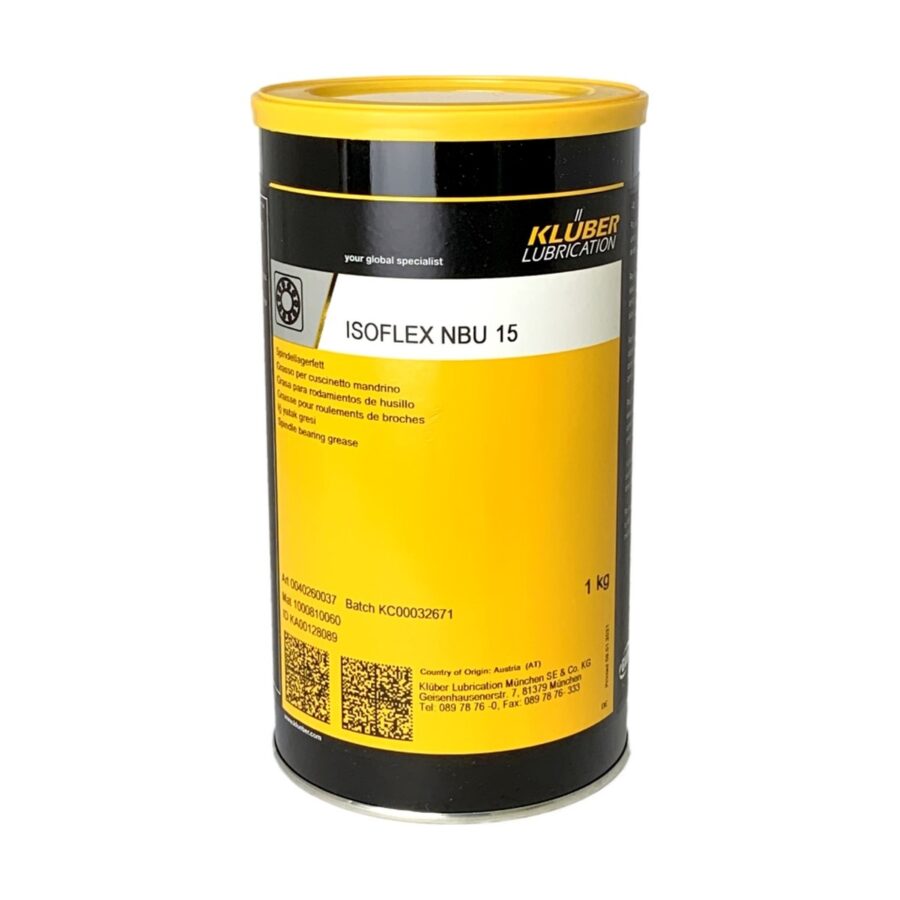
| ISOFLEX NBU 15 | High-speed spindle bearing grease | Machine-tool spindles, high-speed rolling bearings |
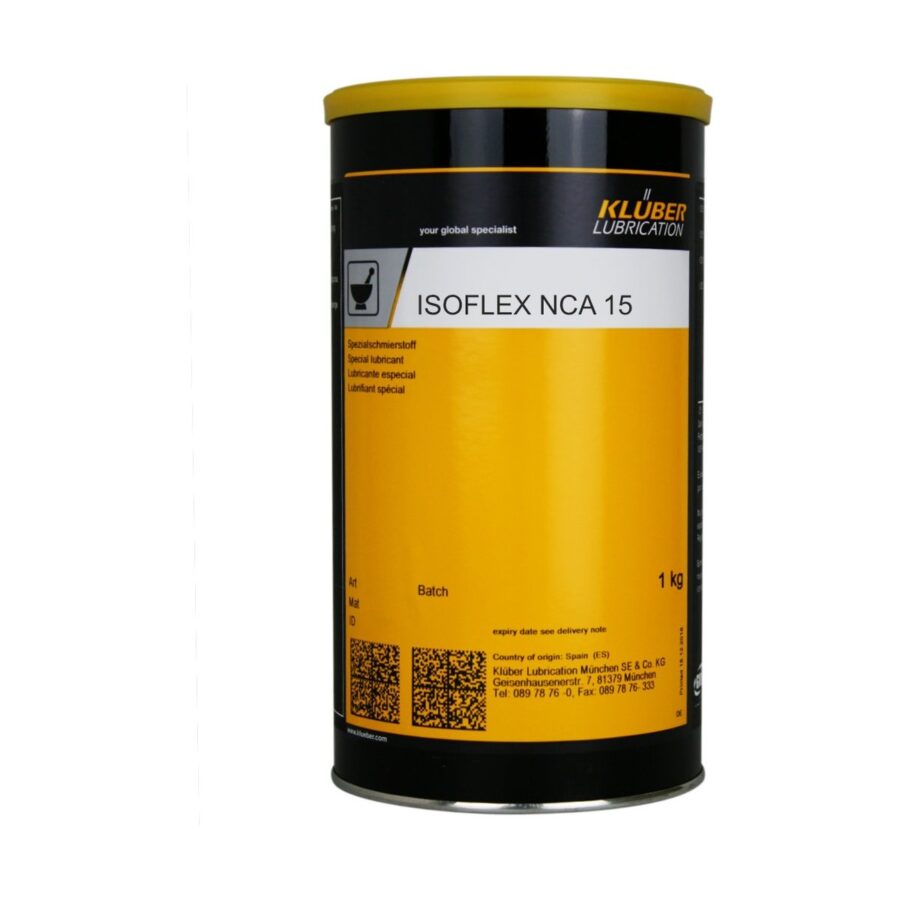
| ISOFLEX NCA 15 | Spindle bearing grease | Precision spindle bearings |
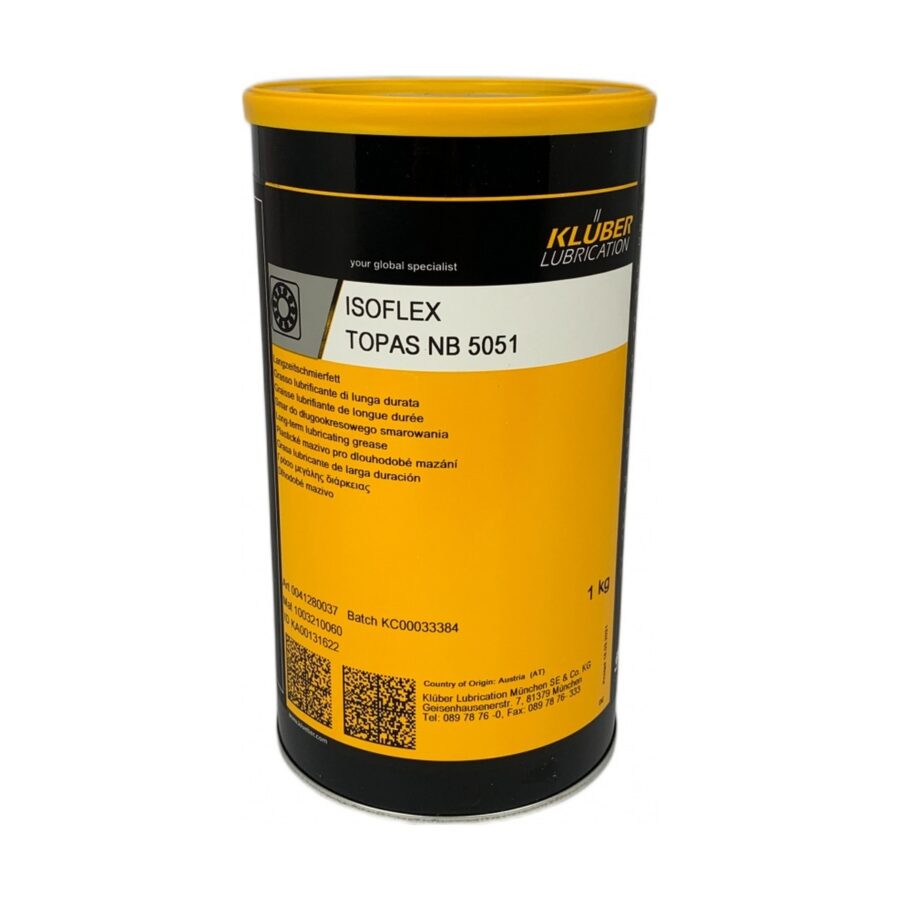
| ISOFLEX TOPAS NB 52 / NB 152 / NB 5051 | Synthetic rolling and plain bearing / long-term greases | Long-life rolling bearings |
| ISOFLEX TOPAS NCA 52 / NCA 152 / NCA 5051 | Synthetic long-term greases | Long-term lubrication of rolling bearings |
| ISOFLEX TOPAS NCA 51, TOPAS L 32 | Synthetic low-temperature greases | Bearings at low temperatures |
| ISOFLEX TOPAS L 152 | Rolling bearing grease | Rolling bearings |
| ISOFLEX LDS 18 Special A (and A/UV) | Long-term lubricating grease | Rolling bearings at low and normal temperatures |
| ISOFLEX SUPER LDS 18 | High-speed, smooth-running grease | Bearings needing low friction |
| ISOFLEX PDL 300 A, PDB 38 CX 1000, ALLTIME SL 2, TEL/3000 ALTEMP | Special-purpose greases | Specific applications per data sheet |
How do you read ISOFLEX product names?
ISOFLEX names follow a loose pattern. “NBU” and “NCA” grades are the classic spindle greases. “TOPAS” marks grades with synthetic hydrocarbon base oils, designed for long life and wide temperature ranges. The numbers usually relate to consistency or base-oil viscosity, but not in a way that can be compared across sub-families, so always read the data sheet. “LDS 18” grades are designed for low temperatures and low friction.
Spindle greases: NBU 15 and NCA 15
High-speed spindle bearings in machining centres, grinders and lathes run at very high speeds with light loads and tight precision. They need a grease with low friction, a high speed rating and the ability to form a thin, stable film after running-in. ISOFLEX NBU 15 and NCA 15 are among the most widely specified greases for these bearings worldwide. Many spindle makers name them in their manuals. Start with the spindle maker’s recommendation; if it names one of these greases, use exactly that grade.
Synthetic long-term greases: the TOPAS grades
The TOPAS grades use synthetic hydrocarbon base oils, which resist oxidation and keep their viscosity over a wide temperature range. They are designed for long relubrication intervals or lifetime lubrication in rolling bearings. They suit sealed bearings, hard-to-reach points, bearings in hot environments and equipment where reliability matters more than grease price. Several viscosity and consistency options are available, so match the grade to the speed and load.
Low-temperature and low-friction greases: LDS 18
ISOFLEX LDS 18 Special A is a long-term grease for rolling bearings at low and normal temperatures, used where low starting torque and smooth running matter, for example in small motors, instruments and cold rooms. ISOFLEX SUPER LDS 18 is designed for high speeds and smooth running. The A/UV version contains a UV tracer, which allows inspection under UV light that grease has been applied.
How do you choose an ISOFLEX grade?
- Check the equipment or spindle maker’s recommendation first.
- Calculate the speed factor (n·dm: speed in rpm multiplied by the mean bearing diameter in mm) and compare it with the data sheet limit.
- Measure or estimate the bearing operating temperature.
- Consider load: heavier loads need higher base-oil viscosity.
- Decide whether you need long-term or lifetime lubrication, or regular relubrication.
- Check compatibility with the grease currently in the bearing.
Quick selection table
| Application | Usual starting point |
|---|---|
| Machine-tool spindles | ISOFLEX NBU 15 or NCA 15 (as specified by the spindle maker) |
| Long-life sealed bearings | ISOFLEX TOPAS NB or NCA grades |
| Cold rooms and low temperatures | ISOFLEX LDS 18 Special A or TOPAS low-temperature grades |
| Small, fast motors and fans needing low friction | ISOFLEX SUPER LDS 18 |
| Textile spindles and rollers | Check the machine maker; ISOFLEX and STABURAGS grades are common |
What is the speed factor?
The speed factor, written n·dm, combines rotational speed and bearing size. It is calculated by multiplying the speed in rpm by the mean bearing diameter in mm, which is the average of the bore and the outside diameter. For example, a spindle bearing with a 70 mm bore and a 110 mm outside diameter has a mean diameter of 90 mm. At 15,000 rpm, its speed factor is 15,000 × 90 = 1,350,000 mm/min. Each grease data sheet gives a maximum speed factor, and the grease must be rated above the value your bearing reaches. Some sources also apply a bearing-type correction factor, because angular contact, cylindrical roller and spherical roller bearings tolerate different speeds. High-speed ISOFLEX spindle greases are designed for speed factors far beyond what general-purpose greases can handle.
Base oils and thickeners
The ISOFLEX family uses several combinations of base oil and thickener, from mineral and ester oils to synthetic hydrocarbons, combined with thickeners such as lithium, barium complex or other special soaps. The combination decides the temperature range, speed rating, water resistance and compatibility. Because these differ between grades, two ISOFLEX greases may not be compatible with each other, even though they share a family name. Check the data sheet for each grade, and clean out the bearing when changing from one grade to another unless the manufacturer confirms compatibility.
Storage and handling of precision greases
Precision bearings are very sensitive to contamination: a single hard particle can damage the raceway of a spindle bearing. Keep grease containers closed, take grease with a clean spatula or syringe, never with fingers, and work in a clean area. Store tubes and cans indoors at moderate temperature, use the oldest stock first and respect the shelf life on the data sheet. In hot GCC workshops, avoid leaving containers in direct sunlight or near heat sources, which can make oil separate from the grease.
Greasing high-speed spindle bearings
Spindle bearings need very small, precise grease quantities. Too much grease causes high temperatures during start-up and can damage the bearings. Follow the bearing or spindle maker’s fill quantity, which is often a small percentage of the free space. Distribute the grease evenly, then follow a running-in procedure: run the spindle in steps of increasing speed, letting the temperature rise and settle at each step. This spreads the grease and forms a stable film. Skipping running-in is one of the main causes of early spindle failures after rebuilds.
Pack sizes
ISOFLEX greases are available from 50 g tubes and 370 g or 400 g cartridges to 1 kg cans and 25 kg buckets, depending on the grade. Spindle workshops usually buy tubes or cans; plants using ISOFLEX for many bearings buy cartridges or buckets. Each product page lists the sizes we supply. For spindle work, smaller packs are often better: they are used up before the grease ages, and each opening exposes less grease to contamination.
A worked example: a spindle rebuild workshop
A machine-tool service workshop in Dubai rebuilds spindles for local machining centres. After rebuilds, some spindles run hot and fail within months. The workshop finds that technicians are filling bearings with too much grease and skipping running-in to save time. They change to measured fills using a syringe and the spindle maker’s quantity, keep using the specified ISOFLEX NBU 15, and introduce a documented step-by-step running-in procedure with temperature logging. Early failures stop, and the workshop adds the temperature log to its handover documents for customers.
What are the most common mistakes?
- Over-filling spindle bearings.
- Skipping the running-in procedure.
- Substituting a general-purpose grease for a specified spindle grease.
- Mixing different ISOFLEX grades without checking compatibility.
- Choosing a grade by name alone without checking the speed factor.
Frequently asked questions
Do ISOFLEX spindle greases need running-in?
High-speed spindle bearings usually need a running-in procedure after greasing. Follow the spindle or bearing maker’s procedure.
Can I mix two ISOFLEX greases?
Not without checking compatibility; different grades use different base oils and thickeners.
What is the difference between NBU 15 and NCA 15?
Both are spindle bearing greases with different formulations. Use the grade your spindle maker specifies, and check both data sheets if you are choosing.
Is ISOFLEX suitable for electric motors?
Some grades, such as the LDS 18 and TOPAS grades, are used in motors. Check the motor maker’s recommendation and the bearing temperature.
What does the UV in LDS 18 Special A/UV mean?
It contains a UV tracer, so you can check under UV light that grease has been applied.
How much grease does a spindle bearing need?
Usually a small, precisely measured amount set by the bearing or spindle maker, often a fraction of the free space. Too much grease causes overheating during start-up.
Conclusion
ISOFLEX covers a wide range of rolling bearing needs: NBU 15 and NCA 15 for high-speed spindles, TOPAS grades for long life, and LDS 18 grades for low temperatures and low friction. Start with the equipment maker’s recommendation, check the speed factor and temperature, apply the right quantity and run in spindles correctly. Browse all ISOFLEX products and our bearing & spindle greases.
Need help applying this to your plant? Send us the equipment details or the product you use now and we will recommend a suitable Kluber or Mobil grade: request a quote and we reply within one business day.