Key takeaways
- Every hydraulic pump has a viscosity window: a minimum for wear protection and a maximum for start-up.
- In hot climates, oil runs hotter and thinner; check viscosity at the real operating temperature.
- Fix cooling problems before changing oil grade.
- Choose an anti-wear hydraulic oil with good oxidation stability, water separation and air release.
- Cleanliness decides hydraulic reliability more than any other factor.
ISO VG 32, 46 and 68 are the three most common hydraulic oil grades. In hot climates like the UAE and the wider GCC, maintenance teams often ask whether they should move to a thicker oil. The honest answer is: it depends on the pump, the system and the actual oil temperature. This guide explains how to decide, and what else matters in hot conditions.
The pump’s viscosity window
Every hydraulic pump maker specifies a viscosity range for its pumps:
- Minimum viscosity: below this, the oil film in the pump becomes too thin, internal leakage increases, efficiency drops and wear accelerates.
- Optimum range: where the pump works best for efficiency and life.
- Maximum start-up viscosity: above this, the oil is too thick to flow into the pump at start-up, risking cavitation and damage.
The oil you choose must stay within this window from the coldest start-up to the hottest running condition. Piston, vane and gear pumps all have different limits, so always check the actual pump’s data.
What does heat do to hydraulic oil?
As oil temperature rises, viscosity falls. A VG 46 oil that is ideal at 50 °C may approach the pump’s minimum viscosity at 80 °C or above. In a hot workshop, an outdoor machine in summer sun, or a system with an undersized or dirty cooler, oil temperatures can reach these levels.
Heat also ages the oil faster. Oxidation accelerates with temperature, producing acids, sludge and varnish that block valves and filters. Seals harden faster at high temperature, increasing leaks.
Should you use ISO VG 32, 46 or 68?
| Grade | Typical use | In hot climates |
|---|---|---|
| ISO VG 32 | Cooler climates, precision systems, cold starts | May become too thin in hot running unless well cooled |
| ISO VG 46 | The most common general industrial grade | Often fine with good cooling; check peak temperature |
| ISO VG 68 | Hotter running conditions, heavier systems | Common in hot climates where the pump allows it; check start-up |
A practical decision process
- Find the pump maker’s viscosity limits (minimum, optimum and maximum start-up).
- Measure oil temperature in the tank and, ideally, at the pump inlet during the hottest operation.
- Check the oil’s viscosity at that temperature using the data sheet values at 40 °C and 100 °C.
- Check cold-start viscosity at the lowest start-up temperature.
- Choose the grade that keeps you inside the window across the full range.
- Fix cooling first if oil temperatures are abnormal.
Why should you fix the cooling before changing the oil?
If a system runs much hotter than its design temperature, changing to a thicker oil treats the symptom, not the cause. Common causes of overheating include:
- Dirty or blocked oil coolers (air or water side).
- Faulty cooling fans or thermostatic valves.
- Low oil level, so the oil does not have time to cool.
- Internal leakage from worn pumps, cylinders or valves.
- Relief valves set too low, or running continuously over relief.
- Poorly ventilated machine enclosures.
A thicker oil also increases energy consumption and slows system response, so it is not a free fix.
What else matters besides viscosity?
| Property | Why it matters in hot conditions |
|---|---|
| Anti-wear performance | Protects high-pressure pumps, especially when viscosity is lower at heat |
| Oxidation stability | Slows sludge and varnish formation at high temperature |
| Water separation (demulsibility) | Lets condensed water separate and be drained |
| Air release and foam control | Prevents spongy operation and cavitation |
| Filterability | Allows fine filtration without additive loss |
| Viscosity index | Keeps viscosity more stable across temperature |
Mobil hydraulic oils in our range
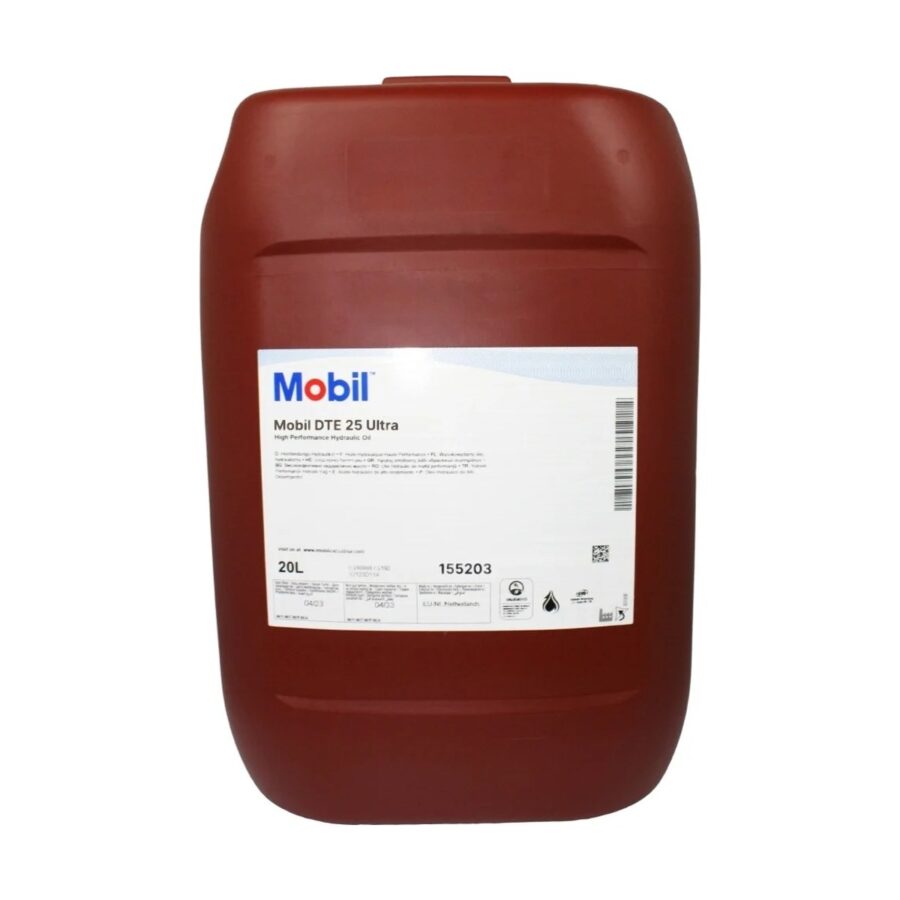
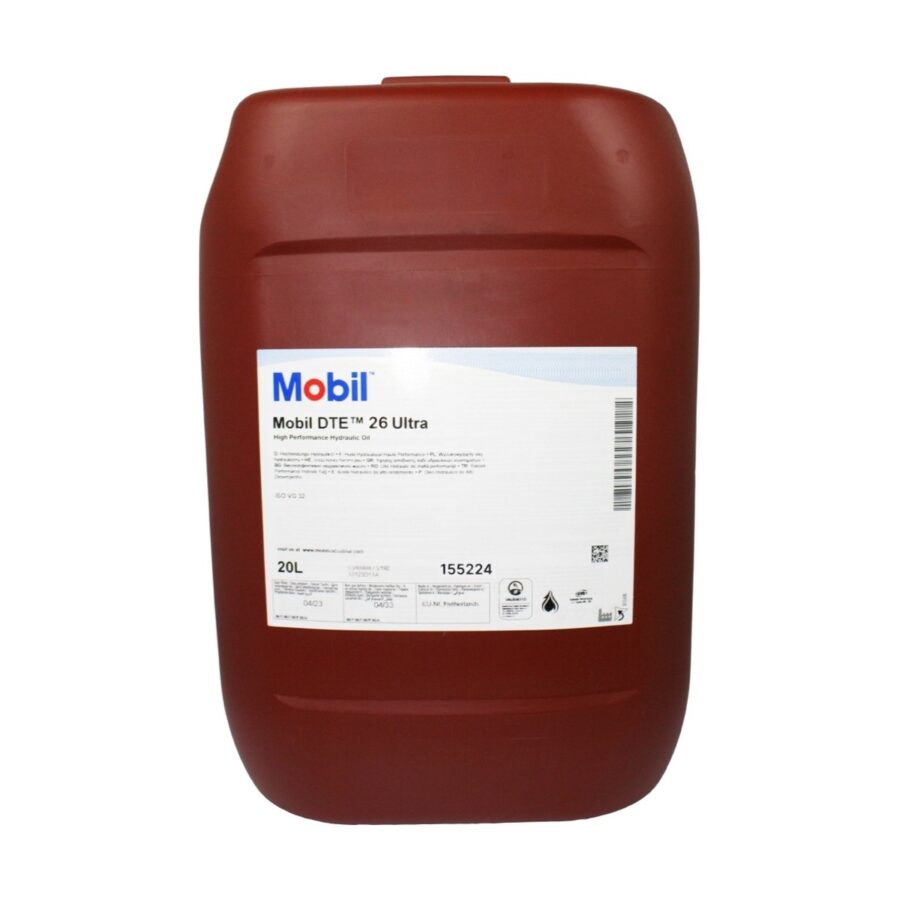
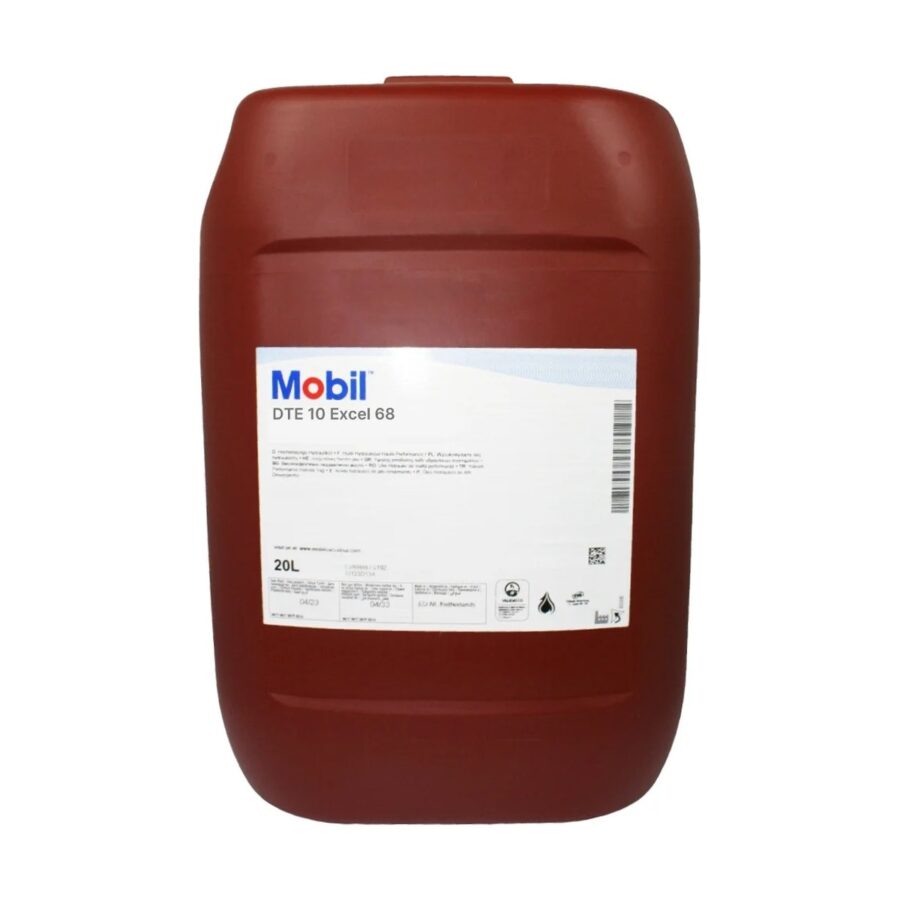
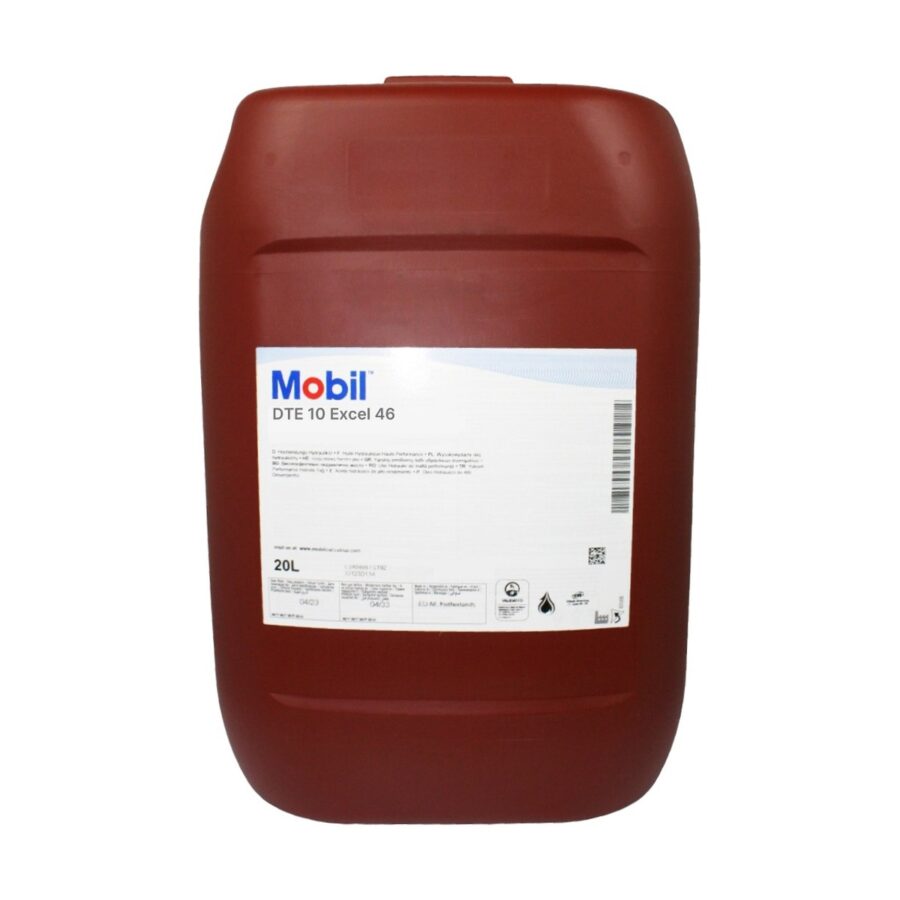
Mobil DTE 10 Excel (ISO VG 32 to 150) is positioned as a high-performance anti-wear hydraulic oil for demanding systems where long oil life matters. Mobil DTE 20 Ultra (DTE 22, 24, 25 and 26) are anti-wear hydraulic oils for industrial and mobile equipment. Both are available in VG 46 and 68. See our comparison of DTE 10 Excel and DTE 20 Ultra.
Why is cleanliness the biggest factor?
Most hydraulic failures start with contamination. In dusty GCC environments, keeping oil clean is essential:
- Fit desiccant breathers to reservoirs to stop dust and humid air entering.
- Filter new oil when filling; new oil is often not clean enough for modern hydraulics.
- Maintain filters and check differential pressure indicators.
- Keep cylinder rod wipers and seals in good condition.
- Set a target cleanliness code (ISO 4406) and test against it.
Monitoring hydraulic oil
Regular oil analysis checks viscosity, water, oxidation, wear metals and particle counts. Trends show whether the oil is ageing faster in summer, whether contamination is rising, and when to change oil on condition rather than on a fixed calendar. See oil analysis basics.
Hydraulic oil temperature targets
Many industrial hydraulic systems are designed to run with oil temperatures roughly in the 40–60 °C range. Short peaks above this are usually tolerated, but continuous running much hotter shortens oil life, hardens seals and reduces viscosity. A useful rule is to treat a sustained tank temperature above about 70 °C as a sign that cooling, system efficiency or oil grade needs attention. Always check the equipment maker’s own limits.
Worked example: an injection moulding machine in summer
An injection moulding machine in a hot factory runs its VG 46 hydraulic oil at about 55 °C in winter and 75 °C in July. The piston pump maker states a minimum viscosity of 16 mm²/s. At 75 °C, the VG 46 oil approaches that limit, and the machine shows slower cycle response and rising leakage. Inspection finds the water-cooled oil cooler partly blocked with scale. After the cooler is cleaned, summer oil temperature drops to about 60 °C, and the existing VG 46 oil stays comfortably inside the pump’s window. No grade change is needed, and energy consumption falls because the system is no longer running hot.
Seasonal checks for hydraulic systems
- Before summer: clean coolers, check fans and thermostatic valves, check oil level.
- Check breathers and replace desiccant cartridges.
- Take an oil sample for a pre-summer baseline.
- During summer: log tank temperatures weekly on critical machines.
- After summer: sample again and compare oxidation and particle counts.
Hydraulic oil and seals
High temperatures harden nitrile seals and accelerate leakage. Oils with good seal compatibility and stable additive systems help, but the most effective protection is keeping oil temperatures under control. If a system has frequent seal failures in summer, check oil temperature before replacing seals again.
Mobile hydraulics in heat and dust
Excavators, loaders, cranes and other mobile equipment in GCC construction and quarrying face extreme heat, direct sun and dust. Radiator and oil-cooler cleanliness is critical: dust packed into cooler fins can raise oil temperatures dramatically. Daily blowing-out of coolers on dusty sites, good breathers and rod wipers, and correct oil grade per the machine manual keep hydraulic systems reliable.
Topping up and changing oil
Top up only with the same product and grade, filtered on the way in. When a full change is needed, drain while warm, replace filters, clean the tank if sludge is present, and refill through a filter. If you change product, check compatibility with the old oil and flush if the manufacturer recommends it. Record the change and take a new baseline oil sample after a few weeks of running.
What should you check before changing grade?
- What viscosity window does the pump maker specify?
- What is the oil temperature at the hottest operating point?
- Is the cooling system clean and working?
- What is the coldest start-up temperature?
- Does the equipment maker allow a different grade?
What are the most common mistakes?
- Switching to VG 68 without checking the pump’s cold-start limit.
- Ignoring a dirty cooler and changing oil grade instead.
- Topping up with a different product or grade.
- Filling new oil without filtration.
- Running reservoirs without breathers in dusty areas.
Frequently asked questions
Is VG 68 better for summer and VG 46 for winter?
Some equipment makers allow seasonal changes, but changing oil twice a year is rarely practical. Usually it is better to choose one grade that suits the full temperature range, and fix cooling if needed.
Why is my hydraulic oil running so hot?
Common causes are blocked coolers, low oil level, internal leakage in worn components, wrong relief valve settings or high ambient temperature.
What temperature should hydraulic oil run at?
Many systems are designed for oil temperatures in the region of 40–60 °C; check the equipment maker’s limits. Continuous running at much higher temperatures shortens oil and seal life.
Can I mix VG 46 and VG 68?
It produces an intermediate viscosity but makes the actual value uncertain. Avoid it; use one grade per system.
Do I need zinc-free hydraulic oil?
Only if the pump or system maker specifies it, or for environmental reasons. Check the specification.
Conclusion
Choosing between ISO VG 32, 46 and 68 in hot climates means checking the pump’s viscosity window against the real oil temperature, fixing cooling problems first, and only then adjusting the grade within the maker’s guidance. Combine the right grade with a high-quality anti-wear oil, strict cleanliness and regular oil analysis, and hydraulic systems stay reliable even through GCC summers.
Need help applying this to your plant? Send us the equipment details or the product you use now and we will recommend a suitable Kluber or Mobil grade: request a quote and we reply within one business day.