Key takeaways
- Start from the operating conditions (temperature, speed, load, environment, relubrication method), not from a brand or product name.
- Base-oil viscosity has the biggest effect on bearing life; match it to speed, load and operating temperature.
- The thickener decides temperature limit, water resistance and, crucially, compatibility with the grease already in the bearing.
- NLGI grade describes stiffness only; it says nothing about quality, load capacity or temperature range.
- Most plants can cover the majority of grease points with two to five well-chosen greases.
Choosing an industrial grease means matching a lubricant to the real conditions at the lubrication point: temperature, speed, load, contamination and how often you can relubricate. When those conditions are known, the right grease follows almost automatically. When they are guessed, even an expensive premium grease can fail early. This guide gives maintenance, reliability and procurement teams a repeatable, seven-step method that works for rolling bearings, plain bearings, slides, couplings and enclosed gears.
The method below is based on established lubrication practice used by bearing manufacturers and lubricant makers such as Kluber Lubrication and Mobil industrial lubricants, and by professional bodies such as STLE (Society of Tribologists and Lubrication Engineers). It is written for plants in the UAE and the wider GCC, where high ambient temperatures and abrasive dust make correct grease selection especially important.
Why does grease selection matter?
Lubrication-related causes, such as wrong lubricant, too little or too much lubricant, contamination and aged grease, are consistently reported among the most common reasons rolling bearings fail before their calculated life. A bearing that should run for years can fail in months if the grease film is too thin, the grease cooks at temperature, or dust and water get past a grease that does not seal well. Because a bearing failure often stops a whole line, the cost of the wrong grease is usually far higher than the price difference between two products.
Grease selection also affects energy use, maintenance hours and stock. The right grease can run cooler, need relubrication less often and replace several products you hold today. That is why a structured selection method pays for itself quickly.
Step 1: Define the operating conditions
Before you open a catalogue, write down what the lubrication point actually experiences. Measure wherever you can; estimates based on the room temperature or the motor nameplate are often wrong.
Temperature
Record the lowest start-up temperature and the highest steady running temperature at the bearing housing. An infrared thermometer is enough for a first survey. In GCC conditions, measure in summer as well as winter: outdoor equipment in direct sun and machines in hot plant rooms can run far hotter than their design assumptions.
Speed
Note the shaft speed (rpm) and the bearing’s bore and outside diameters. The mean bearing diameter dm is (bore + outside diameter) ÷ 2, and the speed factor is n × dm. Grease data sheets state the maximum speed factor each grease is suited to, so this one number quickly rules products in or out.
Load and motion
Is the load light, normal, heavy or shock-loaded? Is the motion continuous rotation, very slow rotation, or small oscillating movements? Heavy, shock and oscillating loads call for extreme-pressure (EP) additives or solid lubricants; very slow motion needs a high base-oil viscosity.
Environment
List anything that attacks the grease: water and washdown, steam, dust and sand, chemicals, vacuum, radiation, or possible food contact. Each of these narrows the choice.
Relubrication
Finally, note how often the point can realistically be reached and by what method: grease gun, centralised system, automatic single-point lubricator, or not at all (lubricated for life). This decides how long the grease must last and how pumpable it needs to be.
Step 2: Choose the base-oil viscosity
The base oil does the lubricating; the thickener only holds it in place and releases it to the contact. The viscosity of that base oil, stated on the technical data sheet at 40 °C (and often at 100 °C) in mm²/s, controls how thick the lubricating film between rolling elements and raceways will be.
| Operating condition | Base-oil viscosity needed | Why |
|---|---|---|
| Slow speed, heavy load | High (often several hundred mm²/s at 40 °C) | A thick film is needed to keep surfaces apart |
| Medium speed, normal load | Medium | Balanced film thickness and friction |
| High speed, light load | Low | Limits churning, friction and heat |
| High operating temperature | Higher than at normal temperature | Viscosity falls as temperature rises |
| Very low start-up temperature | Not too high | Stiff grease can starve the bearing at start-up |
Bearing manufacturers publish methods to calculate the minimum viscosity your bearing needs at its operating temperature and speed. If the grease’s base oil is thinner than that at operating temperature, bearing life drops sharply, regardless of brand. For a deeper explanation, see base oil viscosity in grease.
Step 3: Choose the base-oil type
The base-oil type decides the temperature range, oxidation life and, in some cases, compatibility with plastics and seals.
| Base oil | Strengths | Typical use | Examples in our range |
|---|---|---|---|
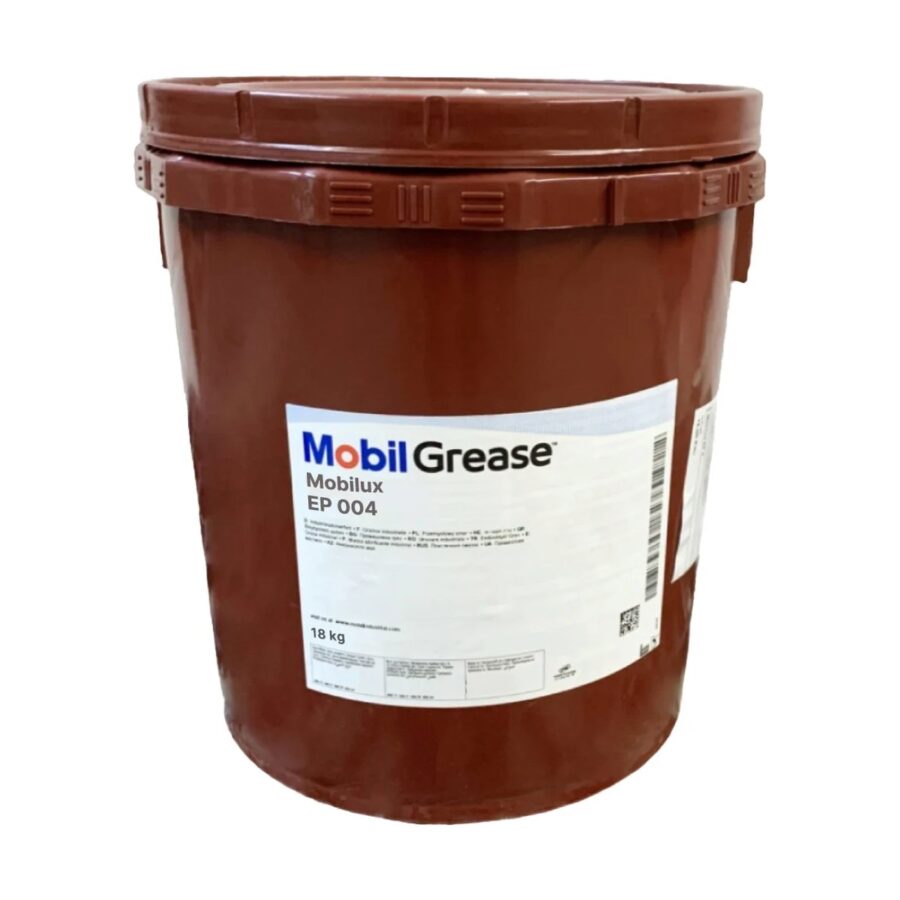
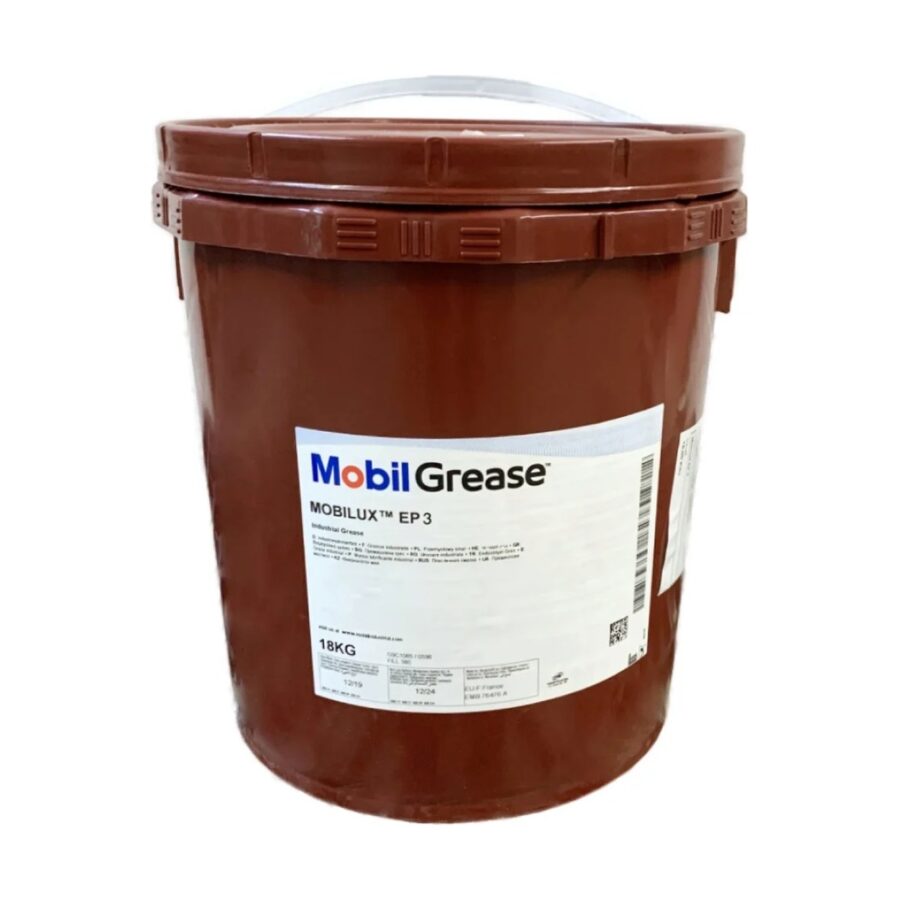
| Mineral oil | Cost-effective, good general performance | General bearings at normal temperatures | Mobilux EP |
| PAO (synthetic hydrocarbon) | Wide temperature range, long life, good low-temperature flow | Hot or long-interval bearings | Mobilith SHC |
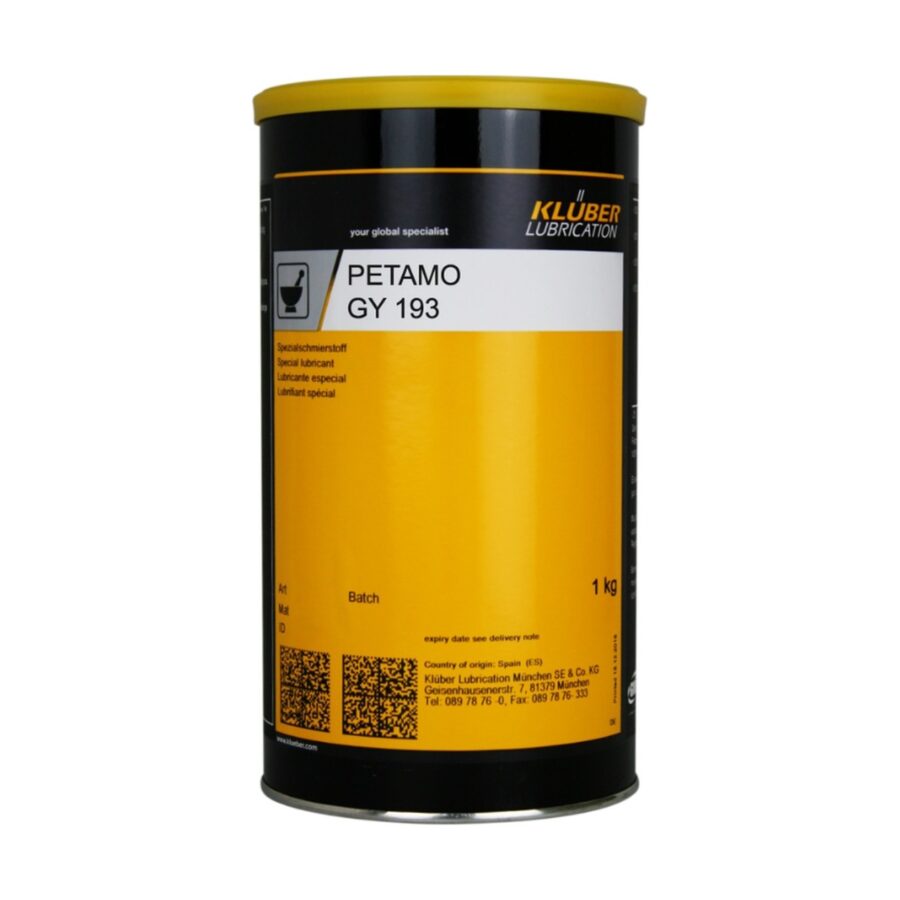
| Ester oil | Good at high temperature and high speed | Hot, fast bearings, long-term lubrication | Kluber PETAMO GY 193 |
| PFPE | Very high temperatures, chemical inertness | Kilns, ovens, aggressive media | Kluber BARRIERTA L 55 |
| Silicone | Very wide temperature range at light load | Light-load mechanisms, plastics | Special applications |
Synthetic base oils cost more per kilogram, but where they extend relubrication intervals, survive higher temperatures or prevent failures, they normally reduce total cost.
Step 4: Choose the thickener
The thickener is the fibrous structure that holds the oil. It sets the upper temperature limit, water resistance, mechanical stability and compatibility with other greases. The main families are summarised below; our thickener comparison goes into more detail.
- Lithium and lithium complex: versatile, widely used multipurpose and EP greases (e.g. Mobilux EP, Mobilith SHC, Mobil XHP 222).
- Polyurea: long life at elevated temperatures; very common for electric motors (e.g. Mobil Polyrex EM, Kluber PETAMO).
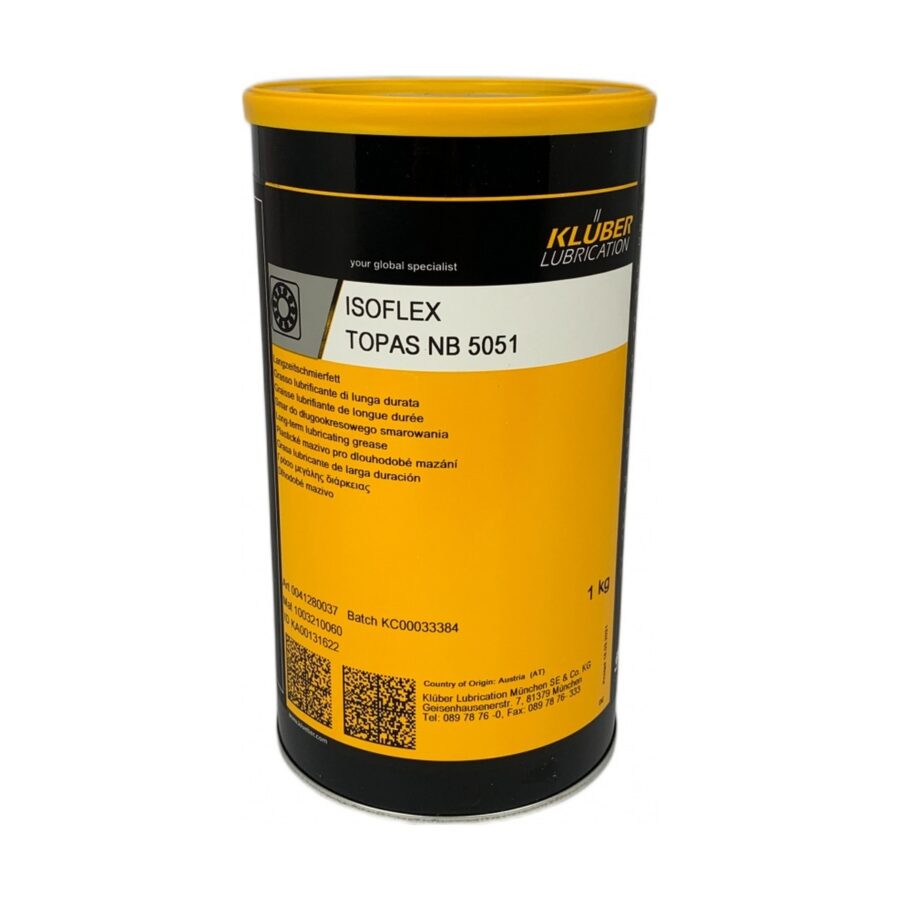
- Barium complex: good water resistance and load capacity (e.g. Kluber STABURAGS, ISOFLEX TOPAS NB).
- Calcium sulfonate complex: strong water resistance and corrosion protection for wet, heavily loaded equipment.
- PTFE with PFPE oil: extreme temperatures and chemical resistance (e.g. Kluber BARRIERTA L 55).
Step 5: Choose the consistency (NLGI grade)
Consistency is classified by NLGI grades from 000 (fluid) to 6 (block). NLGI 2 is the default for rolling bearings and grease guns. Softer grades (000 to 1) suit centralised systems, long feed lines and cold conditions; NLGI 3 helps where the grease must also seal, or on vertical shafts and vibrating equipment. Read NLGI grades explained for the full table.
Step 6: Add the special requirements
| Requirement | What to look for | Where to start |
|---|---|---|
| Heavy or shock loads | EP additives, solid lubricants, high base-oil viscosity | EP greases |
| High temperature | Synthetic or PFPE base oil, heat-stable thickener, low evaporation | High-temperature greases |
| Long intervals / lifetime | Oxidation-stable synthetic base oils | Synthetic & long-term greases |
| High speed | Low base-oil viscosity, high speed-factor rating | Bearing & spindle greases |
| Water and washdown | Water resistance and corrosion protection data on the TDS | Barium complex, calcium sulfonate or water-resistant EP greases |
| Possible food contact | NSF H1 registration (NSF) | Food-grade lubricants |
Step 7: Check compatibility before switching
If the point already contains grease, check whether the new product is compatible with the old one. Mixing incompatible thickeners can soften the grease so that it leaks out, or harden it so that it no longer feeds oil. When in doubt, clean out the old grease, or purge it with the new grease until only fresh grease emerges, then shorten the next relubrication interval. See grease compatibility: can you mix greases?.
A worked example: conveyor drive bearing in a cement plant
A conveyor drive bearing runs at about 80 °C in summer, at moderate speed, under heavy load, in a very dusty area, with weekly relubrication by grease gun. Working through the steps: a medium-to-high base-oil viscosity for the load; mineral or PAO base oil (the temperature is moderate); a lithium-complex or barium-complex thickener for mechanical stability; NLGI 2 for the grease gun and sealing; EP additives for heavy load. A water-resistant lithium-complex EP grease would be a typical choice, applied in the correct quantity each week so fresh grease purges dust from the seals.
What mistakes should you avoid?
- Choosing by brand or price alone instead of by operating conditions.
- Using the room temperature instead of the measured bearing temperature.
- Ignoring base-oil viscosity and comparing only NLGI grades.
- Mixing greases with different thickeners during a product change.
- Using one general-purpose grease for high-speed spindles, hot ovens and food lines.
- Over-greasing to “be safe”, which causes heat and seal damage.
How can you consolidate your greases?
Most plants can reduce dozens of greases to a short list: one general-purpose EP grease, one electric-motor grease, one high-temperature grease, one food-grade grease where needed, and a few specials for spindles or extreme temperatures. Fewer products mean fewer mix-ups, less stock and simpler training. Read lubricant consolidation for a step-by-step method.
Use the lubricant finder on our homepage to filter Kluber and Mobil greases by product type, industry, brand and maximum temperature.
Frequently asked questions
Is a more expensive grease always better?
No. The best grease is the one that matches the operating conditions. Premium synthetic greases pay off at high temperatures, long intervals or on critical bearings; for ordinary bearings a good mineral grease is often the right choice.
Can one grease cover my whole plant?
Usually not all of it, but a small set of two to five greases often covers most points. Very hot, very fast or food-contact points normally need their own products.
What information do you need to recommend a grease?
The equipment and bearing type, speed, temperature, load, environment, relubrication method and the grease you use now. A photo of the current label helps.
How do I know if my current grease is wrong?
Warning signs include grease that hardens or darkens quickly, oil leaking from housings, bearings running hot, frequent failures at the same point, and grease washing out.
Should I change grease in summer?
Not usually. Choose a grease that covers the full year’s temperature range, and shorten relubrication intervals for hot points in summer if needed.
Conclusion
Choosing the right industrial grease is a process, not a guess: define the conditions, match the base-oil viscosity and type, select the thickener and NLGI grade, add special requirements and check compatibility before you switch. Following these seven steps prevents most lubrication-related bearing failures and usually lets you run your plant on fewer, better products.
Need help applying this to your plant? Send us the equipment details or the product you use now and we will recommend a suitable Kluber or Mobil grade: request a quote and we reply within one business day.