Key takeaways
- At low temperatures, ordinary greases stiffen, raising starting torque and starving bearings of oil.
- Low-temperature greases use low-viscosity synthetic base oils and suitable thickeners to keep flowing at −40 °C to −70 °C.
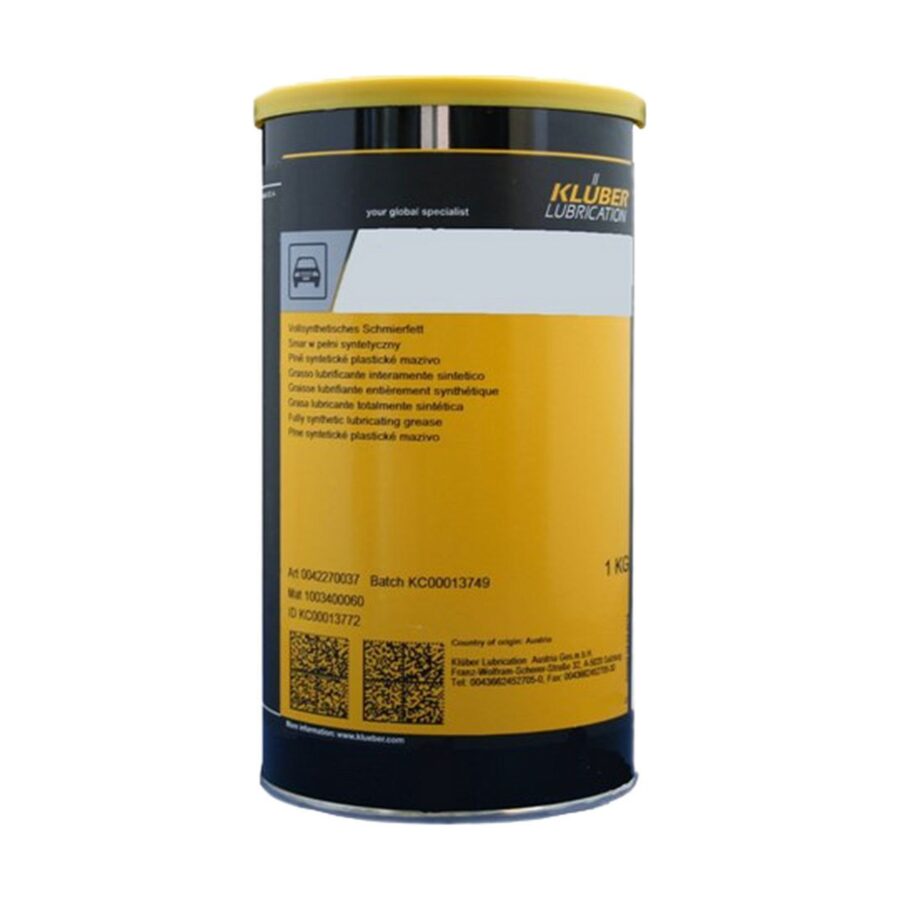
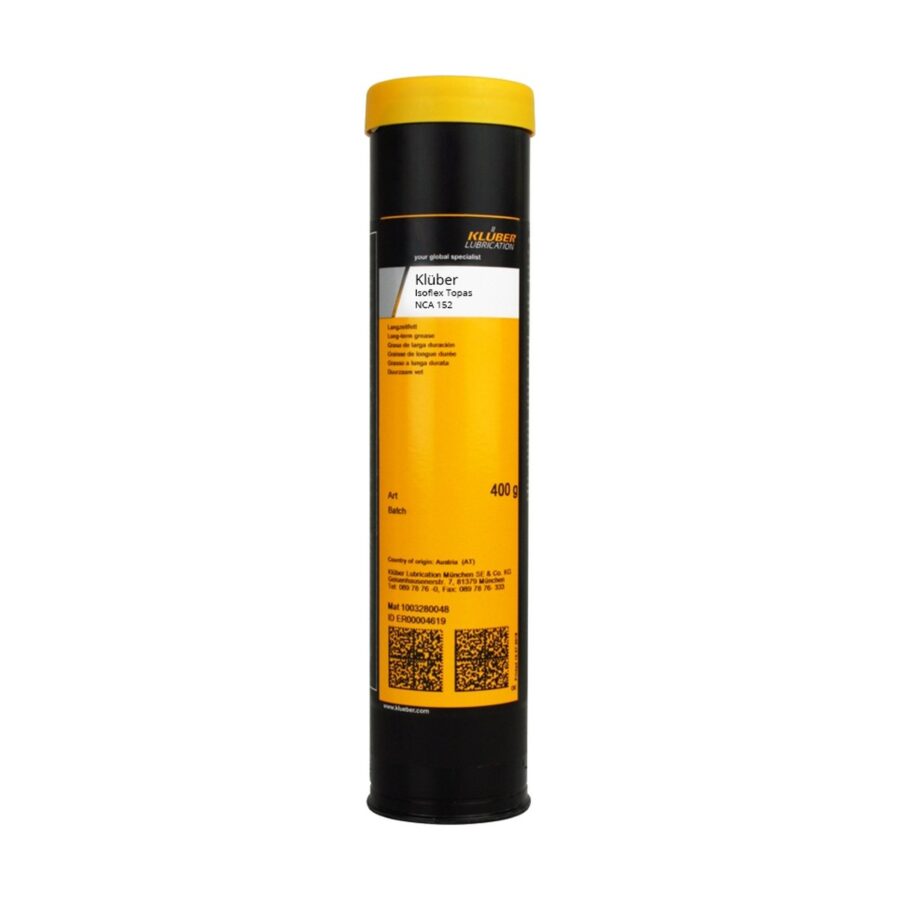
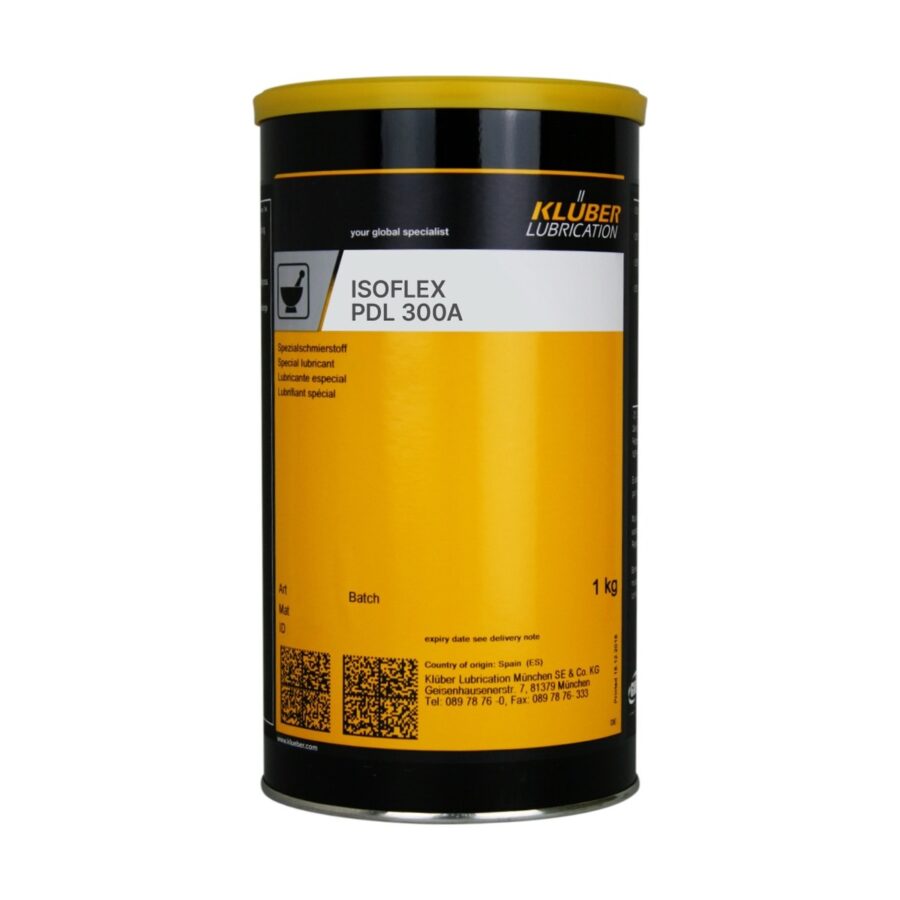
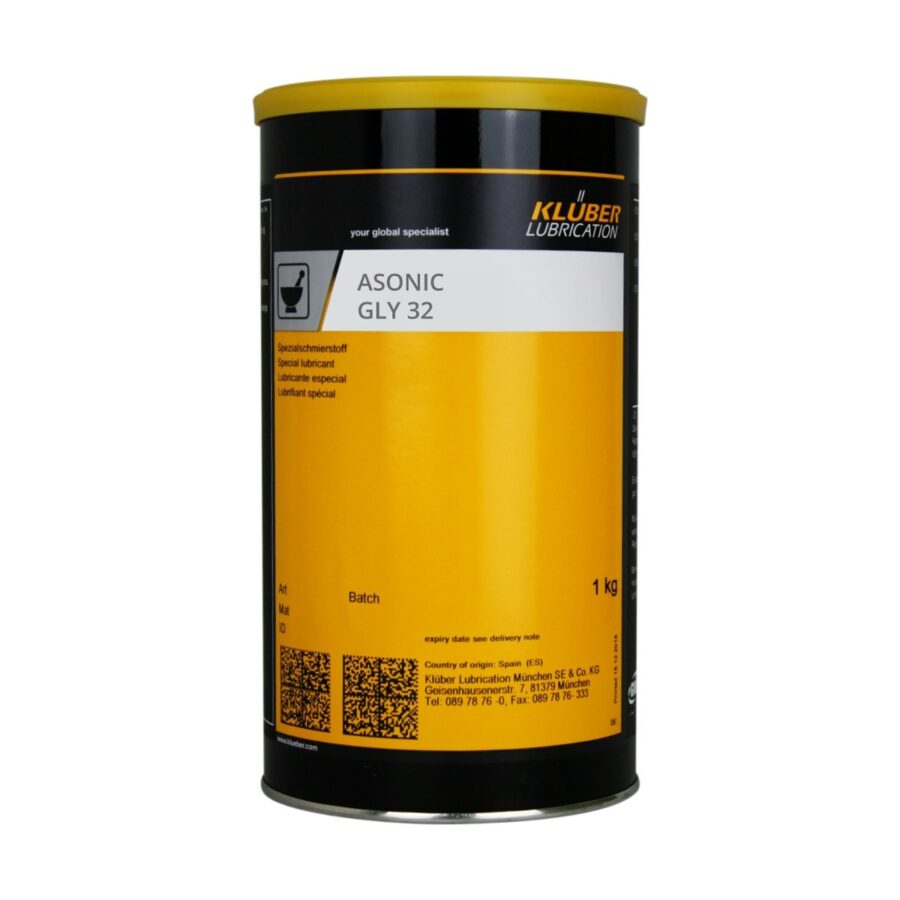
- ISOFLEX TOPAS NCA 52 (−50 °C), ASONIC GLY 32 (−50 °C), ISOFLEX PDB 38 CX 1000 (−60 °C) and ISOFLEX PDL 300A (−70 °C) cover most cold-store needs.
- Use an NSF H1 registered grease where food contact is possible, for example on conveyors in food cold stores.
- Check both ends of the range: equipment in cold stores may also see heat from motors or defrost cycles.
The GCC is hot, but its food supply depends on cold chains. Cold stores, blast freezers, ice plants and refrigerated distribution centres run equipment at −20 °C to −40 °C: conveyors, doors, fans, lifts and handling equipment. A grease chosen for a hot climate can become stiff and fail in these conditions. This guide compares low-temperature greases from Kluber that we supply. For the opposite extreme, see high-temperature greases compared.
Why do normal greases fail in the cold?
As temperature falls, the base oil becomes thicker and the grease stiffer. The bearing needs more torque to start, motors draw higher current, and the grease may not release enough oil to the contact, so the bearing runs partly dry. A stiff grease can also be pushed aside and not flow back into the rolling path (channelling too strongly). Mineral greases with base oils of 150–220 mm²/s, which are ideal for hot bearings, are often unsuitable below about −20 °C.
What makes a grease suitable for low temperatures?
- A low-viscosity synthetic base oil (often ester or PAO) that stays fluid at low temperature.
- A thickener that does not harden significantly in the cold.
- A low starting and running torque at the minimum temperature, shown in the TDS.
- A minimum service temperature at least 10 °C below the lowest temperature the equipment sees.
Low-temperature greases compared
| Grease | Service temperature | Composition (from TDS) | Typical use |
|---|---|---|---|
| ISOFLEX TOPAS NCA 52 | −50 °C to 130 °C | Synthetic, special calcium soap | Long-term lubrication of rolling bearings across a wide temperature range |
| ASONIC GLY 32 | −50 °C to 140 °C | Lithium soap, base oil about 25 mm²/s | Low-temperature, low-noise rolling bearings |
| ISOFLEX TOPAS NB 5051 | −60 °C to 130 °C | Barium complex soap, base oil about 30 mm²/s | Long-term lubrication at very low temperatures |
| ISOFLEX PDB 38 CX 1000 | −60 °C to 120 °C | Fluid grease, base oil about 13 mm²/s | Small gears and bearings at very low temperatures |
| ISOFLEX PDL 300A | −70 °C to 110 °C | Base oil about 7.5 mm²/s | Very low temperatures, low torque, high speed |
| ISOFLEX TOPAS L 32 Special | −60 °C to 130 °C | Synthetic | Low-temperature bearings |
| CENTOPLEX 24 DL | from −35 °C | Lithium-calcium soap | Low-temperature bearings where a mineral-based grease is acceptable |
Values are from the manufacturer’s data on our product pages. Check the current TDS for your application.
Which grease for a cold store at −25 °C?
For conveyors, roller bearings, door mechanisms and fan bearings in a typical cold store at about −25 °C, a synthetic grease with a minimum temperature of −40 °C to −50 °C gives a good margin. ISOFLEX TOPAS NCA 52 and ASONIC GLY 32 are common choices. If the bearing also runs warm, for example near a motor, check that the upper limit is sufficient.
Which grease for blast freezers at −40 °C and below?
Blast freezers and spiral freezers can reach −40 °C or lower. Here, greases rated to −60 °C or −70 °C are safer: ISOFLEX TOPAS NB 5051, ISOFLEX PDB 38 CX 1000 for small gears and lightly loaded mechanisms, and ISOFLEX PDL 300A for low-torque bearings. Equipment makers often specify a particular grease; follow it.
Do food cold stores need food-grade grease?
Where incidental food contact is possible, for example conveyors carrying unwrapped food, use an NSF H1 registered grease that is also rated for the low temperature. Kluberpaste UH1 84-201 (H1, from −45 °C) is used for assembly and some sliding applications. For bearing greases, ask us for an H1 grease with a suitable low-temperature rating. See Kluber UH1 vs Mobil SHC Cibus and the food plant lubrication checklist.
What about defrost cycles and condensation?
Cold stores go through defrost cycles, and equipment moves between cold rooms and warm loading areas. This creates condensation, which brings water into bearings. Choose greases with good water resistance and corrosion protection, use well-sealed bearings, and relubricate enough to keep fresh grease at the seals. Water contamination is one of the main causes of failure in cold-chain equipment. See {post(“water-contamination-in-oil”, “water contamination”)}.
How should low-temperature grease be applied and stored?
- Relubricate equipment at normal temperature where possible, for example during a planned warm-up, so the grease flows into the bearing.
- Use the quantity recommended for the bearing; do not overfill.
- Do not mix low-temperature greases with standard greases; residual stiff grease raises torque.
- Store grease at room temperature, not in the cold store, so it can be applied easily.
- Label grease points so the correct low-temperature grease is always used.
Which equipment in cold stores needs attention?
| Equipment | Typical concern |
|---|---|
| Conveyors and roller beds | Stiff grease raising drive torque; condensation |
| Fast-acting doors and door drives | Frequent cycling between cold and warm sides |
| Evaporator and condenser fans | Bearing life, low temperature and moisture |
| Forklift and handling equipment | Moving between cold rooms and loading bays |
| Spiral and tunnel freezers | Very low temperatures and food-contact areas |
| Automated storage and retrieval systems | Long travel paths, many bearings and guides |
Make a list of all lubricated points in the cold areas, the lowest temperature at each, and whether food contact is possible. This list is the basis for choosing a short list of greases.
How does energy use relate to grease choice?
Stiff grease increases the torque needed to turn bearings and gears, and motors use more energy to overcome it. In a large cold store with many conveyors, fans and drives running continuously, the difference adds up. Low-temperature greases with low starting and running torque reduce this extra load and can reduce motor trips on start-up after stops.
Should cold-store equipment be greased in the cold or warm?
Grease flows better when warm, so relubrication is easier and more effective when equipment is at normal temperature, for example during planned maintenance or a defrost period. If equipment must be greased in the cold, store the grease at room temperature, use small quantities and allow the equipment to run so the grease distributes. Avoid applying large quantities of cold, stiff grease, which can raise torque and temperature until it settles.
Can one grease cover both cold rooms and hot areas?
Wide-range synthetic greases such as ISOFLEX TOPAS NCA 52 (−50 °C to 130 °C) can cover many points in both cold rooms and normal areas, which simplifies the store. Very light greases such as ISOFLEX PDL 300A are excellent in the cold but have a lower upper limit, so they are not suitable for hot points. Where a site has both very cold and very hot equipment, two or three greases are usually needed.
Checklist before choosing a low-temperature grease
- Lowest temperature at each lubrication point, including blast freezer cycles.
- Highest temperature, for example near motors or during defrost.
- Speed and load of the bearing or gear.
- Food-grade requirement (NSF H1).
- Exposure to condensation, washdown or cleaning chemicals.
- Compatibility with the grease currently in use.
What are the signs of the wrong grease in a cold store?
- Motors that trip or struggle when starting after a stop.
- Squealing or noisy bearings in the first minutes of operation.
- Grease that looks hard or waxy at the seals.
- Higher energy use on conveyors and drives in winter or after changes.
- Bearing failures that show signs of poor lubrication despite regular greasing.
If these signs appear, check the grease type and its minimum service temperature against the actual temperature at the point, and plan a change to a suitable low-temperature grease. Clean out the old grease during the change, because a mixture of stiff and soft greases behaves unpredictably in the cold. Record the new grease on the point label and in the schedule, and brief the technicians who work in the cold areas.
Frequently asked questions
What grease works at −40 °C?
Synthetic low-temperature greases such as ISOFLEX TOPAS NCA 52 (from −50 °C), ASONIC GLY 32 (from −50 °C) or ISOFLEX TOPAS NB 5051 (from −60 °C) are suitable. Choose a minimum temperature below the lowest the equipment sees.
Can I use Mobilux EP 2 in a cold store?
Mobilux EP 2 is rated from about −20 °C. In cold stores below that, use a dedicated low-temperature grease.
Why do my cold-store motors trip on start-up?
Stiff grease raises starting torque. A low-temperature grease, correct fill quantity and good condition of the motor and bearings help.
Do low-temperature greases work at high temperatures too?
Many work across a wide range, for example ISOFLEX TOPAS NCA 52 from −50 °C to 130 °C, but very light greases such as ISOFLEX PDL 300A have a lower upper limit (110 °C). Check both ends.
Conclusion
In cold stores and freezers, use synthetic low-temperature greases with a minimum service temperature well below the coldest conditions: ISOFLEX TOPAS NCA 52 or ASONIC GLY 32 for typical cold rooms, and ISOFLEX TOPAS NB 5051, PDB 38 CX 1000 or PDL 300A for blast freezers. Use H1 greases where food contact is possible, protect bearings against condensation, and keep the correct grease clearly labelled.
Need help applying this to your plant? Send us the equipment details or the product you use now and we will recommend a suitable Kluber or Mobil grade: request a quote and we reply within one business day.