Key takeaways
- Both ranges are NSF H1 registered, so they can be used where incidental food contact is possible; check the registration for each product.
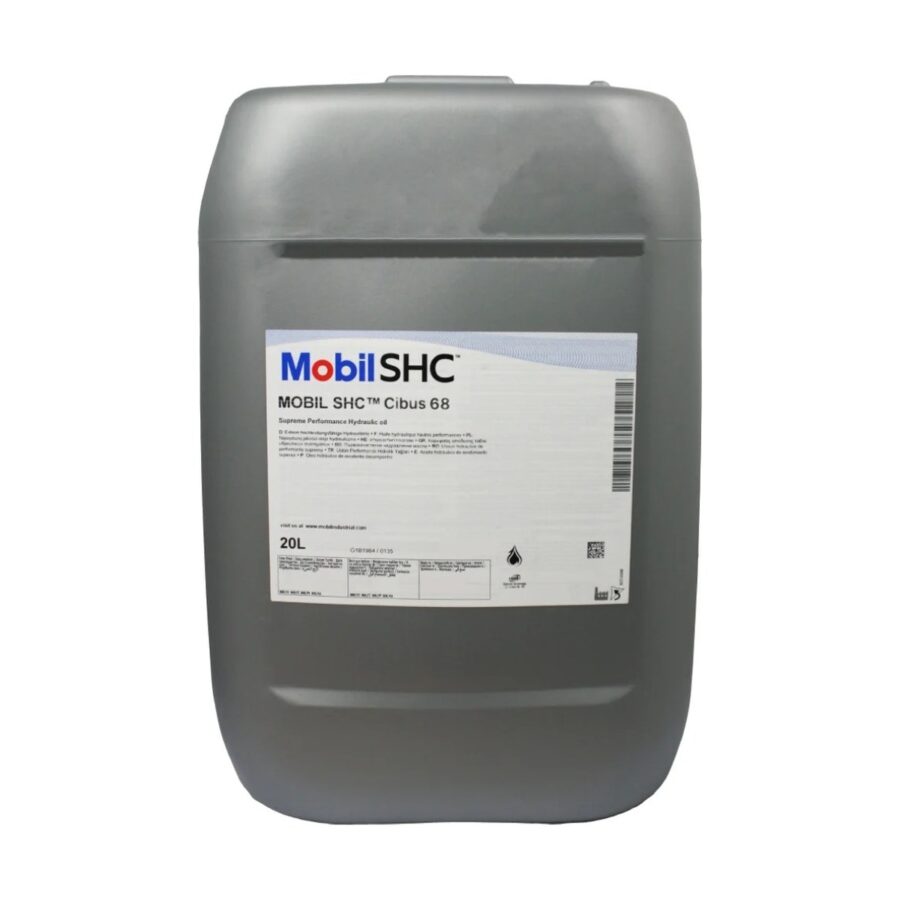
- Mobil SHC Cibus is mainly a PAO-based range of food machinery oils for hydraulics, gears, compressors and bearings.
- Kluber’s food-grade range (UH1 and other H1 products) is especially broad in greases, high-temperature lubricants and pastes.
- Many food plants use SHC Cibus oils for circulating systems and Kluber H1 greases and pastes for bearings, chains and assembly.
- Consolidating to a short list of H1 products, clearly labelled, reduces mistakes and audit findings.
Food and beverage plants in the UAE and GCC need lubricants that are safe if incidental food contact occurs. The two ranges we are asked about most are Kluber’s UH1 food-grade lubricants and Mobil SHC Cibus. This guide compares them so you can choose the right product for each lubrication point. For the background on registrations, see NSF H1, H2 and H3 explained.
What does NSF H1 registration mean?
NSF H1 registration means a lubricant’s formulation has been reviewed against the requirements for incidental food contact, based on FDA 21 CFR 178.3570. H1 lubricants may be used where contact with food is possible but should be minimised. H2 lubricants are for use where there is no possibility of food contact. Registration is product-specific, so each product used in a food area should be checked.
Kluber UH1 vs Mobil SHC Cibus at a glance
| Factor | Mobil SHC Cibus | Kluber food-grade (UH1 and H1) |
|---|---|---|
| Main product types | Oils: hydraulic, gear, circulating, compressor; some greases | Greases, oils, pastes and sprays |
| Base oils | Mainly PAO synthetic | PAO, ester, PFPE and others depending on product |
| High-temperature greases | Limited | Broad: BARRIERTA L 55 and Klubertemp up to 250–260 °C |
| Assembly and high-temperature pastes | Not a focus | Kluberpaste UH1 84-201, UH1 96-402 |
| Typical use | Hydraulic systems, gearboxes and compressors in food machinery | Bearings, chains, valves, ovens, assembly, sliding guides |
Where does Mobil SHC Cibus fit best?
SHC Cibus oils are a natural choice for the oil-filled systems of food machinery: hydraulic units on fillers and presses, gearboxes on mixers and conveyors, and circulating systems. Because they are PAO-based, they offer a wide temperature range and good oxidation stability. Mobil SHC Cibus 68 lists a viscosity index of 140. We supply grades from ISO VG 32 to 150. See the Mobil SHC Cibus range guide.
Where do Kluber food-grade lubricants fit best?
Kluber’s food-grade range is particularly strong where greases, extreme temperatures or pastes are needed:
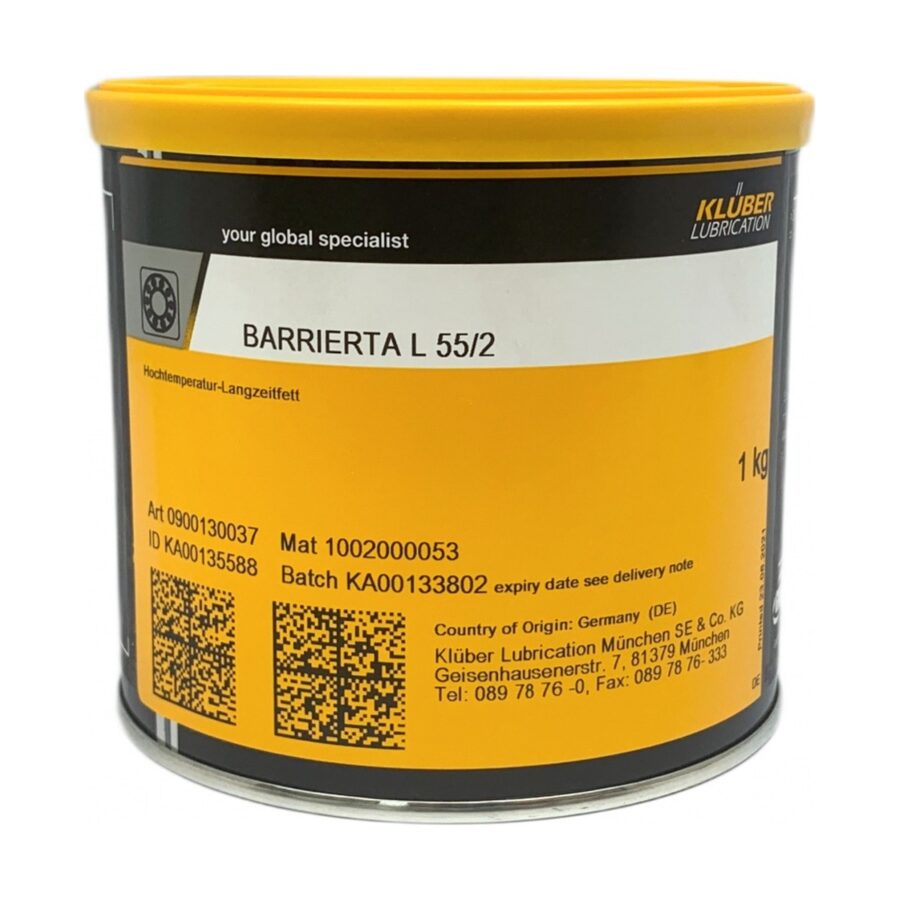
- BARRIERTA L 55/2: PFPE-based, −40 °C to 260 °C, NSF H1 registration 129 400; for oven conveyors, hot bearings and long-term lubrication.
- Klubertemp GR AR 555: −30 °C to 250 °C, NSF H1 registration 149 306; for high-temperature bearings and guides.
- Kluberalfa BF 83-102: −50 °C to 200 °C, NSF H1 registered; for high-temperature, high-speed bearings.
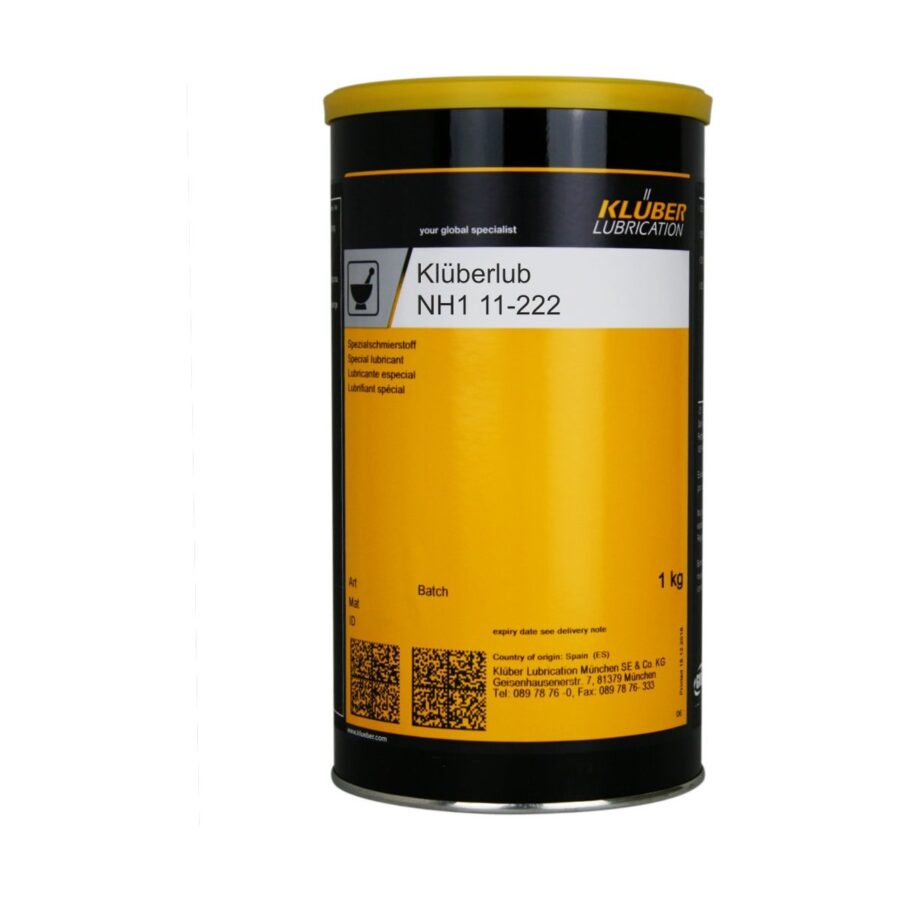
- Kluberlub NH1 11-222: aluminium complex grease, −15 °C to 100 °C, NSF H1; a multipurpose grease for general points.
- Paraliq GB 363: H1 grease for valves and fittings in the beverage and dairy industries.
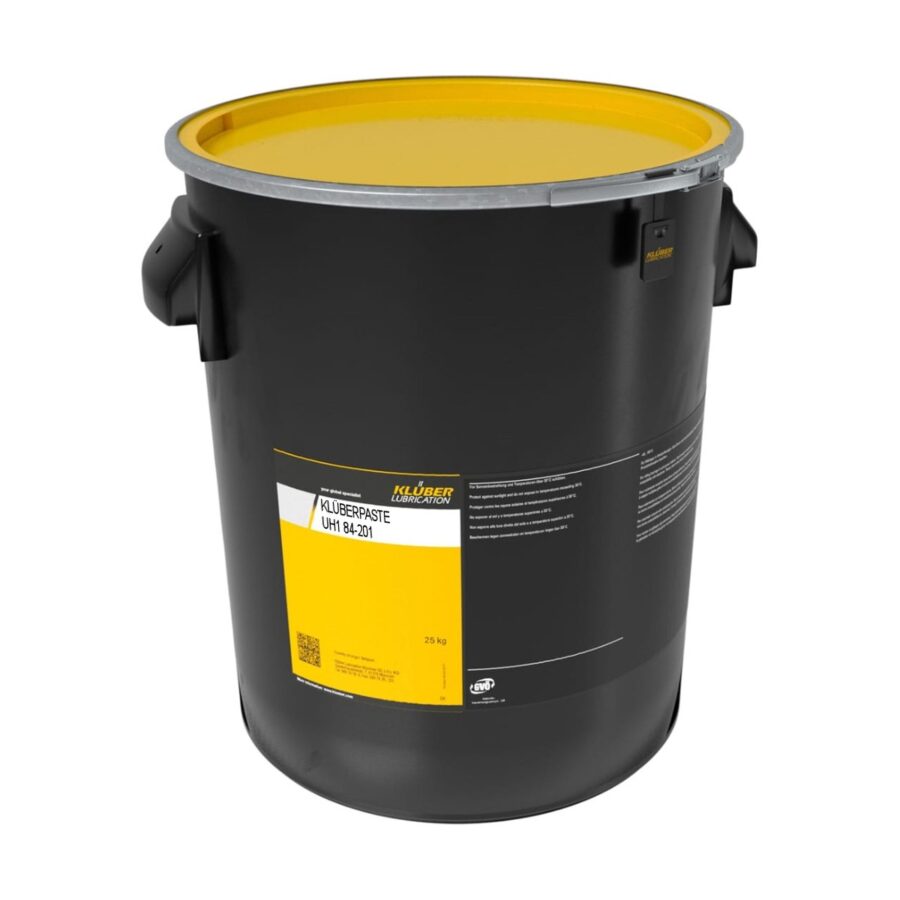
- Kluberpaste UH1 84-201: white H1 assembly paste, −45 °C to 120 °C.
For a detailed list, see Kluber food-grade UH1 lubricants.
Which should I use for high-temperature points?
Ovens, proofers, fryers and sterilisers often exceed the limits of standard H1 greases. For these, Kluber’s PFPE-based H1 greases, such as BARRIERTA L 55/2 and Klubertemp GR AR 555, are usually chosen because they resist evaporation and oxidation at 200–260 °C. Our guide to food-grade high-temperature grease explains how to select them.
Can a food plant use both brands?
Yes, and many do. A typical combination is SHC Cibus oils for hydraulics and gearboxes, plus Kluber H1 greases for bearings, chains and high-temperature points, and Kluber H1 pastes for assembly. What matters is that every product used in food areas is H1 registered, that products are not mixed incorrectly, and that each lubrication point is clearly labelled with the correct product.
How do you build a food-grade lubrication programme?
- Survey every lubrication point and classify the risk of food contact.
- Select H1 products for all points in or above the food zone; consider H1 for the whole plant to avoid mix-ups.
- Consolidate to a short list of products that cover all requirements.
- Label points and containers, and keep H1 and non-H1 products separate in the store.
- Keep NSF registration evidence, SDS and Halal certificates on file for audits.
See building a food-grade lubrication programme and Halal and Kosher lubricants in the GCC.
How do the ranges compare for common food plant equipment?
| Equipment | Typical H1 choice |
|---|---|
| Hydraulic units on presses and fillers | Mobil SHC Cibus 32, 46 or 68 |
| Gearboxes on mixers and conveyors | Mobil SHC Cibus 100 or 150, or the grade the gearbox maker specifies |
| General rolling bearings | Kluberlub NH1 11-222 or another H1 bearing grease |
| Oven and proofer conveyor bearings | BARRIERTA L 55/2 or Klubertemp GR AR 555 |
| High-speed hot bearings | Kluberalfa BF 83-102 |
| Valves and fittings in beverage and dairy lines | Paraliq GB 363 |
| Assembly of screws, seals and fittings | Kluberpaste UH1 84-201 |
| Hot screws in ovens | Kluberpaste UH1 96-402 |
These are typical choices; the right product for each point depends on load, speed, temperature, washdown and the equipment maker’s recommendation.
What about washdown and water resistance?
Food plants wash equipment frequently, often with hot water, steam and cleaning chemicals. These wash grease out of bearings and chains and can cause corrosion. When choosing H1 greases for washdown areas, look for water resistance and corrosion protection on the data sheet, use well-sealed bearings, and relubricate after washdown cycles where the maker recommends it. Oils in gearboxes and hydraulics should be checked for water contamination, because water speeds oxidation and reduces lubrication. Our guide on water contamination explains how to detect and remove it.
Which documents should a food plant keep?
- NSF H1 registration evidence for every lubricant used in food areas.
- Safety data sheets (SDS) for all lubricants.
- Technical data sheets showing temperature ranges and properties.
- Halal and Kosher certificates where customers or markets require them.
- A lubrication schedule listing each point, the product and the interval.
- Records of changes, so auditors can see when and why products changed.
Auditors for food safety standards such as those based on HACCP commonly ask for these documents. Keeping them organised in one place saves time during audits.
Should non-food areas also use H1 lubricants?
Some plants use H1 lubricants throughout the site, even in workshops and utility areas, so that a non-H1 product can never reach a food area by mistake. This simplifies stores and training, at the cost of using higher-priced products in places that do not strictly need them. Others keep a short list of H2 products for clearly separated areas. Either approach can work if it is documented and controlled.
How do consolidation and labelling reduce risk?
The more lubricants a plant uses, the higher the chance that the wrong one is applied. A food plant can often cover most needs with a handful of H1 products: one or two oils, a general grease, a high-temperature grease and a paste. Colour-coded labels on lubrication points, grease guns and containers make the correct choice obvious. See our guide on lubricant consolidation for a step-by-step method.
How do you change a food plant to H1 lubricants?
- Survey all points and list the current products.
- Select H1 replacements with matching viscosity, consistency and temperature range.
- Check compatibility with the current products and plan flushing or cleaning where needed.
- Change over one area at a time, starting with the highest food-contact risk.
- Update labels, lubrication schedules and stores records.
- Train the team on the new products and on keeping H1 and non-H1 products apart.
Changing over in a planned sequence avoids the situation where some points have been changed and others have not, and nobody is sure which product is where. Keep a record of the date and product for each point so auditors can follow the changes. After the changeover, review the product list once a year to remove any products that are no longer needed and to confirm that registrations and certificates are still current. New equipment should be added to the schedule with an H1 product chosen before it enters production. Ask equipment suppliers to state the lubricants used at the factory, so you can confirm they are H1 registered before installation.
Frequently asked questions
Is Mobil SHC Cibus NSF H1?
The SHC Cibus range is designed for food machinery and the products are NSF H1 registered. Check the registration for the specific grade you use.
Are all Kluber food-grade lubricants called UH1?
Many have UH1 in the name, but some H1 registered Kluber products, such as BARRIERTA L 55/2, Klubertemp GR AR 555 and Kluberlub NH1 11-222, do not. Check the NSF registration on the data sheet.
Can I mix SHC Cibus with a Kluber food-grade oil?
Mixing depends on base oil and additive compatibility. Do not mix without checking; drain and flush when changing products.
Do you supply Halal certified food-grade lubricants?
Many H1 lubricants also hold Halal certification. Ask us for the current certificate for the products you need.
Conclusion
Mobil SHC Cibus and Kluber’s H1 range are complementary. Use SHC Cibus PAO oils for hydraulics, gearboxes and circulating systems in food machinery, and Kluber H1 greases and pastes for bearings, chains, high-temperature points and assembly. Check the H1 registration of every product, consolidate to a short list and label everything clearly.
Need help applying this to your plant? Send us the equipment details or the product you use now and we will recommend a suitable Kluber or Mobil grade: request a quote and we reply within one business day.