Key takeaways
- NSF H1 lubricants are for use where incidental food contact may occur; H2 only where there is no possibility of contact.
- H3 covers soluble or edible oils used to clean and prevent rust on hooks, trolleys and similar equipment.
- H1 ingredients are limited to those permitted under FDA 21 CFR 178.3570, with a maximum level in food if contact occurs.
- Many plants use H1 products throughout production areas to remove the risk of mix-ups.
- Registration covers food safety, not performance: H1 products must still suit temperature, load and speed.
Food, beverage, pharmaceutical and packaging plants classify lubricants according to whether they could come into contact with the product. The NSF registration categories (H1, H2 and H3) are the most widely used reference worldwide and are expected by many food-safety standards and auditors. This guide explains what each category means, where it can be used, and how to choose and document food-grade lubricants.
The categories are administered by NSF, which registers lubricants based on their formulation and labelling. H1 formulations must use ingredients permitted under FDA 21 CFR 178.3570.
The NSF lubricant categories
| Category | Meaning | Typical use |
|---|---|---|
| H1 | Lubricants for use where incidental food contact may occur | Equipment above or near open product, packaging and product-contact zones |
| H2 | Lubricants for use where there is no possibility of food contact | Equipment away from product, e.g. forklifts, utilities |
| H3 | Soluble or edible oils | Cleaning and preventing rust on hooks, trolleys and similar equipment |
| HT1, HT2 | Heat-transfer fluids with or without possible incidental contact | Heat-transfer systems |
| 3H | Release agents for direct contact | Grills, ovens, cutting boards |
NSF H1 in detail
H1 lubricants are formulated from a limited list of base oils, thickeners and additives considered acceptable for incidental food contact. If contact occurs, the amount in food must stay below a very low limit (commonly cited as 10 ppm). They are designed for accidental contact through drips, leaks or splashes, not for intentional addition to food. Good practice is still to keep lubricant out of the product wherever possible.
H1 products carry the NSF registration mark and a registration number, which can be checked in NSF’s public listings.
NSF H2 in detail
H2 lubricants are for equipment and machine parts where there is no possibility of contact with food. They may contain ingredients not permitted in H1 products, but must not contain certain hazardous substances. They are used in areas such as workshops, utilities, and vehicles that do not enter production zones.
NSF H3 in detail
H3 products are soluble or edible oils used to clean and prevent rust on equipment such as hooks, trolleys and similar items, where they may contact food. They are typically simple edible oils and are not designed as general machine lubricants.
Where does each category belong in a food plant?
| Area | Typical category |
|---|---|
| Processing lines above or near open product | H1 |
| Filling, capping and packaging machines | H1 |
| Conveyors carrying unwrapped product | H1 |
| Ovens, fryers and dryers in production | H1 (high-temperature grades) |
| Hooks and trolleys in meat processing | H3 (for rust prevention/cleaning) |
| Workshops, compressor rooms, boiler houses | H2 or conventional (if clearly separated) |
| Forklifts and vehicles outside production | Conventional or H2 |
Why do many plants use H1 lubricants everywhere?
Keeping both H1 and non-food-grade lubricants in the same plant creates a risk: the wrong grease gun or oil can is used on the wrong machine. Many food plants therefore standardise on H1 products throughout production areas, and keep conventional products only in clearly separated areas. Modern synthetic H1 oils and greases perform well enough to make this practical in most applications.
H1 performance: what to check
Early food-grade lubricants were often simple white mineral oils with limited performance, which gave the category a reputation it no longer deserves. Today, many H1 products use synthetic PAO, ester, PAG or PFPE base oils with H1-permitted additives, and they handle heavy loads, high speeds and temperatures well beyond 200 °C in some grades. Still, H1 additive options are narrower than for conventional products, so compare the data sheets carefully:
- Viscosity grade and viscosity index at your operating temperature.
- Upper and lower operating temperature limits.
- Load-carrying tests such as FZG for gear oils or four-ball weld load for greases.
- Water resistance and washout behaviour where equipment is cleaned often.
- Compatibility with seals, paints and the lubricant being replaced.
Related standards
- ISO 21469: specifies hygiene requirements for the formulation, manufacture and use of lubricants with incidental product contact. Some manufacturers certify their production sites to it.
- HACCP, ISO 22000 and FSSC 22000: food-safety management systems that expect lubricants to be controlled as potential chemical hazards.
- Halal and Kosher: separate requirements about ingredient origin and production; check certificates separately.
What does NSF registration not tell you?
- Whether the product suits the temperature, load and speed of your application.
- Whether it is Halal or Kosher certified.
- Whether it meets other customer or regulatory requirements.
- Whether it is compatible with the lubricant already in the machine.
Food-grade products in our range
| Product | Type |
|---|---|
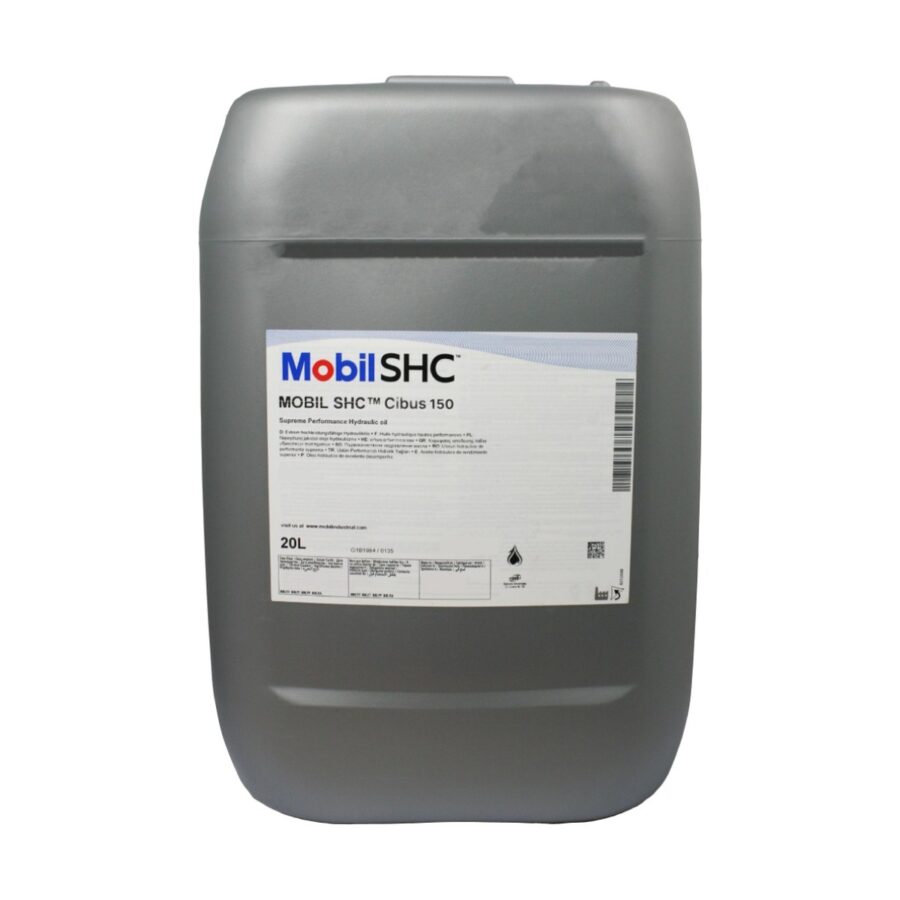
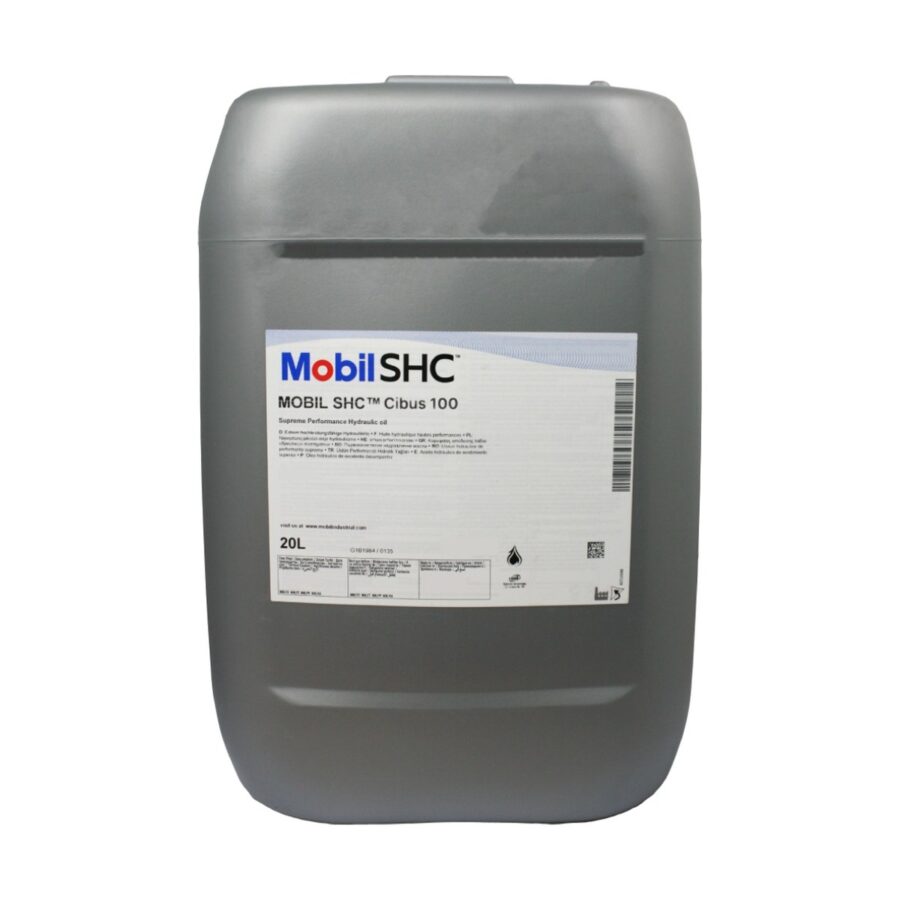
| Mobil SHC Cibus 32–150 | NSF H1 synthetic oils for gears, hydraulics, bearings |
| Klubersynth UH1 14-1600 | H1 synthetic grease |
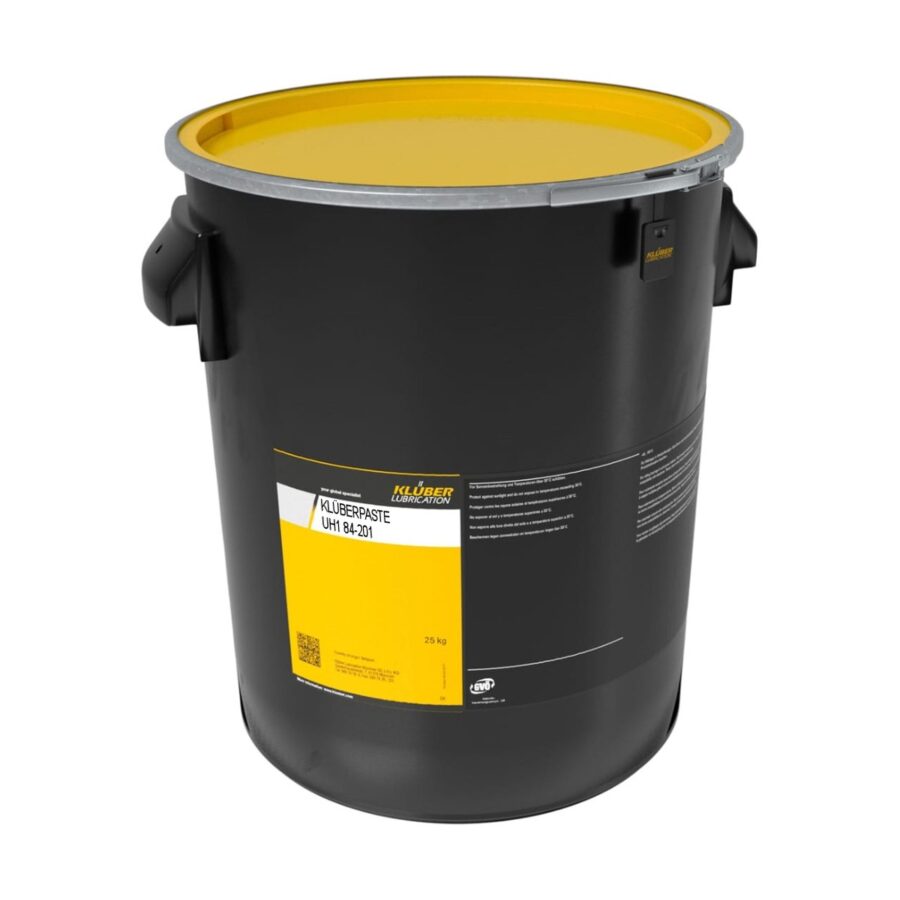
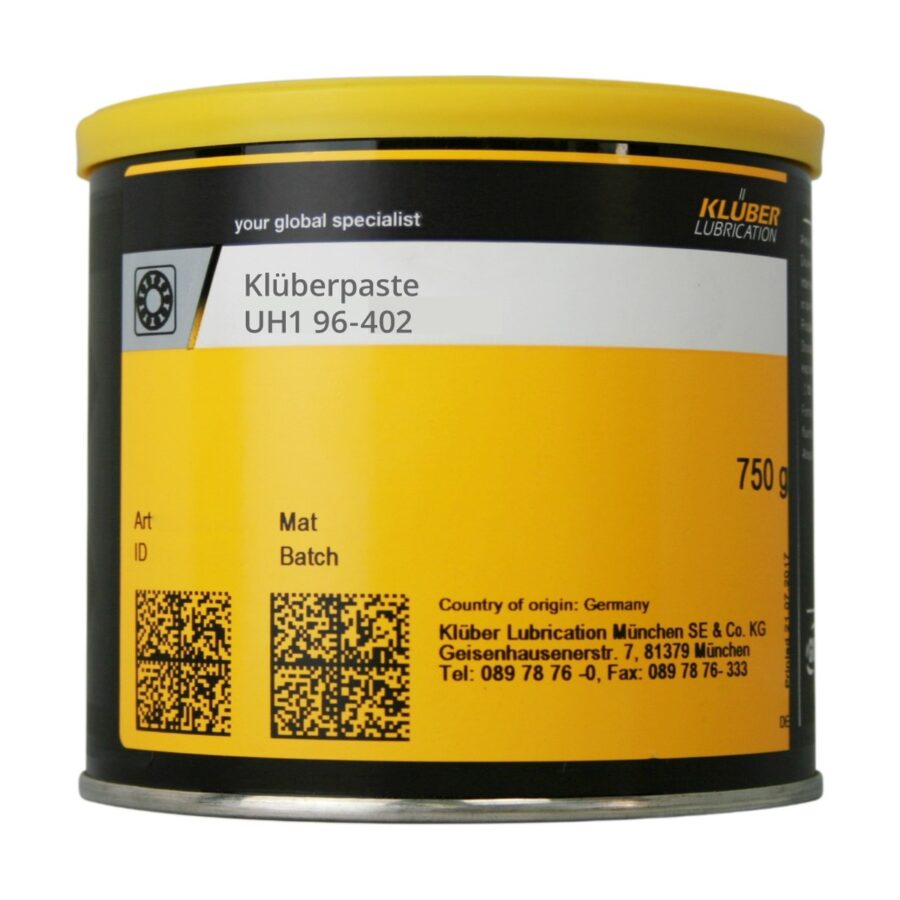
| Kluberpaste UH1 84-201 / UH1 96-402 | H1 assembly and high-temperature pastes |
| Kluber BARRIERTA L 55 | High-temperature PFPE grease; NSF H1 for the grades stated |
| Klubertemp GR AR 555 | High-temperature grease with NSF H1 registration per product data |
| Paraliq GB 363, Kluberlub NH1 11-222 | H1 valve grease and multipurpose lubricant |
Always check the individual product page and data sheet for the registration that applies to the exact grade. Browse our NSF H1 food-grade lubricants.
Documentation for audits
- Keep a list of every lubricant used and where.
- File the TDS, SDS and NSF registration details for each product.
- Keep Halal/Kosher certificates where required.
- Record lubrication tasks and product changes.
- Review the list at least once a year.
How does NSF registration work?
The lubricant manufacturer submits the full formulation and the product label to NSF. NSF reviews each ingredient against the permitted lists, including FDA 21 CFR 178.3570 for H1 products, and checks that the label is accurate. Once approved, the product receives a registration number and a category code and appears in the NSF White Book listing of nonfood compounds. The registration applies to that exact formulation and label: if the formulation changes, it must be reviewed again. This is why buyers should check the registration of the precise grade they order, not just the product family name.
Switching a plant to H1 lubricants
- Survey every lubrication point and list the current product at each one.
- Choose H1 replacements by viscosity, temperature, load and speed, not by registration alone.
- Check compatibility with the existing lubricant, seals and paints; plan a flush where products are not compatible.
- Change one machine or line at a time and monitor temperatures and noise after the change.
- Relabel lubrication points, grease guns and containers, and use colour coding to prevent mix-ups.
- Remove the old products from production areas so they cannot be used by mistake.
- Update the lubricant list, SDS file and HACCP documentation.
A worked example: a bakery audit
A bakery in Dubai prepares for an FSSC 22000 audit. Its lubrication survey finds 14 products in use, including two conventional greases on the oven conveyor and an H2 gear oil on a mixer gearbox mounted above the dough line. The team replaces the oven conveyor greases with a high-temperature H1 grease, changes the mixer gearbox to an H1 synthetic gear oil of the same ISO VG grade, and consolidates the remaining products to six H1 lubricants. Each lubrication point is labelled with the product name and colour code, and the TDS, SDS and NSF registration of each product are filed together. At the audit, the lubricant control section is closed with no findings.
How do you choose an H1 product?
Select an H1 product the same way as any lubricant: by viscosity, temperature range, load, speed and environment, then confirm its registration. Our guide on building a food-grade lubrication programme shows how to consolidate to a short list of H1 products.
What are the most common mistakes?
- Assuming “food-grade” on a label means H1 without checking the registration.
- Using H2 products above open product.
- Choosing an H1 grease without checking its temperature and load rating.
- Keeping H1 and non-H1 products in the same, unlabelled grease guns.
- Not keeping registration documents for audits.
Frequently asked questions
Is an H1 lubricant edible?
No. H1 lubricants are acceptable for incidental contact within strict limits; they are not food and should be kept out of the product as far as possible.
Do H1 lubricants perform worse?
Not necessarily. Many synthetic H1 oils and greases match or exceed conventional products in demanding applications.
How do I check an NSF registration?
The product label and data sheet show the registration; NSF publishes listings of registered products.
What is ISO 21469?
A standard for the hygienic formulation, manufacture and use of lubricants with incidental product contact.
Are H1 lubricants Halal?
Not automatically. Halal and Kosher status are separate; check each product’s documentation.
Conclusion
NSF H1, H2 and H3 categories tell you where a lubricant can be used in a food plant. H1 products are for zones where incidental contact may occur, H2 for zones with no possible contact, and H3 for cleaning and rust prevention on equipment such as hooks. Many plants simplify by using H1 throughout production areas. Whatever you choose, check performance as well as registration, and keep the documentation ready for audits.
Need help applying this to your plant? Send us the equipment details or the product you use now and we will recommend a suitable Kluber or Mobil grade: request a quote and we reply within one business day.