Key takeaways
- The thickener holds the base oil and sets the grease’s temperature limit, water resistance and mechanical stability.
- Lithium and lithium complex are versatile all-rounders; polyurea excels in electric motors and long life.
- Barium complex and calcium sulfonate complex greases resist water and carry high loads.
- PTFE thickeners with PFPE oils cover extreme temperatures and chemicals but must never be mixed with conventional greases.
- Thickener type is the main factor in grease compatibility, so check it before changing products.
A lubricating grease is mostly base oil, typically around 70–95%, held in a thickener, plus additives. The thickener forms a fibrous or particulate network that holds the oil like a sponge and releases it to the bearing as it runs. Its chemistry largely decides how hot the grease can run, how well it resists water, how stable it stays under shear, and which other greases it can safely be mixed with.
This guide compares the thickener families used in industrial greases, including those in the Kluber and Mobil ranges we supply, so you can choose the right type for each application.
What is the difference between soap and non-soap thickeners?
Thickeners fall into two broad groups. Soap thickeners are made by reacting a fatty acid with a metal hydroxide (lithium, calcium, sodium, barium, aluminium). Complex soaps add a second acid, which raises the drop point and improves high-temperature performance. Non-soap thickeners include polyurea, clay (bentonite), silica and PTFE.
Thickener comparison table
| Thickener | Temperature capability | Water resistance | Main strengths | Typical uses |
|---|---|---|---|---|
| Lithium (simple) | Moderate | Good | Versatile, economical | General bearings |
| Lithium complex | High | Good | Higher drop point, mechanical stability | Industrial and EP bearings |
| Calcium sulfonate complex | High | Excellent | Load capacity, corrosion protection | Wet, heavily loaded equipment |
| Polyurea | High | Good | Long life, low noise | Electric motors, sealed bearings |
| Barium complex | High | Very good | Water resistance, pressure absorption | Rolling and plain bearings |
| Aluminium complex | Moderate–high | Very good | Water resistance, adhesion | Food and wet applications |
| Clay (bentonite) | Very high (no drop point) | Good | Heat resistance | Slow, hot bearings |
| PTFE (with PFPE oil) | Very high | Excellent | Chemical inertness | Kilns, ovens, chemicals |
Lithium and lithium complex
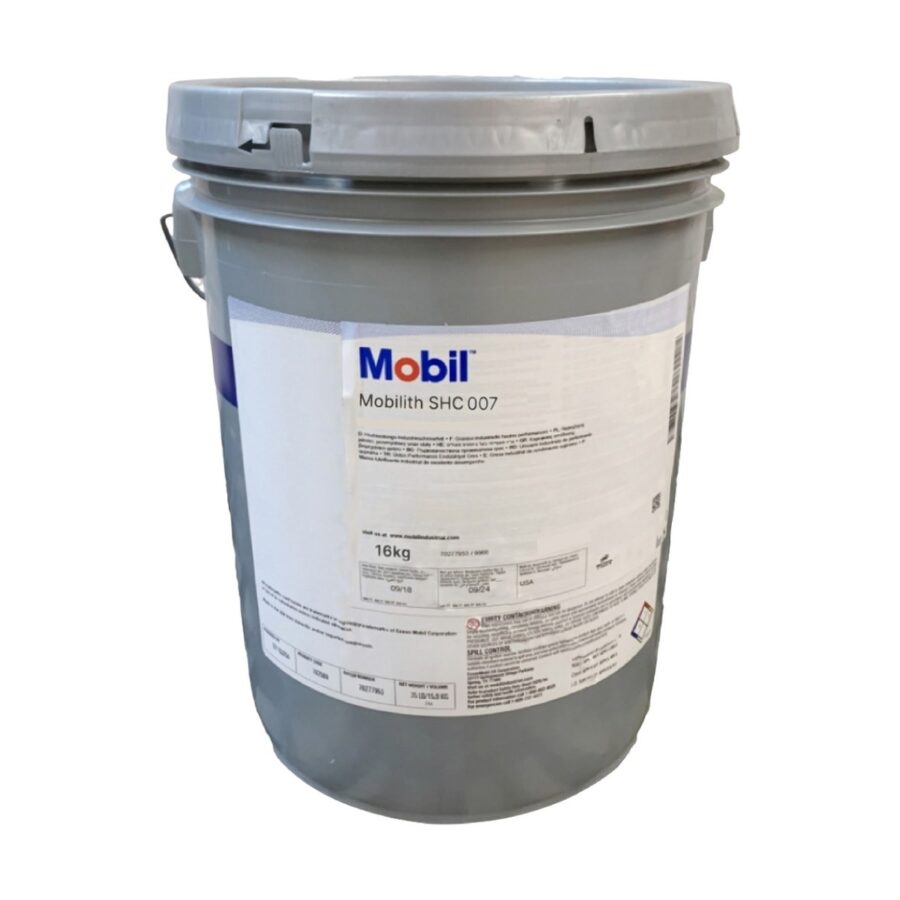
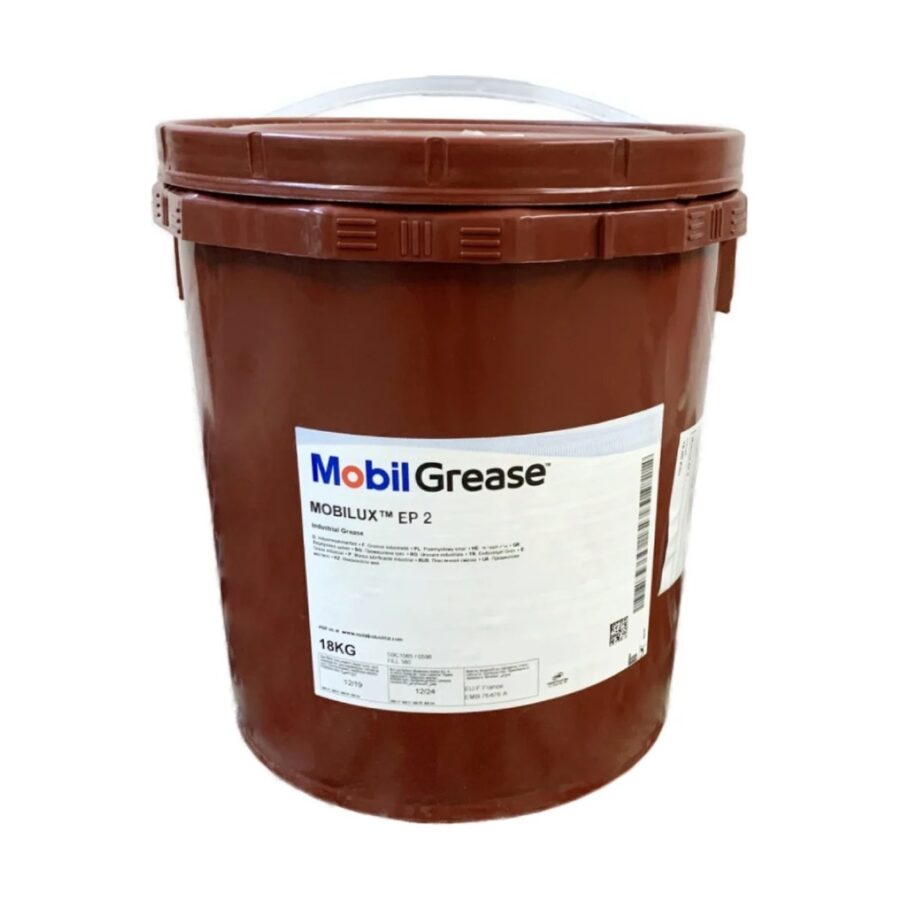
Lithium greases became the industry’s workhorse because they combine good water resistance, mechanical stability and ease of manufacture. Simple lithium greases have a moderate upper temperature limit. Lithium-complex greases raise that limit and improve stability, which is why many industrial EP greases use them. Mobilux EP is a lithium EP grease family; Mobilith SHC and Mobil XHP 222 are lithium-complex greases.
Polyurea
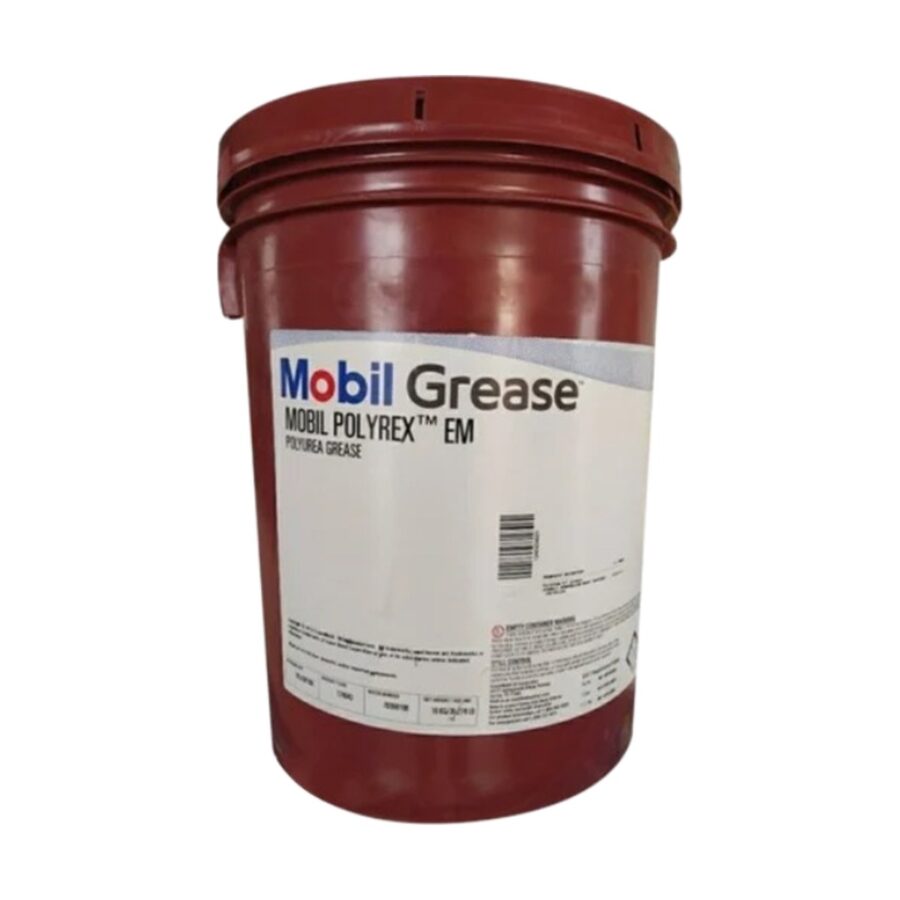
Polyurea greases are non-soap greases known for long life at elevated temperatures and good oxidation resistance. They are widely used in electric motor bearings, fans and sealed-for-life bearings. Mobil Polyrex EM is a polyurea electric motor grease; Kluber PETAMO GY 193, according to its product data, combines an ester oil with a polyurea thickener for long-term, high-temperature lubrication. Polyurea greases should not be mixed casually with other thickener types.
Calcium sulfonate complex
Calcium sulfonate complex greases offer excellent water resistance, natural load-carrying ability and corrosion protection. They are popular in steel mills, paper mills, marine and mining equipment where water and heavy loads combine.
Barium complex
Barium complex greases are known for water resistance and high load capacity. Kluber’s STABURAGS family uses this thickener; according to its product data, STABURAGS NBU 12/300 KP combines mineral oil with a barium complex soap for good wear protection, pressure absorption and corrosion protection. Kluber ISOFLEX TOPAS NB grades combine barium complex thickeners with synthetic oils for long-term lubrication.
Clay and other inorganic thickeners
Clay (bentonite) greases have no true drop point, so they do not melt. That makes them useful for slow, hot bearings. However, the base oil still oxidises at high temperature, so the oil, not the thickener, limits life.
PTFE with PFPE oil
Greases made from perfluoropolyether (PFPE) oil and PTFE thickener are chemically inert, non-flammable and stable at very high temperatures. Kluber BARRIERTA L 55 is a well-known example, used in kilns, ovens and chemical environments. They are not miscible with conventional greases, so bearings must be cleaned completely before switching.
What is the difference between drop point and service temperature?
The drop point is the temperature at which a grease becomes fluid enough to drip in a standard laboratory test. It is not the maximum usable temperature. The upper service temperature, often well below the drop point, is the figure to use for selection, because above it the base oil oxidises or evaporates too fast for a useful life.
How does the thickener affect grease compatibility?
When two greases with different thickeners mix, the combined structure can collapse (soften and leak) or harden. Some thickener pairs are generally compatible and others are known to be poor. Use general compatibility charts as a first check only, and ask the manufacturer for critical changes. Our guide on grease compatibility explains the safe changeover procedure.
Which thickener suits which application?
| Application | Typical thickener choice |
|---|---|
| General plant bearings | Lithium or lithium complex |
| Electric motors, fans | Polyurea |
| Wet, heavily loaded equipment | Calcium sulfonate or barium complex, or a water-resistant lithium-complex EP grease |
| Very high temperature or chemicals | PTFE with PFPE oil |
| Slow, hot bearings | Clay or high-temperature complex greases |
| Food contact | Any of the above, provided it is NSF H1 registered |
What are the most common mistakes?
- Choosing a grease on drop point instead of service temperature.
- Changing thickener type without cleaning out or purging the old grease.
- Assuming all “lithium greases” are interchangeable.
- Topping up a PFPE grease with a conventional grease, or vice versa.
Additives and solid lubricants work with the thickener
The thickener is only part of the picture. Additives tailor the grease for its job:
- Antioxidants slow the ageing of the base oil, which is essential for long-life and high-temperature greases.
- Anti-wear and extreme-pressure (EP) additives protect surfaces under heavy and shock loads.
- Corrosion inhibitors protect bearings from rust when water is present.
- Solid lubricants such as molybdenum disulphide (MoS₂), graphite or PTFE keep protecting when the oil film breaks down, for example under very slow motion or shock loads.
- Tackifiers improve adhesion for open gears, chains and vertical surfaces.
Two greases with the same thickener can therefore perform very differently. A lithium-complex EP grease with good corrosion inhibitors behaves very differently in a wet steel mill from a lithium-complex grease designed for a dry electric motor.
Thickener and base-oil combinations in practice
| Product (examples from our range) | Thickener | Base oil | Designed for |
|---|---|---|---|
| Mobilux EP 2 | Lithium | Mineral | General industrial bearings |
| Mobilith SHC 220 | Lithium complex | Synthetic (PAO) | Hot, heavily loaded, long-interval bearings |
| Mobil Polyrex EM | Polyurea | Mineral | Electric motor bearings |
| Kluber PETAMO GY 193 | Polyurea | Ester | Long-term, high-temperature bearings |
| Kluber STABURAGS NBU 12/300 KP | Barium complex | Mineral | Long-term rolling and plain bearings |
| Kluber BARRIERTA L 55/2 | PTFE | PFPE | Very high temperatures, chemicals |
Thickener and base-oil details for each product are taken from the manufacturers’ product data. Always confirm on the current technical data sheet before making a selection or a changeover.
What is oil bleed and why does it matter?
Every grease releases (“bleeds”) a small amount of oil from its thickener over time; this is how it lubricates. The rate depends on the thickener type, its concentration and the temperature. Too little bleed can starve a bearing; too much makes the grease dry out quickly and leak. Data sheets may show an oil-separation value from a standard test. Long-life greases are designed for a steady, controlled bleed over many months.
Which thickeners work best in GCC conditions?
High ambient temperatures, intense sun on outdoor equipment and fine dust shape thickener choice in the UAE and the wider GCC. Greases with heat-stable thickeners (lithium complex, polyurea, calcium sulfonate complex) resist softening and oil bleeding on hot summer days better than simple soap greases. For outdoor equipment exposed to dust, a thickener with good mechanical stability helps the grease keep sealing out particles. In humid coastal plants and ports, water-resistant thickeners with strong corrosion inhibitors protect bearings from rust during humid nights and washdowns.
How do you find the thickener on a data sheet?
Kluber data sheets usually list “Chemical composition, thickener” and “Chemical composition, type of oil” in the product data table. Mobil data sheets describe the thickener in the product description (for example “lithium complex” or “polyurea”) and list the base-oil viscosity in the typical properties table. If the thickener is not stated, ask your supplier before mixing the product with another grease.
Frequently asked questions
Which thickener is best?
There is no single best thickener. Choose for the application: temperature, water, load, speed and compatibility with the grease already in the bearing.
Is lithium grease suitable for high temperatures?
Simple lithium greases have a moderate limit. Lithium-complex, polyurea or synthetic greases are better choices for higher temperatures; check the upper service temperature.
Why are polyurea greases used in motors?
They offer long life at elevated temperatures, good oxidation resistance and low noise, which suits electric motor bearings.
Can I mix lithium and polyurea greases?
They can be incompatible. Clean out or purge thoroughly when changing between them.
Do thickeners affect food-grade status?
Food-grade status depends on NSF H1 registration of the complete grease, not on thickener type alone.
Conclusion
The thickener is the part of a grease that decides how it copes with heat, water, shear and other greases. Lithium and lithium-complex greases cover most general applications, polyurea suits motors and long life, barium and calcium sulfonate complexes handle water and load, and PTFE/PFPE greases solve the hottest and most chemically aggressive applications. Match the thickener to the application, and always check compatibility before changing products.
Need help applying this to your plant? Send us the equipment details or the product you use now and we will recommend a suitable Kluber or Mobil grade: request a quote and we reply within one business day.