Key takeaways
- The NLGI grade describes how stiff or soft a grease is, measured by worked cone penetration at 25 °C.
- NLGI 2 is the default for most rolling bearings and grease guns.
- Softer grades (000–1) suit centralised systems, long lines, gearboxes and cold starts; NLGI 3 helps sealing and vertical shafts.
- NLGI says nothing about base-oil viscosity, temperature range, load capacity or water resistance.
- Two NLGI 2 greases can behave completely differently, so always read the full data sheet.
Every grease data sheet lists an NLGI grade, and it is often the first number buyers look at. It is also one of the most misunderstood. The NLGI grade describes the consistency of a grease (how stiff or soft it is), not how good it is, how much load it carries or how hot it can run. Understanding what NLGI does and does not tell you helps you choose the right grease and avoid expensive mistakes.
The classification is maintained by the NLGI (originally the National Lubricating Grease Institute) and is used by lubricant makers worldwide, including Kluber and Mobil.
How is grease consistency measured?
Consistency is measured by a cone penetration test standardised in DIN ISO 2137 and ASTM D217. A grease sample is first “worked” 60 double strokes in a standard grease worker, which simulates the shearing it experiences in use. A standard cone is then released into the grease at 25 °C for five seconds, and the depth it sinks in is measured in tenths of a millimetre. This is the worked penetration.
A soft grease lets the cone sink deeper and has a high penetration value and a low NLGI number. A stiff grease resists the cone, so it has a low penetration value and a high NLGI number.
The NLGI grades at a glance
| NLGI grade | Worked penetration (0.1 mm) | Consistency | Typical applications |
|---|---|---|---|
| 000 | 445–475 | Fluid | Enclosed gear units, centralised systems |
| 00 | 400–430 | Semi-fluid | Enclosed gears, centralised systems |
| 0 | 355–385 | Very soft | Centralised systems, cold conditions |
| 1 | 310–340 | Soft | Centralised systems, low temperatures, some bearings |
| 2 | 265–295 | Medium (like peanut butter) | Most rolling bearings, grease guns |
| 3 | 220–250 | Firm | Large bearings, vertical shafts, sealing, vibration |
| 4 | 175–205 | Very firm | Special applications |
| 5 | 130–160 | Hard | Rarely used |
| 6 | 85–115 | Block | Open plain bearings, block greases |
Data sheets often give the lower and upper worked-penetration limits rather than a single figure; the NLGI grade is the band those values fall into. Some greases sit between two grades and are described as, for example, NLGI 1–2 or 2–3.
How do you choose the right NLGI grade?
NLGI 2: the default for rolling bearings
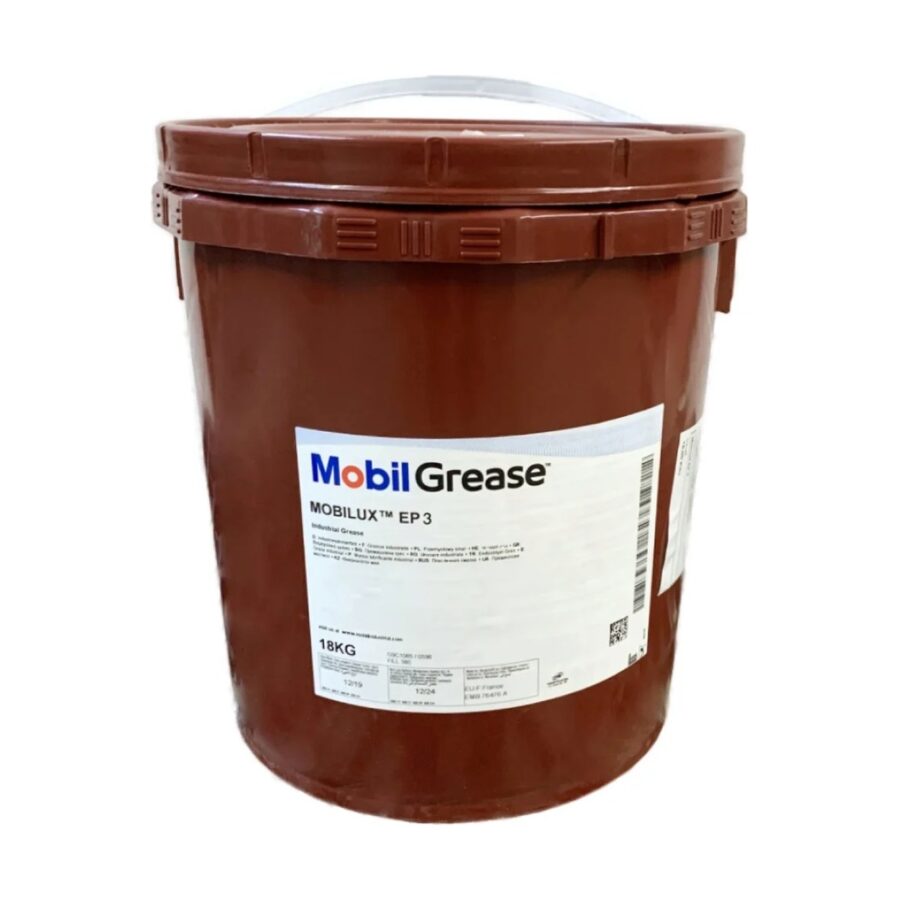
Most ball and roller bearings in pumps, fans, motors, conveyors and gearbox output shafts use NLGI 2. It stays in the bearing, feeds oil at a steady rate, and is easy to apply with a grease gun. Mobilux EP 2 is a typical example of a widely used NLGI 2 industrial grease.
NLGI 1 and 0: centralised systems and cold starts
Centralised lubrication systems push grease through long, narrow lines to many points. Softer greases flow more easily and reduce the pressure needed. Many systems are designed for NLGI 1, 0 or 00, especially where lines are long or temperatures are low. Always check the system maker’s specification.
NLGI 00 and 000: semi-fluid greases for gear units
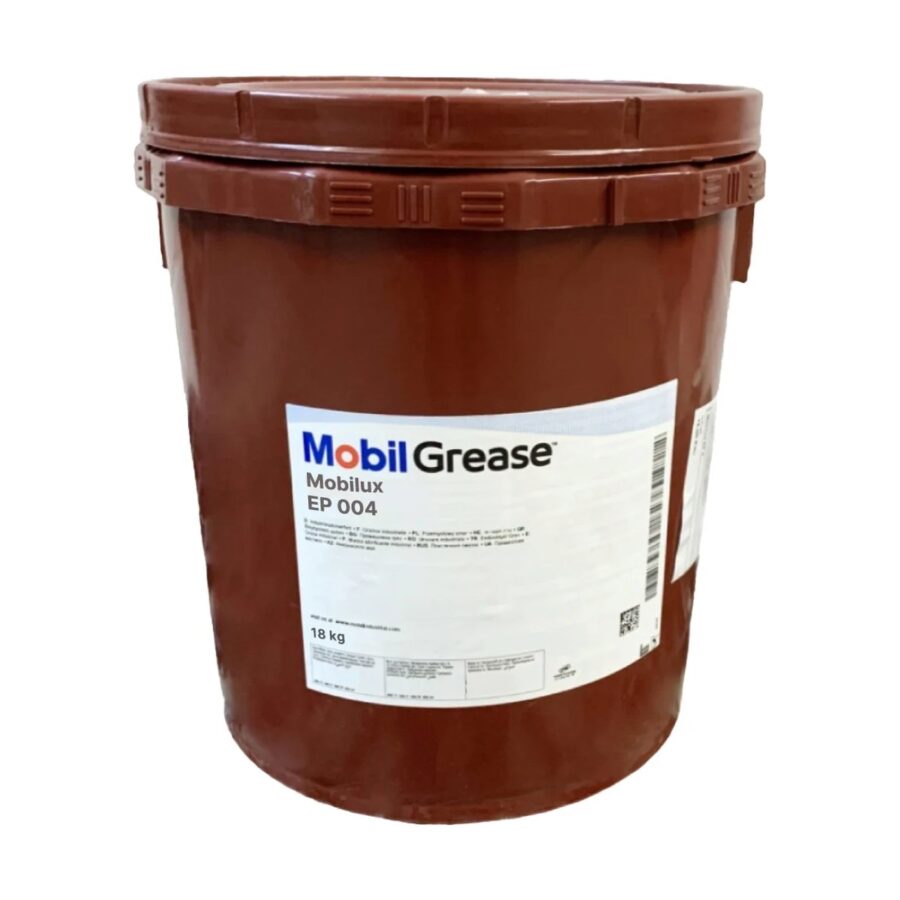
Semi-fluid greases are used in enclosed gear units that would leak oil, and in some centralised systems. Mobilux EP 004, for example, is a semi-fluid grease used in such applications.
NLGI 3: sealing, vertical shafts and vibration
A firmer grease is less likely to slump out of a housing on a vertical shaft, to be shaken out by vibration, or to let dust past a seal. It is common in large bearings, vibrating screens and some dusty applications.
How do temperature and climate affect the NLGI grade you need?
Grease softens as it warms and stiffens as it cools. In the GCC, an NLGI 2 grease in an outdoor bearing will be noticeably softer on a summer afternoon than on a winter morning. That is rarely a problem for a well-sealed bearing, but if grease is slumping out of housings in summer, a firmer grade or a grease with a more heat-stable thickener can help.
For centralised systems, the critical question is pumpability at the lowest temperature the system sees. A grease that pumps easily in a hot plant may struggle in an air-conditioned room or a cold store.
What does the NLGI grade not tell you?
Because NLGI describes stiffness only, it tells you nothing about:
- The base-oil viscosity, which controls film thickness and bearing life.
- The upper and lower service temperatures.
- Load-carrying (EP) performance.
- Water resistance and corrosion protection.
- The thickener type and therefore compatibility with other greases.
- Food-grade (NSF H1) status.
That is why two NLGI 2 greases can behave completely differently in the same bearing. Always read the full technical data sheet; our guide on how to read a lubricant data sheet explains each value.
How does grease consistency change in service?
A grease’s consistency changes as it is sheared in a bearing. Good greases keep their consistency well; poorer ones soften and leak, or harden. Data sheets may show results from prolonged working tests (for example after 100,000 strokes) or roll stability tests. These help compare greases for vibrating or heavily sheared applications.
Practical tips for maintenance teams
- Check the equipment maker’s recommended NLGI grade and stick to it.
- Use the grade your dispensing method can handle: grease gun, central system or automatic lubricator.
- Do not mix grades of different products to “adjust” consistency.
- Label grease guns with the product name and grade.
- If grease leaks in summer or does not pump in winter, review the grade with your supplier.
What are the most common mistakes?
- Assuming a higher NLGI grade means a “stronger” or better grease.
- Comparing two greases on NLGI grade only.
- Using NLGI 2 in a central system designed for NLGI 0 or 00.
- Using a soft grade in a vertical shaft where it slumps away from the bearing.
Which NLGI grade suits each dispensing method?
| Dispensing method | Typical NLGI range | Notes |
|---|---|---|
| Manual grease gun | 1–3 (usually 2) | Easy to apply; calibrate grams per stroke |
| Single-line centralised system | 000–2 | Depends on line length, diameter and temperature |
| Progressive centralised system | 000–2 | Softer grades reduce the risk of blocked distributors |
| Dual-line system (long distances) | 0–2 | Used in steel mills and large plants |
| Automatic single-point lubricator | 00–2 | Softer grades feed more reliably through long lines |
| Hand packing (open bearings) | 2–3 | Firmer grades stay in place during assembly |
The table is a general guide only. The lubrication system maker specifies the grades and temperature limits for each system, and pumpability tests (such as flow pressure at low temperature) on the grease data sheet help confirm the choice.
Reading NLGI on Kluber and Mobil data sheets
Mobil usually states the NLGI grade directly and often builds it into the product name: Mobilux EP 0, EP 1, EP 2 and EP 3 are the same grease family in four consistencies, and EP 004 is a semi-fluid grade. Kluber data sheets typically list the worked penetration limits (for example “Worked penetration, DIN ISO 2137, 25 °C, lower limit value” and “upper limit value”), from which you can read the NLGI band, and some product names carry the grade, such as BARRIERTA L 55/0, 55/1 and 55/2.
When comparing products from two brands, compare the penetration ranges as well as the stated grade. Two greases both described as NLGI 2 may sit at opposite ends of the 265–295 band, which can matter in a centralised system.
Low-temperature pumpability and cold rooms
Air-conditioned plant rooms, cold stores and freezers can be much colder than the outside air in the GCC. A grease that flows easily through a centralised system in a hot workshop may become too stiff to pump in a cold store. Data sheets often give a flow-pressure value at low temperature (for example according to DIN 51805) that shows how much pressure is needed to make the grease flow. If a system serves both warm and cold areas, choose the grade and product for the coldest point, and check the system maker’s pressure limits.
How does storage affect grease consistency?
Grease that has stood for a long time, especially in heat, can release a little oil on its surface and feel firmer underneath. This is normal and does not change its NLGI grade in any meaningful way; stir the oil back in gently before use. A grease that has become very hard, grainy or discoloured should be checked before use. See our guide to grease storage and shelf life for best practice in hot climates.
Consistency and leakage: a practical diagnosis
If grease is leaking from a housing, consistency is only one possible cause. Before switching to a firmer grade, check for over-greasing, a missing relief path, worn seals, excessive temperature and incompatibility with the previous grease. Changing the NLGI grade solves the problem only when the grease is truly too soft for the application.
Frequently asked questions
Is NLGI 2 the same as “No. 2 grease”?
Yes. People often call an NLGI grade 2 grease a “No. 2 grease”.
Can I use NLGI 2 in a central lubrication system?
Some systems handle NLGI 2, but many are designed for NLGI 1, 0 or 00, especially with long lines or low temperatures. Check the system maker’s specification.
Does a higher NLGI grade carry more load?
No. Load capacity depends on base-oil viscosity and additives, not on consistency.
Which NLGI grade is best for hot climates?
NLGI 2 works for most bearings. Where grease slumps out in summer, consider NLGI 3 or a grease with a more heat-stable thickener.
What does NLGI 1.5 mean?
It indicates a consistency between NLGI 1 and 2. The data sheet will show the actual penetration range.
Conclusion
The NLGI grade is a useful shorthand for how stiff a grease is, and choosing the right grade for your dispensing method and application prevents leakage, starvation and pumping problems. But it is only one part of grease selection: base-oil viscosity, thickener, temperature range and additives matter just as much. Read the whole data sheet, and match every property to the real operating conditions.
Need help applying this to your plant? Send us the equipment details or the product you use now and we will recommend a suitable Kluber or Mobil grade: request a quote and we reply within one business day.