Key takeaways
- Steel mills combine extreme heat, large amounts of cooling water, scale and very heavy, shock-loaded drives.
- Greases for casters and roller tables must resist water washout and high temperatures and protect against corrosion.
- Rolling mill gearboxes and roll neck bearings need EP oils and greases with high viscosity, plus excellent water separation in oil systems.
- Hydraulic systems near hot metal may need fire-resistant fluids; all hydraulics need strict cleanliness and water control.
- Central lubrication systems are common; their reliability depends on pumpable greases and regular checks.
Steel and metals plants are among the harshest environments for lubricants. Molten metal, hot slabs and billets, huge quantities of cooling water, mill scale, shock loads and continuous operation all attack bearings, gears and hydraulic systems. Lubricant failures can stop a melt shop or rolling mill, with very high production losses. This guide works through the main areas of a steel plant, from melt shop to finishing, and explains what each needs. See also our steel and metals industry page.
What makes steel mills so demanding for lubricants?
| Condition | Effect | Response |
|---|---|---|
| Radiant heat and hot product | Oxidation, carbonisation, grease running out | High-temperature greases, cooling, shielding |
| Cooling water and steam | Washout, rust, emulsified oil | Water-resistant greases, oils with good demulsibility, seals |
| Mill scale and dust | Abrasive wear | Seals, purging relubrication, filtration |
| Very heavy and shock loads | Scuffing, pitting, bearing damage | EP additives, high viscosity |
| Continuous operation | Little maintenance time | Central lubrication, long-life products, condition monitoring |
Melt shop: EAF, ladles and casting
Electric arc furnaces, ladle furnaces and ladle cranes operate around molten steel. Tilting mechanisms, electrode arms and cranes carry heavy loads in intense heat. Bearings and slides in these areas need high-temperature greases with good adhesion, and hydraulic systems near hot metal often use fire-resistant fluids. Bolts and fittings on hot equipment need high-temperature anti-seize pastes so they can be removed during maintenance.
Continuous casters
Continuous casters guide the hot strand through hundreds of segment rolls, each with bearings exposed to radiant heat, cooling water sprays and steam. These bearings are usually lubricated by central systems with a grease designed for high temperatures, water resistance and pumpability. The grease must not wash out, must protect against corrosion and must pump reliably through long lines. Bearing failures in caster segments lead to strand defects and costly segment changes.
- Choose greases specifically suited to caster conditions: water resistant, high-temperature, pumpable.
- Check central system output at each bearing regularly.
- Inspect seals during segment overhauls.
- Track grease consumption: sudden changes signal leaks or blockages.
Reheating furnaces
Walking beam and pusher furnaces have hot mechanisms, rollers and drive bearings near the furnace. Bearings near the furnace need high-temperature greases; furnace door mechanisms and hot fasteners need high-temperature pastes such as WOLFRACOAT C so that they can be opened at maintenance. Measure bearing temperatures to choose correctly.
Rolling mills: stands and roll neck bearings
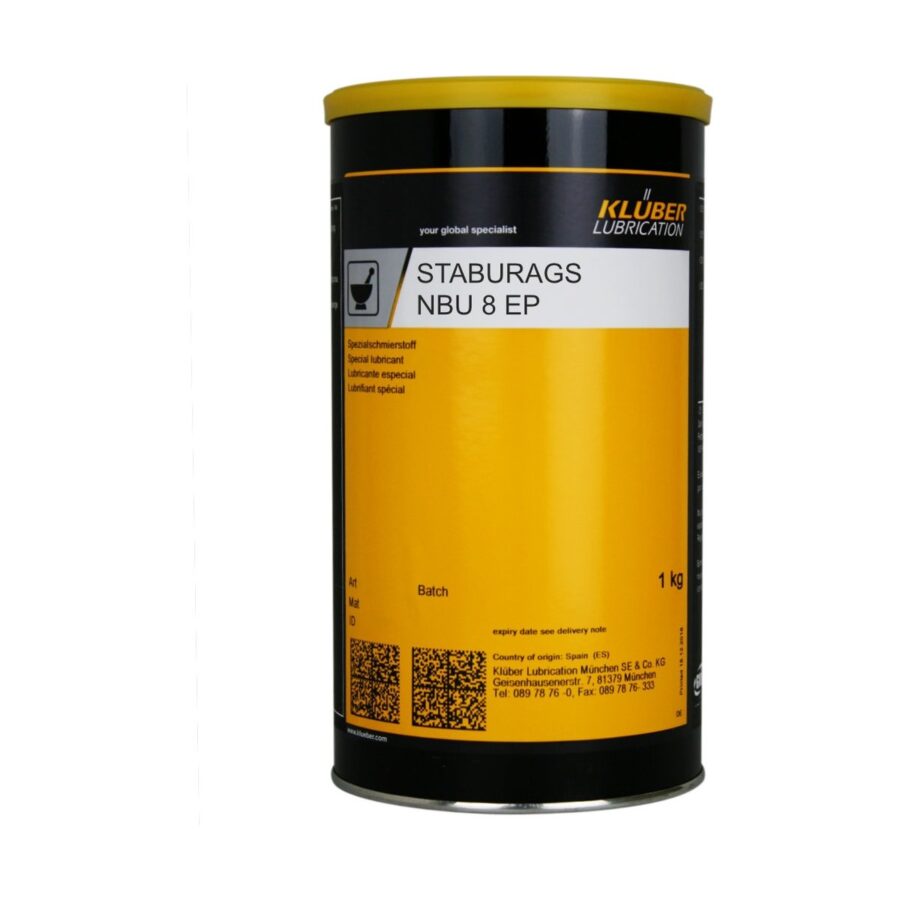
Rolling mill stands carry enormous loads. Roll neck bearings may be rolling bearings (four-row tapered or cylindrical roller bearings) lubricated with grease or oil-air systems, or oil-film bearings lubricated by circulating oil systems. Rolling bearings need high-viscosity EP greases with good water resistance, such as STABURAGS NBU 8 EP. Oil-film bearings need special circulating oils with excellent water separation, because roll cooling water inevitably enters the system; follow the bearing maker’s oil specification.
Mill gearboxes and pinion stands
Main mill drives, pinion stands and gearboxes run under shock loads and often in high ambient temperatures. They need EP gear oils of the viscosity specified by the maker, often ISO VG 320 to 680, with good water separation and filtration. Mobilgear 600 XP 460 or 680 suit many mineral oil applications; Mobil SHC 634 or 636 are synthetic options for hot or critical drives. See industrial gear oil selection.
Roller tables and cooling beds
Roller tables carry hot product between stands and to cooling beds. Their bearings see heat, water and scale. Use high-temperature, water-resistant EP greases and relubricate often enough to purge contaminated grease. Many plants use central or automatic systems for roller tables because of the large number of points.
Hydraulic systems
Mills rely on hydraulic systems for roll gap control, bending, balancing and handling. Clean, cool hydraulic oil of the right viscosity is essential; water contamination from cooling water is a common risk. Hydraulic systems near molten metal or hot product may use fire-resistant fluids, such as water-glycol (HFC) or synthetic ester (HFDU) fluids, depending on the risk assessment and equipment maker. Never mix fire-resistant fluids with mineral oils, and check seal compatibility when changing.
- Set and monitor ISO 4406 cleanliness targets, especially for servo valves on gauge control.
- Check water content regularly with oil analysis.
- Maintain coolers and keep oil temperatures stable.
- Use desiccant breathers and keep reservoirs sealed.
Wire ropes
Crane and hoist wire ropes in steel plants carry heavy loads near heat and dust. Rope lubricants penetrate the core, prevent internal corrosion and reduce wear between wires. Clean ropes before relubrication where possible, apply the lubricant where the rope opens over a sheave, and inspect ropes regularly for broken wires, corrosion and dryness, as required by the crane maker and local regulations.
Overhead cranes in melt shops and rolling mills carry heavy loads near heat and dust. Hoist and travel gearboxes need EP gear oils, often synthetic in hot bays; wire ropes need rope lubricants; wheels, bearings and couplings need EP greases. Ladle cranes in particular need careful lubrication and inspection. See crane lubrication for general crane practice.
Central lubrication systems
Many steel mill areas use central lubrication systems, from single-line and dual-line systems to progressive systems and oil-air systems. They are reliable when the grease is pumpable at the lowest operating temperature, filters and reservoirs are kept clean, and line breaks or blockages are found quickly. Check that each bearing receives grease, using indicators and visual inspection at seals.
Pastes and anti-seize
Hot fasteners, couplings and fits in steel plants seize quickly without protection. High-temperature pastes such as WOLFRACOAT C or Kluberpaste HEL 46-450 keep connections releasable. See assembly paste vs anti-seize.
Oil analysis and condition monitoring in steel plants
Mill gearboxes, oil-film bearing systems, hydraulic systems and crane gearboxes all benefit from regular oil analysis. Water content is the key parameter in most steel plant oil systems, followed by particle count, viscosity, oxidation and wear metals such as iron and copper. Combine oil analysis with vibration monitoring on drives and thermography on bearings and electrical equipment. Trends matter more than single results: set baselines and alarm limits for each system, and act on rising water or wear before it becomes a failure. See oil analysis basics.
Lubricant storage and handling on site
Steel plants are dirty, hot places, which makes lubricant storage critical. Keep a clean, covered, temperature-controlled lubricant store, separate from the production floor. Use sealed, labelled transfer containers and filter carts for oils, dedicated grease guns per product, and closed central system reservoirs. Contaminated new lubricant is a hidden cause of many failures in heavy industry.
GCC steel and aluminium plants add high ambient temperatures and, in coastal locations, humidity and salt to the usual steel mill challenges. Cooling systems run near their limits in summer, which raises lubricant temperatures. Synthetic oils and greases with wider temperature ranges, well-maintained coolers and strict water control help keep reliability high.
A worked example: a caster segment
A steel plant sees frequent bearing failures in one zone of its continuous caster. Investigation shows that the grease is being washed out by cooling water sprays and that some central system lines are partly blocked. The plant changes to a grease with better water resistance and high-temperature performance, cleans and checks the lines, and adds a routine to verify grease delivery at each segment during maintenance windows. Bearing failures in the zone fall significantly.
What are the most common mistakes?
- Using general-purpose greases in caster and roller table bearings.
- Ignoring water in mill gearbox and hydraulic oils.
- Mixing fire-resistant hydraulic fluids with mineral oils.
- Not checking central system delivery at each point.
- Leaving hot fasteners without anti-seize protection.
Frequently asked questions
Can synthetic greases help in steel mills?
Yes, in hot and long-interval applications. Synthetic EP greases such as Mobilith SHC keep their performance at higher temperatures.
Which grease for heavily loaded roll neck bearings?
A high-viscosity EP grease with good water resistance, such as STABURAGS NBU 8 EP, or the product specified by the bearing or mill maker.
Do steel mills need fire-resistant hydraulic fluids?
Where hydraulic leaks could reach molten metal or hot product, many plants use fire-resistant fluids. Follow the risk assessment and equipment maker’s guidance.
How do I control water in mill gearbox oil?
Use oils with good demulsibility, keep seals and breathers in good condition, drain free water regularly and monitor with oil analysis.
How often should central systems be checked?
Regularly, at least at every maintenance window, verifying grease delivery at each point.
Which paste for hot furnace bolts?
A high-temperature anti-seize paste such as WOLFRACOAT C or Kluberpaste HEL 46-450, applied as a thin film, with torque values suited to the paste.
Conclusion
Steel mill lubrication means fighting heat, water, scale and heavy loads at once. Use water-resistant, high-temperature greases for casters and roller tables, high-viscosity EP products for mill bearings and gearboxes, strict cleanliness and water control for hydraulics, reliable central systems and anti-seize pastes for hot fasteners. Browse our extreme-pressure greases and gear oils.
Need help applying this to your plant? Send us the equipment details or the product you use now and we will recommend a suitable Kluber or Mobil grade: request a quote and we reply within one business day.