Key takeaways
- The base oil makes up most of a grease, so the choice of mineral or synthetic base oil largely sets its temperature range and life.
- Mineral greases are the right, economical choice for most bearings running at normal speeds and temperatures.
- Synthetic greases (PAO, ester, PAG, silicone or PFPE) extend the temperature range, resist oxidation and allow longer relubrication intervals.
- Synthetic grease usually pays back where bearings run hot or cold, are hard to reach, are critical, or where labour and downtime cost more than the grease.
- Change from mineral to synthetic carefully: check thickener compatibility and purge old grease.
Every grease has three parts: a base oil (usually 70–90 % of the grease), a thickener that holds the oil in place, and additives. Whether the base oil is mineral or synthetic has a large effect on how the grease behaves. This guide compares mineral and synthetic greases and helps you decide where the extra cost of a synthetic grease is justified. For the role of the thickener, see grease thickener types compared.
What is the difference between mineral and synthetic grease?
A mineral grease uses a refined petroleum base oil. It is cost-effective, widely available and works well in most general applications. A synthetic grease uses a base oil made by chemical synthesis, such as polyalphaolefin (PAO), ester, polyalkylene glycol (PAG), silicone or perfluoropolyether (PFPE). Synthetic base oils have more uniform molecules, so they keep their viscosity better as temperature changes, flow at lower temperatures, and resist oxidation at higher temperatures.
Mineral vs synthetic grease compared
| Property | Mineral grease | Synthetic grease |
|---|---|---|
| Typical temperature range | About −20 °C to 120–130 °C | From −50 °C or lower up to 180 °C, and up to 260 °C with PFPE |
| Oxidation resistance | Good for normal temperatures | Higher; longer life when hot |
| Viscosity index | Moderate | High; less change with temperature |
| Low-temperature start-up | Stiffer when cold | Lower starting torque |
| Relubrication interval | Standard | Often longer, sometimes lifetime fill |
| Price per kg | Lower | Higher, from moderately to many times higher |
| Availability | Very wide | Wide for common grades; some speciality items have lead times |
What do the product data sheets show?
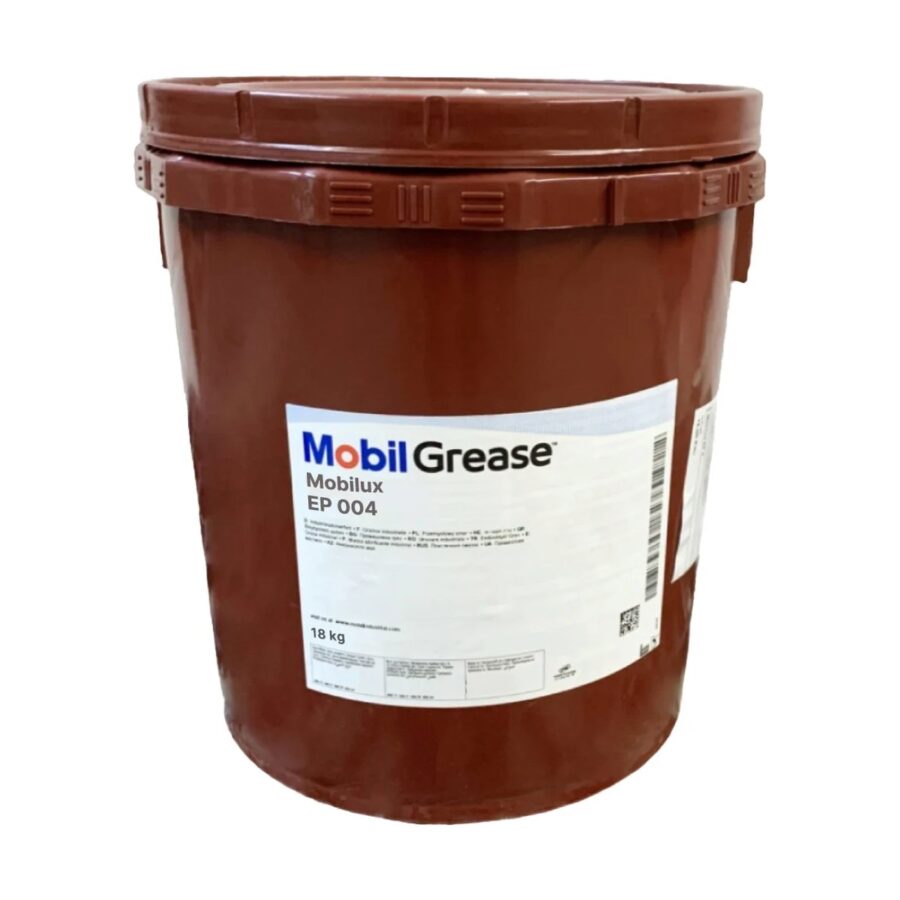
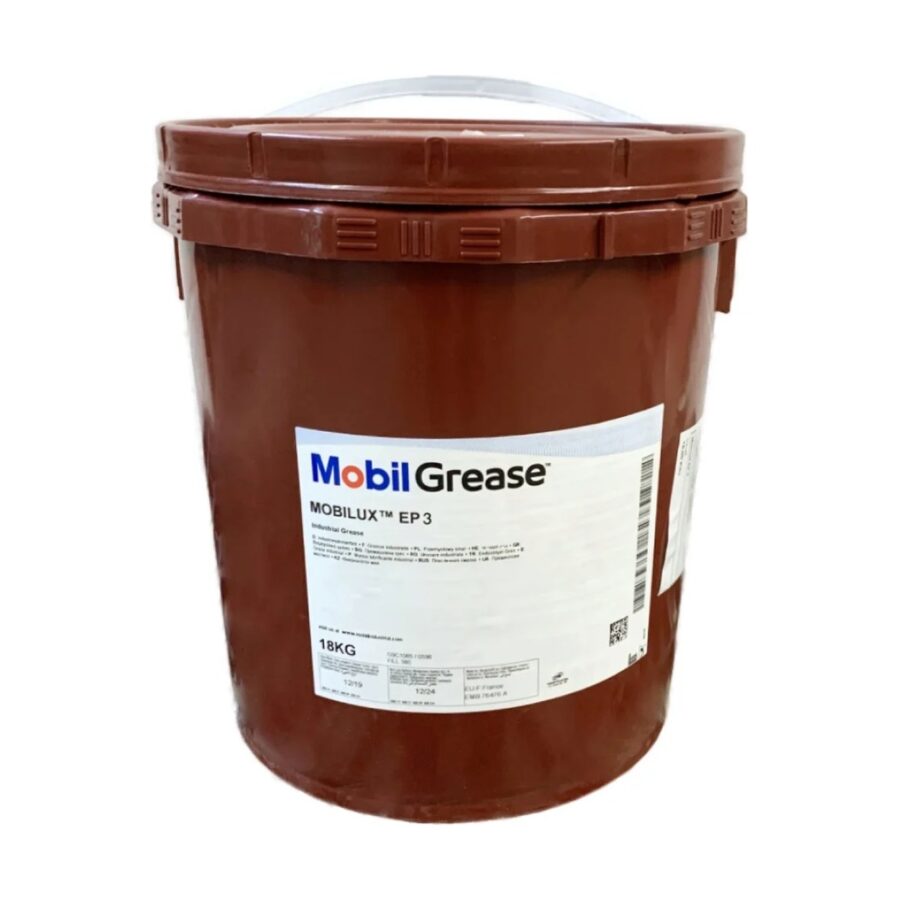
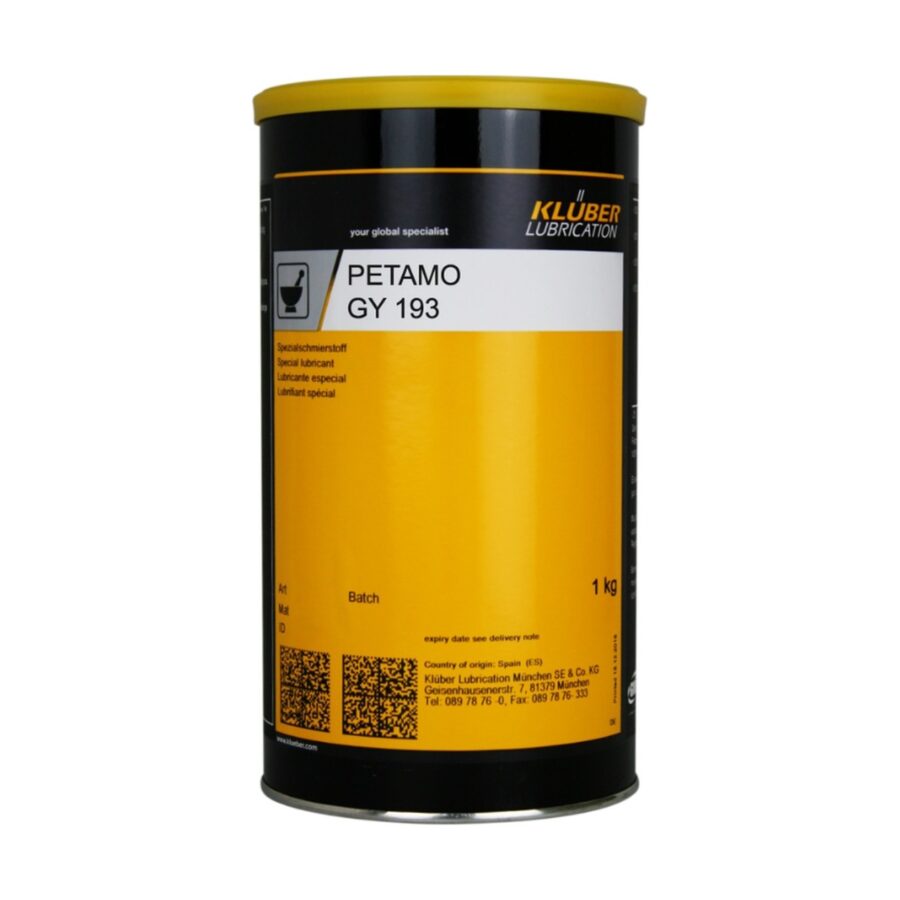
The difference is visible in real products. Mobilux EP 2, a mineral lithium grease, lists an operating range of about −20 °C to 130 °C and a dropping point of 190 °C. Mobilith SHC 220, a PAO-based lithium complex grease with a similar NLGI 2 consistency, lists a base-oil viscosity index of 179 and a dropping point of 265 °C. PETAMO GY 193 (polyurea thickener) is rated to 180 °C, and ISOFLEX TOPAS NCA 52 (synthetic, special calcium soap) works from −50 °C to 130 °C. Always compare like with like: same NLGI grade, similar base-oil viscosity and the same test methods. See how to read a TDS.
When is a mineral grease the right choice?
- Bearings run between about −10 °C and 100 °C at normal speeds.
- Relubrication is easy and already part of a routine schedule.
- Consumption is high, for example central lubrication systems feeding many points.
- The equipment maker specifies a mineral grease.
- There is no history of grease-related failures at that point.
For these points, a good mineral grease such as Mobilux EP or Mobil XHP 222 is usually the best value. Paying more for synthetic grease here rarely brings a measurable benefit.
When does synthetic grease pay back?
- Bearing temperatures regularly above about 100–120 °C, for example kiln fans, dryer rolls, ovens and hot motors.
- Low temperatures, such as cold stores and freezers, where mineral grease stiffens.
- Long relubrication intervals or sealed-for-life bearings.
- Hard-to-reach or hazardous points, where each relubrication costs labour, permits or a stoppage.
- Critical equipment where a bearing failure stops production.
- High speeds, where a lower-viscosity synthetic base oil reduces friction and heat.
In the GCC, heat is the most common reason. Ambient temperatures above 45 °C push many bearings into a range where mineral grease oxidises quickly. Our guide to lubrication in extreme summer heat explains the effect.
How do you calculate whether synthetic grease is worth it?
Compare total cost over a period, for example one year, rather than price per kilogram:
- Grease cost: quantity used per year × price per kilogram.
- Labour cost: number of relubrications × time per relubrication × labour rate.
- Downtime cost: expected bearing failures × repair cost and lost production.
- Repeat the calculation for the synthetic option, using its longer relubrication interval and the expected reduction in failures.
For a single hot fan bearing, a synthetic grease that doubles the relubrication interval and prevents one failure a year can save far more than the difference in grease price. For hundreds of cool, easily reached bearings, the mineral grease usually wins.
Which type of synthetic grease should I choose?
| Synthetic base oil | Typical use |
|---|---|
| PAO (polyalphaolefin) | General synthetic greases, wide temperature range, good compatibility with mineral oils and seals |
| Ester | Low temperatures, high speeds, spindle and instrument bearings |
| PAG (polyglycol) | Some gear and high-temperature greases; not compatible with mineral oils |
| Silicone | Very wide temperature range, light loads, plastics |
| PFPE (perfluoropolyether) | Very high temperatures (up to about 260 °C), chemical resistance, long life |
For details on base oils in oils, see PAO vs PAG vs ester synthetic oils.
How do you change from mineral to synthetic grease?
- Check thickener compatibility between the old and new grease.
- Purge the old grease as completely as possible, or clean the bearing at the next overhaul.
- Relubricate more often during the first period, then extend the interval as you gain confidence.
- Label the grease point and update the lubrication schedule.
Mixing incompatible greases is a common cause of failure after a change. See grease compatibility.
A worked example: hot fan bearing in a cement plant
Consider an induced-draft fan bearing that runs at about 110 °C in summer. With a mineral lithium grease, the plant relubricates every two weeks and still replaces the bearing about once a year. Each relubrication needs a permit and an hour of a technician’s time, and each bearing change stops the line for a shift. Changing to a polyurea or PAO-based synthetic grease rated well above 110 °C typically allows a longer interval because the base oil oxidises more slowly. Even if the synthetic grease costs several times more per kilogram, the plant uses only a few kilograms a year at this point, while the labour, permits and lost production saved are worth far more. The same calculation for a cool conveyor idler would show the opposite result.
What do “semi-synthetic” and “synthetic blend” mean?
Some greases use a blend of mineral and synthetic base oils. They sit between the two in price and performance, and can be a good compromise where temperatures are moderately high. Check the upper service temperature and oxidation data on the TDS rather than relying on the label. A blend with mostly mineral oil behaves mostly like a mineral grease.
Does the thickener matter as much as the base oil?
The thickener sets the dropping point, water resistance, mechanical stability and compatibility. A synthetic base oil in a simple lithium soap will still be limited by the thickener at high temperatures. That is why high-temperature synthetic greases usually use lithium complex, polyurea, clay or PTFE thickeners. When comparing greases, look at both parts together: base oil type and viscosity, and thickener type.
Checklist before changing to a synthetic grease
- Measure the bearing temperature in service, not the ambient temperature.
- Check speed, load and the required base-oil viscosity.
- Confirm compatibility of thickener and base oil with the current grease.
- Check any OEM requirements or warranty conditions.
- Calculate the yearly cost of both options, including labour and downtime.
- Plan purging, labelling and an updated relubrication interval.
How do you know when a mineral grease is failing from heat?
Signs include grease that has darkened and hardened in the housing, oil bleeding and a varnish-like residue on the bearing, rising bearing temperatures between relubrications, and noise or vibration that improves briefly after greasing. If you see these signs at a hot point, review the grease type before simply greasing more often. A change to a grease with a higher temperature rating, or to a shorter interval with the same grease, is usually the fix.
Frequently asked questions
Is synthetic grease always better?
No. It performs better at temperature extremes and lasts longer, but at normal temperatures a good mineral grease is often just as effective and much cheaper.
Can I mix synthetic and mineral grease?
Mixing depends mainly on the thickener and on the base oil type. PAO greases are often compatible with mineral greases of the same thickener; PFPE, silicone and PAG greases generally should not be mixed. Check before mixing.
Does synthetic grease last longer?
Usually yes, because synthetic base oils resist oxidation better. The actual interval depends on temperature, speed, load and contamination.
Is synthetic grease thinner?
Not necessarily. Consistency (NLGI grade) depends mainly on the thickener; viscosity depends on the base oil grade chosen. Synthetic greases are available in all common NLGI grades.
Conclusion
Use mineral grease for the many bearings that run at normal temperatures and are easy to relubricate; it is economical and reliable. Choose synthetic grease where heat, cold, speed, access or criticality make each relubrication or failure expensive. Calculate total cost per year, change over carefully, and the extra price of a synthetic grease is usually recovered at the points where it matters.
Need help applying this to your plant? Send us the equipment details or the product you use now and we will recommend a suitable Kluber or Mobil grade: request a quote and we reply within one business day.