Key takeaways
- Mobil SHC Cibus is a family of synthetic, NSF H1 registered oils for food and beverage machinery.
- One family covers hydraulics, gearboxes, bearings, compressors and circulating systems, which makes plant standardisation easy.
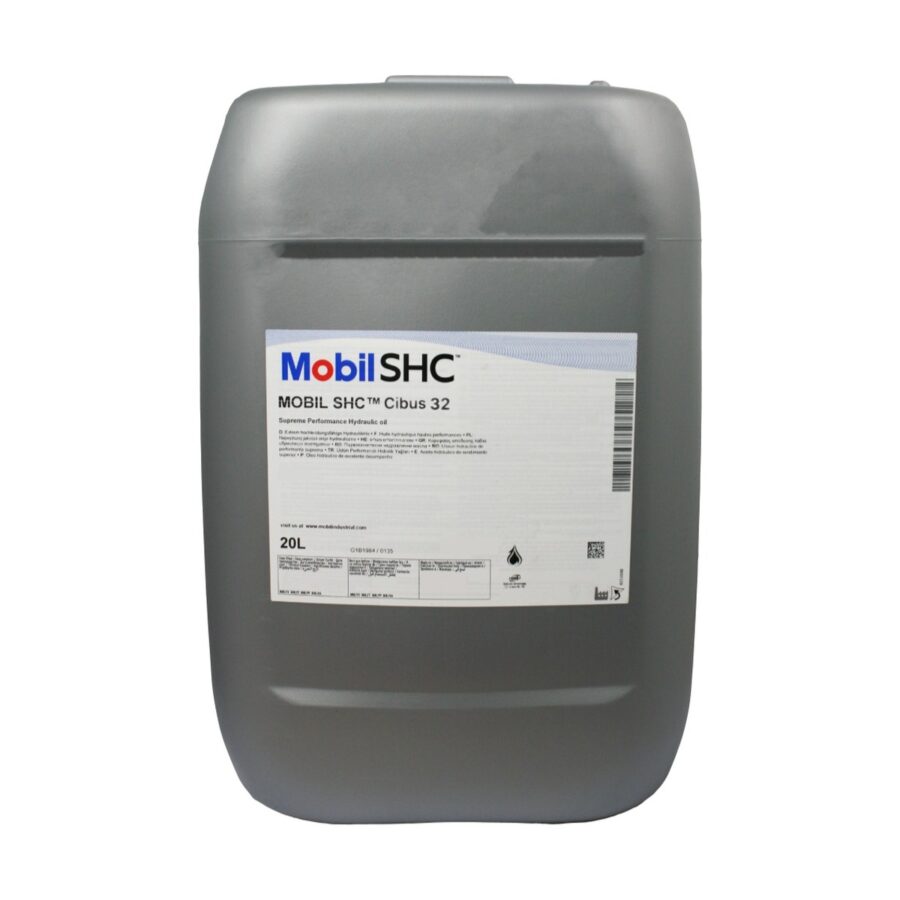
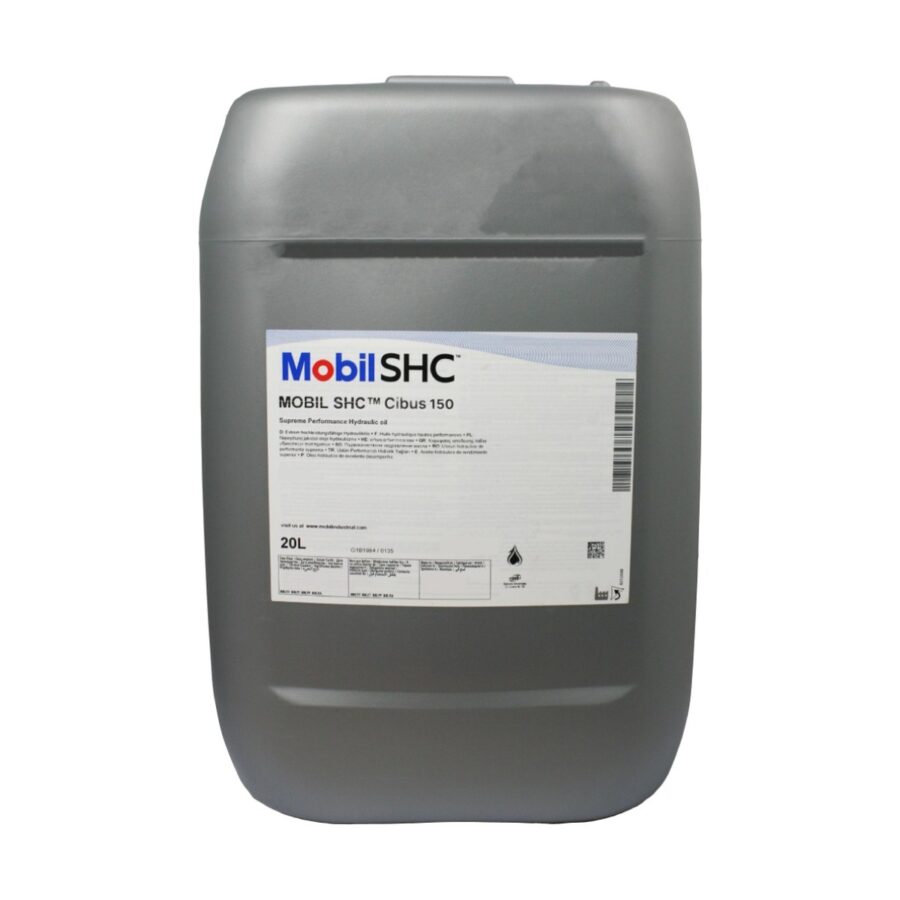
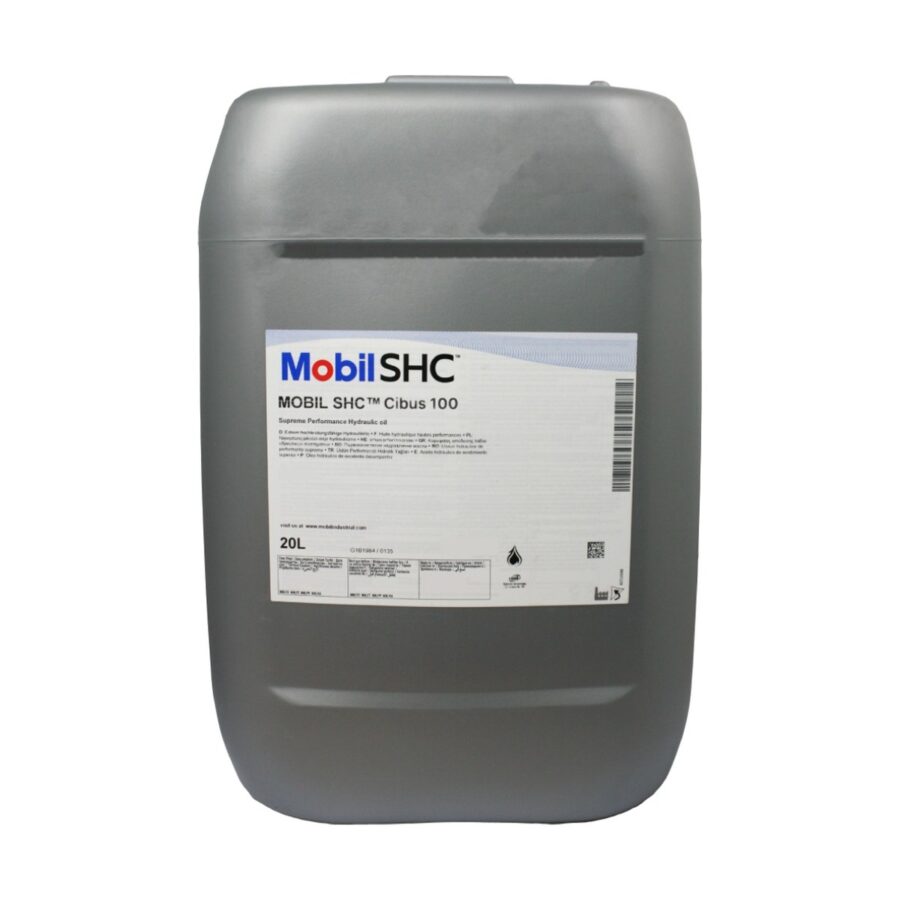
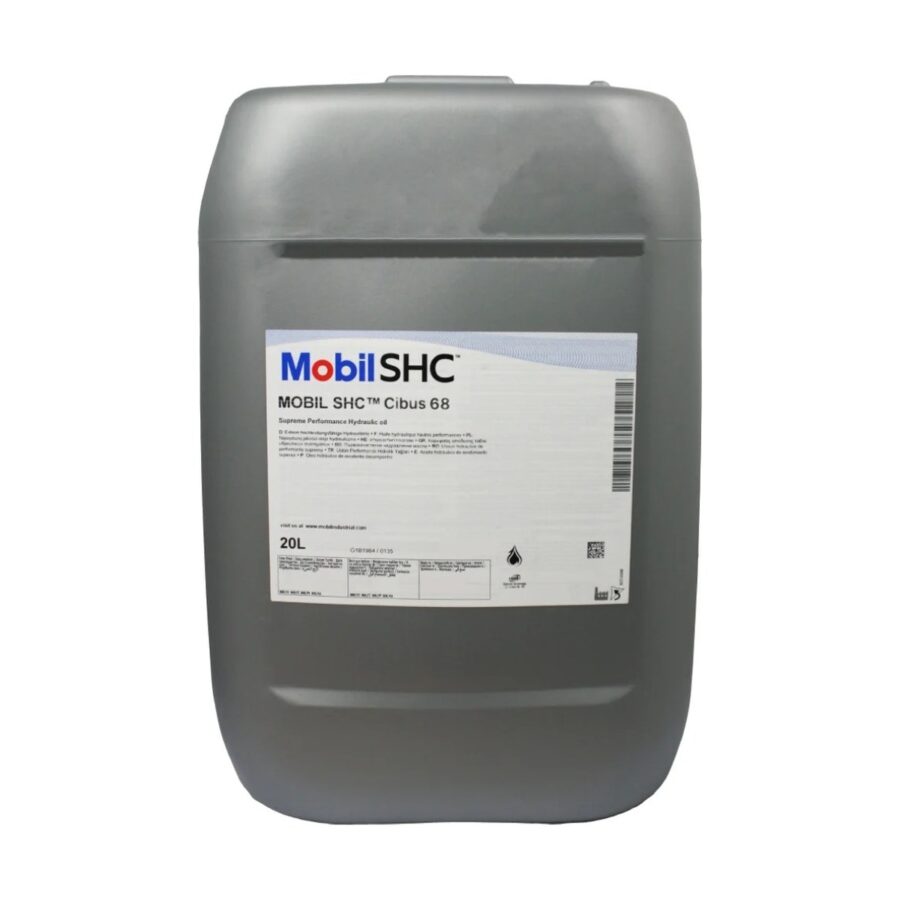
- We supply ISO VG 32, 46, 68, 100 and 150 in 20 L canisters.
- Choose the grade by the equipment maker’s ISO VG, exactly as for a conventional oil.
- Drain, flush where needed and check seal compatibility when changing from a mineral oil.
Mobil SHC Cibus is Mobil’s range of synthetic, NSF H1 registered oils for food and beverage processing equipment. Food, dairy, bakery, beverage and packaging plants use it in gearboxes, hydraulic systems, bearings and circulating systems where incidental contact with food may occur. Because one family spans several viscosity grades, it is one of the easiest ways to standardise a plant on food-grade oils. This guide explains what the range offers, how to choose the grade and how to change over from a conventional oil. For background on food-grade categories, see NSF H1 vs H2 vs H3.
What is Mobil SHC Cibus?
SHC stands for Synthesized Hydrocarbon, Mobil’s name for oils based on polyalphaolefin (PAO). Cibus is Latin for food. The range combines PAO base fluids with an additive system chosen from ingredients permitted for incidental food contact. According to the product data, the oils are NSF H1 registered, and the range is stated as Kosher and Halal compliant. Always check the current data sheet on the Mobil industrial lubricants site or ask us for the documents for the exact grade you buy.
Key features (from the product data)
- NSF H1 registered for incidental food contact.
- Synthetic PAO base fluids with a naturally high viscosity index, so viscosity changes less with temperature.
- Good oxidation and thermal stability for long oil life.
- Anti-wear and rust protection for gears, bearings and hydraulic pumps.
- Pale, low-odour fluids.
- Stated as Kosher and Halal compliant.
Grades we supply
| Grade | ISO VG | Typical use | Pack |
|---|---|---|---|
| Mobil SHC Cibus 32 | 32 | Hydraulic systems, light circulating systems, air-line lubricators | 20 L canister |
| Mobil SHC Cibus 46 | 46 | Hydraulic systems, circulating systems, some compressors | 20 L canister |
| Mobil SHC Cibus 68 | 68 | Hydraulics in hot conditions, light gears, plain and rolling bearings | 20 L canister |
| Mobil SHC Cibus 100 | 100 | Light-duty gearboxes, bearings, circulating systems | 20 L canister |
| Mobil SHC Cibus 150 | 150 | Gearboxes, chains, heavily loaded bearings | 20 L canister |
Higher grades for heavily loaded gearboxes (for example ISO VG 220 to 460) exist in the wider Mobil range. If your equipment needs one of those, ask us and we will confirm availability and lead time.
Where is SHC Cibus used in a food plant?
| Equipment | Typical grade | Notes |
|---|---|---|
| Hydraulic power packs on presses, lifts and forming machines | 32, 46 or 68 | Follow the pump maker’s viscosity window |
| Mixer, conveyor and filler gearboxes | 100 or 150 (higher where specified) | Match the gearbox maker’s ISO VG |
| Plain and rolling bearings with oil lubrication | 68 to 150 | Higher grades for slower, heavier bearings |
| Chains on conveyors and packaging lines | 100 or 150 | Apply sparingly to avoid drips |
| Air-line lubricators and pneumatic tools | 32 | Use the lowest effective dose |
How do you choose the grade?
- Find the viscosity grade the equipment maker specifies in the manual or on the nameplate.
- Check the actual operating temperature: in hot GCC plants, oils often run hotter than in the maker’s standard assumption.
- Keep the same ISO VG when changing from a mineral oil; the higher viscosity index of PAO already gives better protection at high temperatures.
- For hydraulics, confirm that the oil’s viscosity at operating temperature stays within the pump maker’s window.
- Confirm the NSF H1 registration of the exact grade, and Halal or Kosher status if required.
See ISO VG viscosity grades explained and VG 32 vs 46 vs 68 in hot climates.
Why does synthetic oil matter in food plants?
Food plants often combine high ambient temperatures, hot washdowns and cold rooms. A synthetic PAO oil keeps a more stable viscosity across that range than a white mineral oil, which means easier cold starts in chillers and better film strength in hot gearboxes. Synthetic oils also resist oxidation better, so they can last longer between changes. With oil analysis, many plants extend drain intervals on synthetic H1 oils safely, which reduces both oil consumption and downtime.
Viscosity index in practice
Viscosity index (VI) describes how much an oil’s viscosity changes with temperature. A higher VI means a flatter curve: the oil thins less when hot and thickens less when cold. Many white mineral food-grade oils have a VI around 100, while PAO-based oils are typically well above that. In practice, a synthetic ISO VG 46 hydraulic oil running at 60 °C in a hot plant room keeps more of its viscosity than a mineral VG 46 at the same temperature. The same oil also flows more easily at a cold start in a chiller or cold store. That is why plants with both hot and cold areas often find one synthetic grade covers equipment that would need two mineral grades.
Monitoring SHC Cibus with oil analysis
| Test | What it tells you | Why it matters in food plants |
|---|---|---|
| Viscosity at 40 °C | Whether the oil is still in grade or mixed with another oil | Mixing with non-H1 oil can compromise H1 status |
| Water content | Ingress from washdown, condensation or coolers | Washdown areas are a major water source |
| Acid number / oxidation | How far the oil has aged | Supports condition-based drain intervals |
| Particle count (hydraulics) | Cleanliness of the system | Protects pumps and valves |
| Wear metals | Gear, bearing and pump wear | Early warning before failures |
See oil analysis basics for sampling practice and water contamination in oil for washdown areas.
Storing SHC Cibus in hot climates
Warehouses in the GCC can exceed 45 °C in summer. Store canisters indoors, in the coolest available area, off the floor and with caps closed. Avoid direct sunlight, which heats containers and makes them breathe in moist air as they cool. Keep food-grade oils separate from conventional oils and use the oldest stock first.
Changing over from a mineral or other food-grade oil
- Check compatibility: PAO oils are generally compatible with mineral oils, but some food-grade oils use other chemistries (for example PAG), which may not mix.
- Drain the old oil while warm, so as much as possible comes out.
- Flush where the old oil was incompatible, heavily degraded or a different chemistry.
- Check seal and paint compatibility, especially on older equipment.
- Fill with the new grade, label the filling point and record the change.
- Take an oil sample after a few weeks to confirm the system is clean and stable.
Our guide to gear oil compatibility explains which oil chemistries mix safely.
Getting the most from SHC Cibus
- Use dedicated, labelled containers and pumps for each grade.
- Fit desiccant breathers on gearboxes and reservoirs, especially in humid or washdown areas.
- Filter new oil into hydraulic systems, where cleanliness matters most.
- Monitor with oil analysis and change on condition.
- Store canisters indoors, closed, and away from heat.
A worked example: a beverage plant hydraulic system
A beverage bottling plant in Jeddah uses a mineral ISO VG 46 hydraulic oil in the power pack of a palletiser above an open conveyor zone. An audit identifies it as a risk because it is not H1 registered. The plant drains the system, flushes it with a small charge of Mobil SHC Cibus 46, refills with the same grade and labels the reservoir. Oil temperature in the afternoon is the same as before, but viscosity at that temperature is higher, thanks to the higher viscosity index. The lubricant is now H1, the audit point is closed, and the plant adds a quarterly oil sample to monitor condition.
What are the most common mistakes?
- Choosing a different viscosity grade “to be safe” instead of the specified one.
- Mixing SHC Cibus with a food-grade oil of a different chemistry without checking compatibility.
- Filling food-grade oil from containers previously used for conventional oil.
- Assuming H1 status means the oil can be used in unlimited amounts near product.
- Not filing the NSF and Halal documents for audits.
Frequently asked questions
Can Mobil SHC Cibus replace a mineral gear oil?
Often yes, in the same viscosity grade, after draining and flushing. Check seal compatibility and the gearbox maker’s guidance.
Which pack size is available?
Mobil SHC Cibus is supplied in 20 L canisters in our catalogue; ask us about other sizes.
Is SHC Cibus Halal?
The product data states the range is Kosher and Halal compliant. Ask us for the current documents for your grade.
Can I use SHC Cibus in an air compressor?
Some grades are used in compressors; check the compressor maker’s requirements and the data sheet before use.
How long does SHC Cibus last?
Synthetic oils usually last longer than mineral oils under the same conditions. The safest way to set intervals is oil analysis.
Can one SHC Cibus grade cover several machines?
Often yes. Many plants use one grade for most hydraulics and one for most gearboxes, provided each machine’s specified ISO VG matches.
Conclusion
Mobil SHC Cibus gives food and beverage plants one synthetic, NSF H1 family for hydraulics, gearboxes, bearings and circulating systems. Choose the grade by the equipment maker’s ISO VG, change over carefully, keep the oil clean and monitor it with oil analysis. Browse Mobil SHC Cibus products or our full food-grade range.
Need help applying this to your plant? Send us the equipment details or the product you use now and we will recommend a suitable Kluber or Mobil grade: request a quote and we reply within one business day.