Key takeaways
- Food-safety systems such as HACCP, ISO 22000 and FSSC 22000 treat lubricants as a potential chemical hazard that must be controlled.
- A programme starts with a full survey of every lubrication point and the product used there.
- Most plants consolidate to a short list of NSF H1 products used throughout production areas.
- Labelling, dedicated tools and separate storage prevent the most common mistake: the wrong lubricant in the wrong place.
- Documentation and training turn the programme into something auditors can verify.
A food-grade lubrication programme is a documented system that controls which lubricants are used in a food or beverage plant, where they are used, how they are applied and stored, and how the plant proves this to auditors. It protects consumers from chemical contamination, protects the brand from recalls, and protects machines from the wrong lubricant. Done well, it also cuts the number of products in stock and makes maintenance simpler.
This guide sets out the steps we recommend to food, beverage, dairy, bakery and packaging plants across the GCC. It builds on our explanation of NSF H1, H2 and H3 categories.
Why do lubricants belong in your food-safety plan?
HACCP asks plants to identify biological, chemical and physical hazards and control them. Lubricants are a chemical hazard: grease can drip from a bearing above an open conveyor, gear oil can leak from a mixer gearbox, and a technician can grab the wrong grease gun. Food-safety standards such as ISO 22000, FSSC 22000, BRCGS and IFS expect plants to control these risks with a documented approach, and auditors increasingly ask to see it. A lubricant mix-up can also trigger a product recall, which costs far more than any lubricant.
Step 1: Survey every lubrication point
Walk the plant with maintenance staff and list every lubrication point, line by line and machine by machine. For each point record:
- Machine, location and lubrication point (e.g. “filler 2, main drive gearbox”).
- Lubricant currently used, including brand, grade and NSF category.
- Application method (grease gun, oil can, automatic lubricator, central system, spray).
- Quantity and frequency.
- Operating temperature, speed and load where relevant.
- Position relative to open product, packaging and product-contact surfaces.
This survey is the foundation of everything else. Most plants are surprised by how many different products they find, often 15 to 30 in a medium-sized plant, including several that do the same job.
Step 2: Classify the risk at each point
| Zone | Description | Typical lubricant |
|---|---|---|
| Product zone | Points above, near or in contact with open product or packaging | NSF H1 only |
| Splash zone | Points in production areas where drips or sprays could reach product | NSF H1 |
| Non-product zone, production area | Points in production rooms but shielded from product | NSF H1 recommended to avoid mix-ups |
| Separate areas | Workshops, utilities, boiler and compressor rooms | H2 or conventional, clearly separated |
Many plants decide that every point inside production areas will use H1 products, whatever the zone. This removes the risk that a non-H1 product is used on a product-zone machine by mistake, and it makes audits straightforward.
Step 3: Consolidate to a short list of H1 products
Replace the long list of current products with a small number of H1 grades that cover the plant’s temperatures, loads and speeds. A typical consolidated list might look like this:
| Need | Example product type |
|---|---|
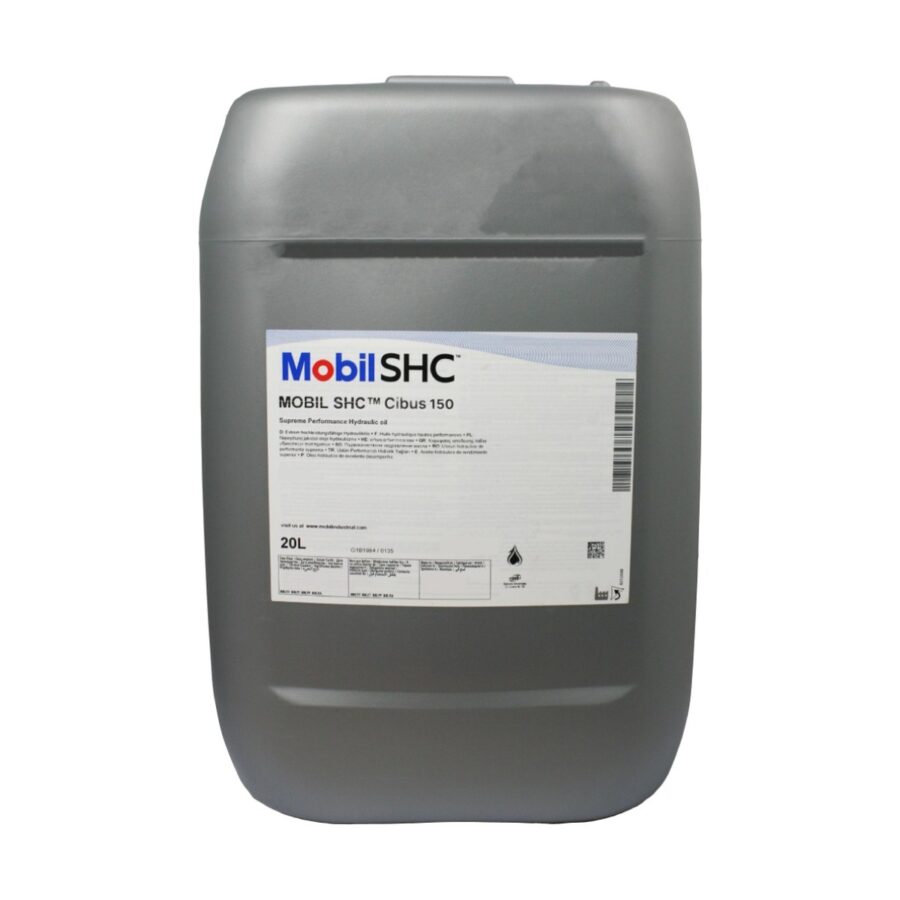
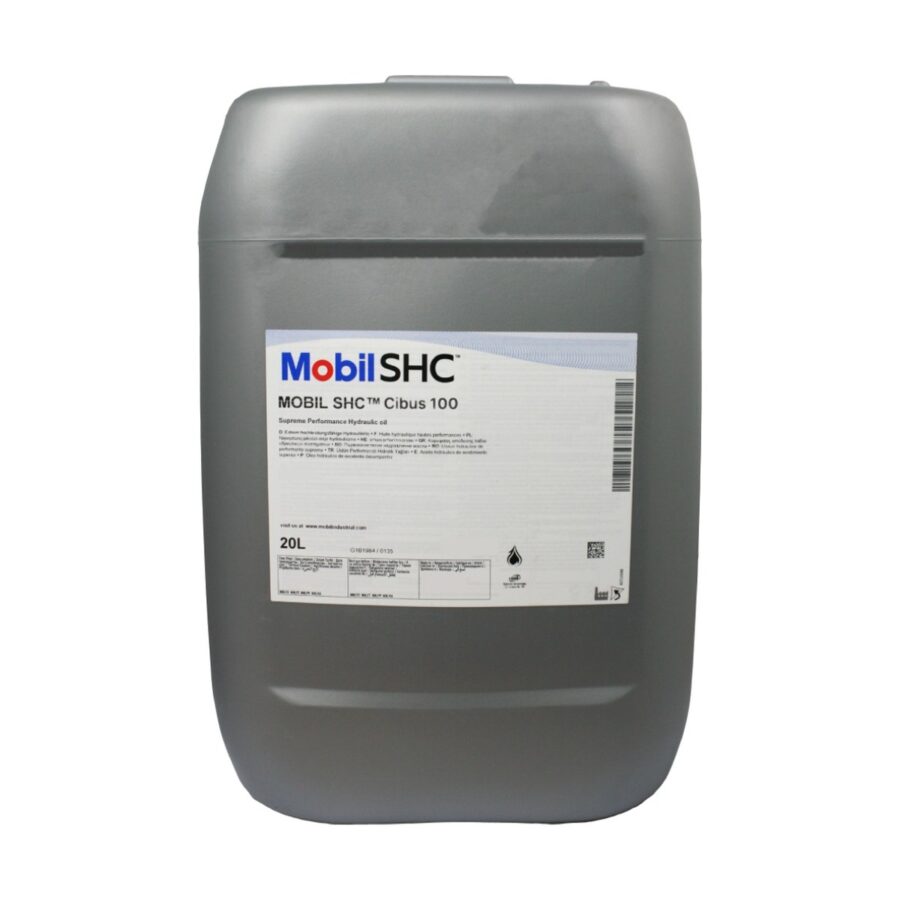
| Gearboxes, hydraulics, compressors, bearings (oils) | Mobil SHC Cibus synthetic H1 oils in ISO VG 32 to 460 |
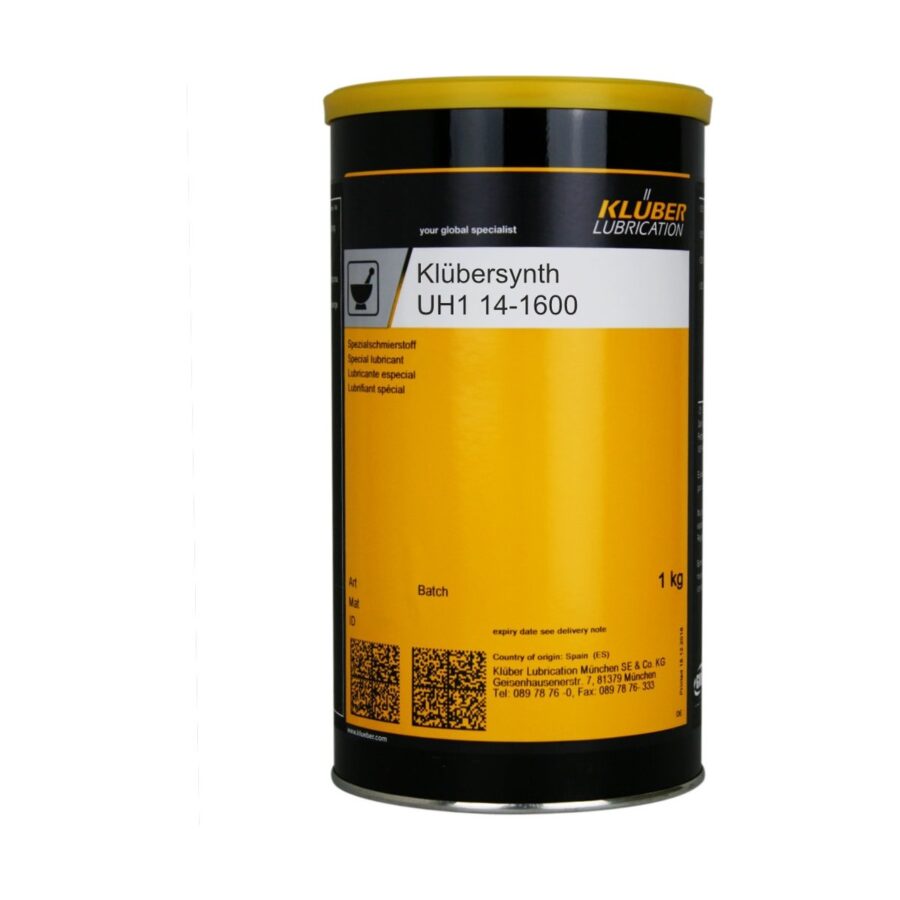
| General rolling bearings (grease) | Klubersynth UH1 14-1600 or another H1 synthetic bearing grease |
| High-load or wet bearings | An H1 grease with good water resistance |
| Oven and dryer bearings and chains | An H1 high-temperature grease or chain oil, such as BARRIERTA L 55 |
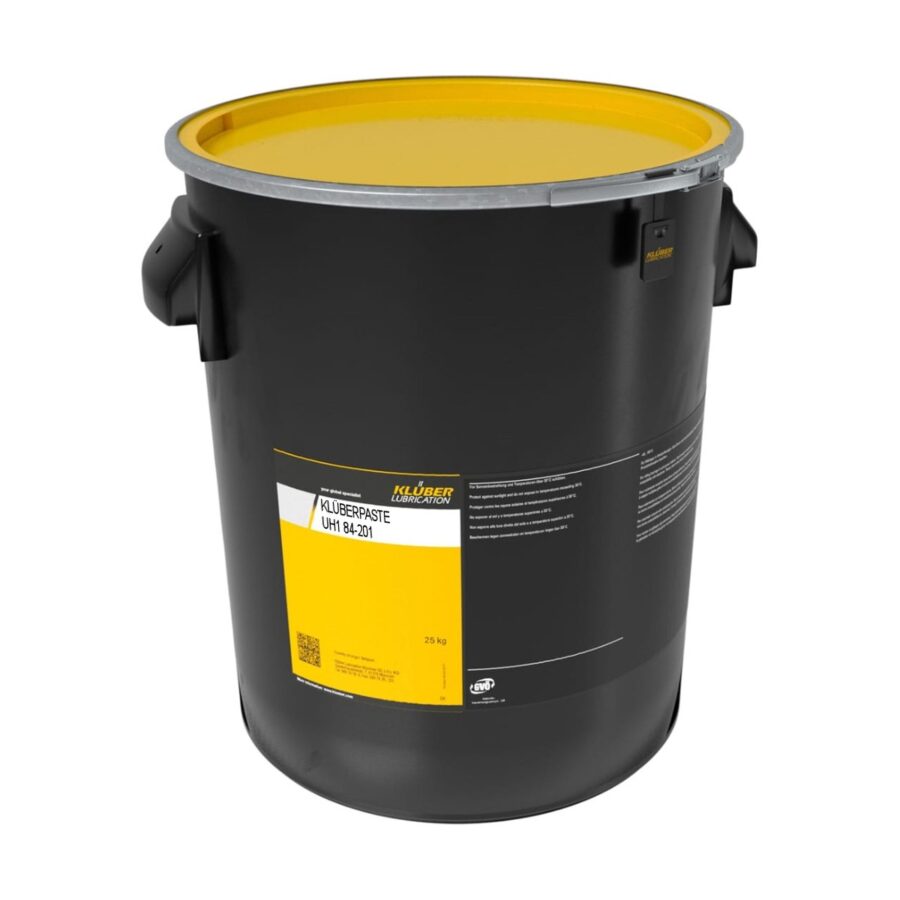
| Assembly and screw threads | Kluberpaste UH1 84-201 or a similar H1 paste |
| Valves and fittings | An H1 valve grease such as Paraliq GB 363 |
Choose each product by viscosity, temperature range, load, speed and water exposure first, then confirm the NSF registration of the exact grade. Our guide to choosing industrial grease explains the selection logic. Fewer products mean fewer mistakes, simpler stock and better buying power.
Step 4: Plan the changeover
- Check compatibility between the old and new lubricants, especially grease thickeners and oil base types.
- Flush gearboxes and circulating systems where the old and new oils are not compatible.
- Purge greased bearings with the new grease until clean grease appears.
- Change one line or machine at a time, and monitor temperature and noise for the first weeks.
- Remove the old products from the plant as each area is converted.
See our guide to grease compatibility for the thickener combinations that cause problems.
Step 5: Identify, label and separate
- Label every lubrication point with the product name and a colour or symbol code.
- Use dedicated, labelled grease guns, oil cans and transfer containers for each product.
- Never refill an H1 grease gun with a non-H1 product, even temporarily.
- Store H1 products in a separate, clean and labelled area, away from non-food-grade products.
- Keep containers closed and clean, and use first-in, first-out stock rotation.
Step 6: Write lubrication procedures
For each machine, write a short procedure or route card: which points to lubricate, which product, how much, how often, and any safety precautions. Include the correct amount of grease per point, because over-greasing pushes grease out of seals and into the product area. Automatic single-point lubricators can help where manual access is difficult or where consistent small amounts are needed.
Step 7: Document everything
| Document | Why auditors want it |
|---|---|
| Lubricant list with point-by-point use | Shows control of every chemical in production |
| Technical data sheets (TDS) | Shows the product suits the application |
| Safety data sheets (SDS) | Shows safe handling and storage |
| NSF registration evidence | Proves H1 status of each product |
| Halal and Kosher certificates where required | Meets customer and market requirements |
| Lubrication records | Shows tasks are done as planned |
| Change records | Shows changes are reviewed before they happen |
Step 8: Train and verify
Train maintenance staff, operators who lubricate and contractors on the reasons for the programme, the labelling system and the procedures. Include lubricant control in internal audits and walk-throughs. Review the programme at least once a year, and whenever new equipment arrives or a product changes. New machines often arrive filled with conventional lubricants from the maker, so check them before they enter production.
Setting up the lubricant store
The lubricant store is where many programmes succeed or fail. A clean, organised store makes it easy to pick the right product and hard to pick the wrong one. Use this checklist when setting one up:
- A dedicated, lockable room or cabinet for H1 products, separate from conventional lubricants.
- Shelves labelled with the product name and the same colour code used at the lubrication points.
- Drums stored indoors, off the floor, with bungs closed.
- Clean, labelled transfer containers and pumps, one per product.
- A spill kit and the SDS for every product within reach.
- A stock list showing minimum levels and lead times, so the plant never runs out and improvises.
- Temperature control where possible: hot GCC stores shorten the shelf life of greases and oils.
See our guide on grease storage and shelf life for storage limits.
A worked example: a dairy plant in Saudi Arabia
A dairy plant surveys its filling, packaging and processing lines and finds 23 lubricants, including four conventional greases on conveyors above open product and two different hydraulic oils. The team consolidates to seven H1 products: two Mobil SHC Cibus viscosity grades for gearboxes and hydraulics, two H1 bearing greases (general and wet-duty), one H1 high-temperature grease for the steriliser area, one H1 assembly paste and one H1 valve grease. Each point gets a coloured label, each product its own grease gun, and the store gets a dedicated H1 shelf. The changeover takes three months, line by line. At the next certification audit the lubricant section is closed without findings, and the store holds far fewer items than before.
What are the most common mistakes?
- Assuming new machines arrive with H1 lubricants.
- Allowing contractors to bring their own lubricants.
- Using one grease gun for several products.
- Choosing H1 products by registration alone, without checking performance.
- Keeping the documents but not the labels and tools that make the system work on the shop floor.
Frequently asked questions
Do I have to use H1 lubricants everywhere?
Not necessarily, but using H1 throughout production areas removes the risk of a mix-up and simplifies audits.
How many products should a food plant need?
Many medium-sized plants can cover their needs with six to ten H1 products. The right number depends on the range of temperatures, loads and equipment.
Do H1 lubricants cost more?
Unit prices are often higher, but consolidation, longer intervals with synthetic products and lower risk usually offset the difference.
What about lubricants in new machines?
Ask the equipment maker which lubricants are used at the factory, and specify H1 products in purchase orders for new equipment.
Can you help us consolidate our lubricant list?
Yes. Send us your current product list and machine list, and we will propose a short range of H1 products.
Conclusion
A food-grade lubrication programme turns lubricants from a hidden risk into a controlled part of your food-safety system. Survey every point, classify the risk, consolidate to a short list of suitable H1 products, change over carefully, label and separate everything, document it and train people. The result is safer food, fewer mistakes, simpler stock and audits that go smoothly.
Need help applying this to your plant? Send us the equipment details or the product you use now and we will recommend a suitable Kluber or Mobil grade: request a quote and we reply within one business day.