Key takeaways
- PETAMO is Kluber’s family of long-term, high-temperature rolling bearing greases, mostly based on polyurea thickeners.
- They are designed for bearings that run hot for long periods where relubrication should be rare or unnecessary.
- Typical uses include electric motors, fans, dryers, conveyor and guide rollers and sealed bearings in hot environments.
- Choose a grade by measured bearing temperature, speed factor and load, then confirm on the data sheet.
- Clean out the previous grease when switching: polyurea greases can be incompatible with other thickeners.
Bearings in hot fans, dryers, kiln auxiliaries, conveyor rollers and electric motors in hot plant rooms often fail early because conventional greases oxidise, harden or bleed out at high temperatures. The PETAMO range is Kluber’s answer: a family of long-term, high-temperature rolling bearing greases that keep lubricating for long periods at temperatures where general-purpose lithium greases struggle. This guide explains the PETAMO grades in our catalogue, what they are designed for and how to choose and use them correctly.
What are PETAMO greases?
Most PETAMO greases combine a polyurea thickener with mineral, synthetic hydrocarbon or ester base oils, or blends of them. Polyurea thickeners contain no metal soap, which gives them very good oxidation stability and long life at high temperatures. They also have good mechanical stability, so the grease does not soften or leak out of the bearing easily. The base oil decides the temperature range, low-temperature behaviour and load-carrying capacity of each grade.
PETAMO grades in our catalogue
| Grade | Positioning (from product data) | Packs we list |
|---|---|---|
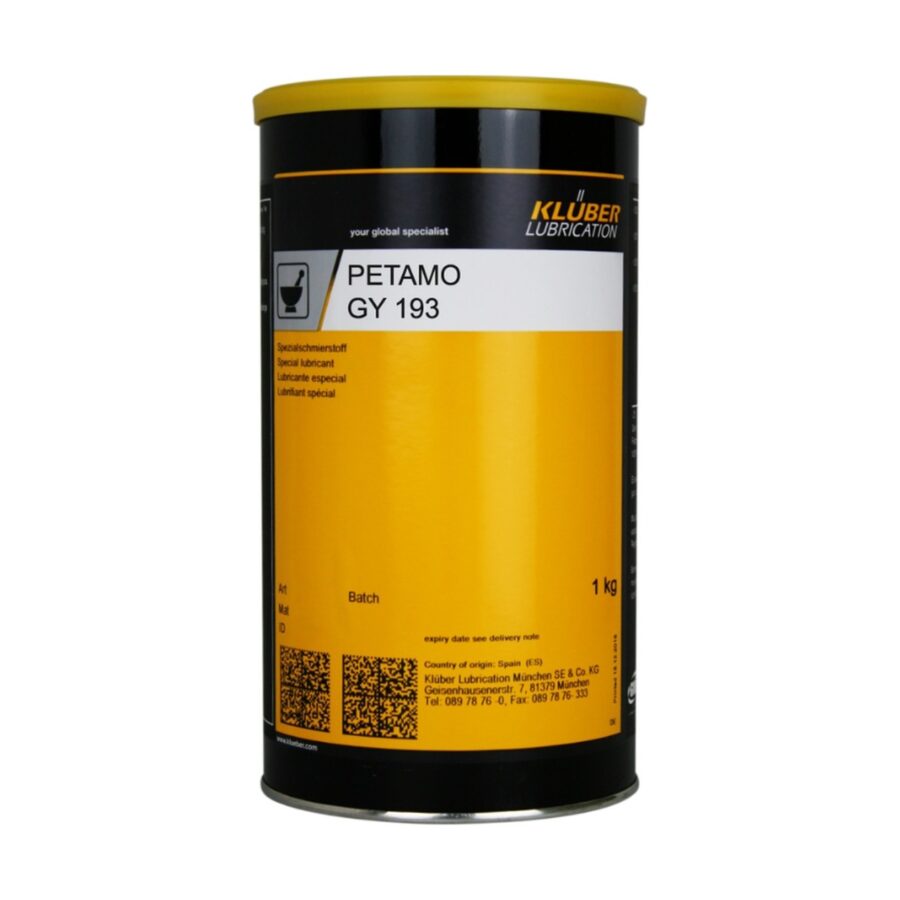
| PETAMO GY 193 | Long-term and high-temperature grease; ester oil with polyurea thickener; service range about −20 °C to 180 °C | 400 g, 1 kg, 25 kg |
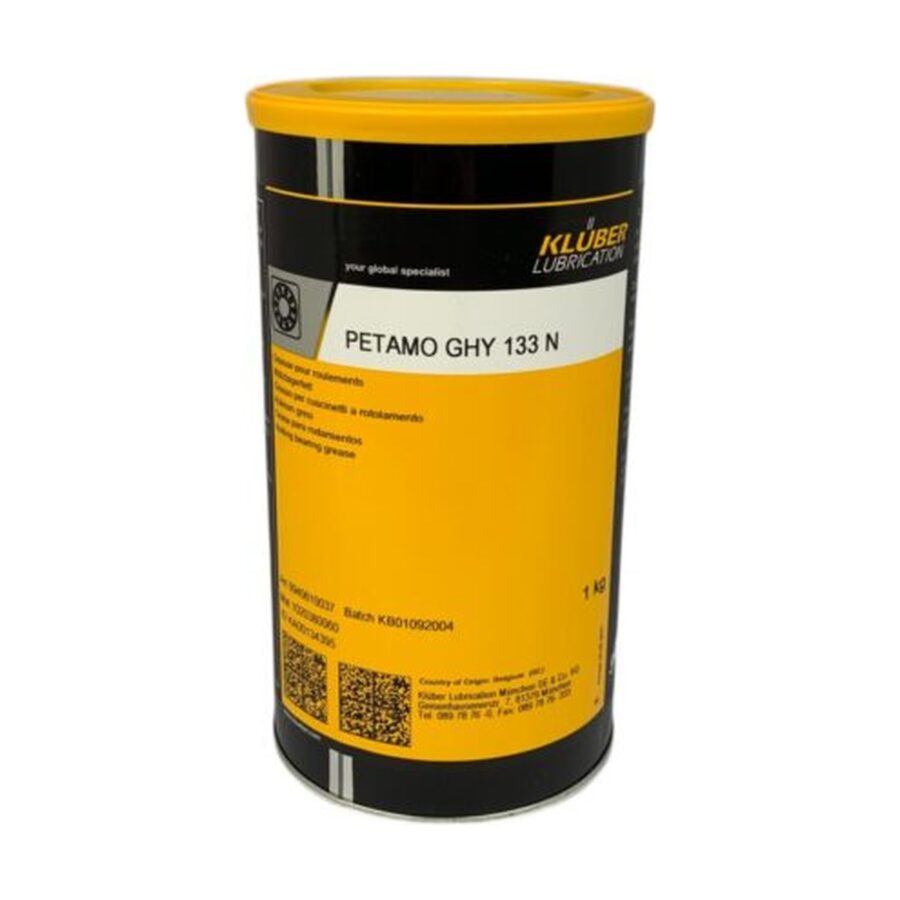
| PETAMO GHY 133 N | Long-term and high-temperature grease | 400 g, 1 kg, 25 kg |
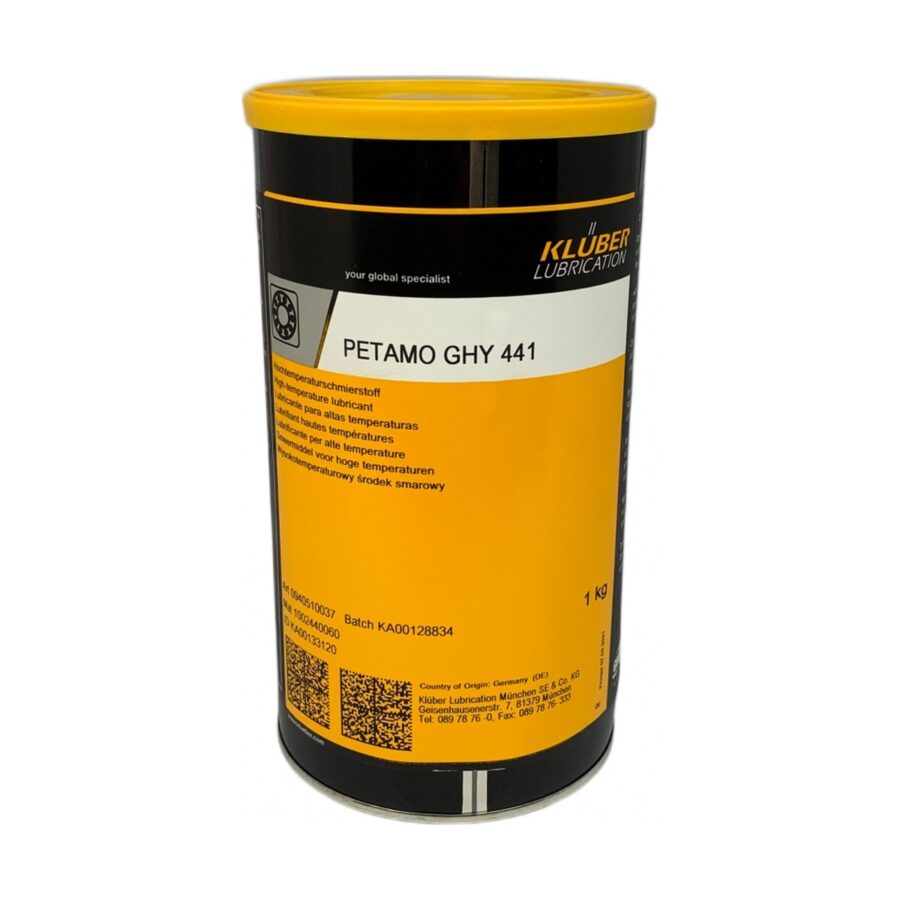
| PETAMO GHY 441 | High-temperature lubrication grease | 400 g, 1 kg |
| PETAMO GHY 443 | High-temperature and long-term grease | 400 g, 1 kg, 25 kg |
Check each grade’s data sheet for its exact base oil, temperature range, speed factor and base-oil viscosity before you choose.
Typical applications
| Equipment | Why PETAMO suits it |
|---|---|
| Electric motors in hot plant rooms | Long grease life at elevated temperature, low leakage |
| Fans and blowers handling hot air | High temperature and speed combined |
| Dryers and ovens (non-food) | Continuous heat, long intervals wanted |
| Conveyor, carrier and guide rollers | Lifetime or long-term lubrication of many bearings |
| Chain wheels and tension rollers | Heat and difficult access |
| Sealed and shielded bearings | Lifetime fill for the service life of the bearing |
According to its product data, PETAMO GY 193 can be used for lifetime lubrication or relubrication, depending on temperature, in applications such as electric motors, fans, carrier and guide rollers, chain wheels and sealed rolling bearings.
What is a polyurea thickener?
Polyurea thickeners are made by reacting isocyanates with amines to form small organic polymer fibres. Unlike lithium, calcium or barium soaps, they contain no metal, so there is nothing in the thickener to catalyse oil oxidation. This is one reason polyurea greases last so long at high temperatures and are widely used for lifetime-lubricated sealed bearings and electric motor bearings. Polyurea greases also tend to have good water resistance and low noise in bearings. Their main practical limitation is compatibility: some polyurea greases do not mix well with lithium or other soap greases, and mixing can soften the grease or shorten its life. That is why cleaning out or thorough purging matters when switching.
Why do bearings fail in hot service?
As a rule of thumb, grease life roughly halves for every 10–15 °C rise above a certain temperature. A grease that lasts a year at 70 °C may last only weeks at 120 °C. At high temperatures, the base oil oxidises and evaporates, the thickener structure breaks down, and the remaining grease either hardens into a dry crust or becomes too soft and runs out. Either way, the bearing loses its lubricating film and starts to wear. Choosing a grease designed for the real temperature is the single most effective way to extend bearing life in hot service.
How do you choose a PETAMO grade?
- Measure the actual bearing temperature in normal operation, using a contact thermometer or infrared camera on the housing.
- Compare it with the upper service temperature on each data sheet, leaving a sensible margin.
- Calculate the speed factor (n·dm) and check it against the grade’s limit.
- Consider load: heavier loads and slower speeds need a higher base-oil viscosity.
- Check the lowest temperature too, for equipment that starts cold or runs outdoors in winter.
- Decide whether you want lifetime lubrication or regular relubrication, and set intervals accordingly.
Our guide on high-temperature grease for kilns, ovens and dryers explains how to compare temperature ratings and when a PFPE grease is needed instead.
PETAMO vs other high-temperature options
| Option | Typical temperature capability | When to choose it |
|---|---|---|
| Lithium complex greases (e.g. Mobilith SHC) | Good, with synthetic base oil | Hot, heavily loaded bearings with regular relubrication |
| Polyurea greases (PETAMO, Polyrex EM) | Very good, with long life | Hot motors, fans and rollers; long intervals |
| PFPE greases (BARRIERTA L 55) | Highest | Very hot zones, chemical exposure, lifetime fills in extreme heat |
See also BARRIERTA L 55 for the hottest applications.
Relubrication: amount and interval
For bearings that are relubricated, use the amount and interval from the equipment maker, or calculate them from the bearing size and conditions. A common formula for the relubrication amount is 0.005 × D × B grams, where D is the outside diameter and B the width of the bearing in millimetres. At high temperatures, shorter intervals with small amounts work better than large, rare top-ups. Over-greasing increases churning and raises temperature, which defeats the purpose of a high-temperature grease. See how much grease a bearing needs.
Changing over to PETAMO
- Check compatibility between the current grease and the PETAMO grade; polyurea and lithium greases can be incompatible.
- Where possible, remove the bearing or open the housing and clean out the old grease.
- If cleaning is not practical, purge with PETAMO until clean grease appears, and shorten the first interval.
- Fill to the recommended level, usually a third to half of the free space.
- Label the lubrication point with the new grease name.
- Monitor temperature for the first weeks.
See grease compatibility for thickener combinations.
Storage
Store PETAMO greases indoors, in closed containers, away from heat and direct sunlight. In hot GCC warehouses, high storage temperatures can cause oil to separate from the grease. Use the oldest stock first and respect the shelf life on the data sheet. Our guide to grease storage covers this in detail.
How does PETAMO perform in GCC conditions?
In the GCC, ambient temperatures in plant rooms, on roofs and near kilns and furnaces often exceed 45 °C in summer. A bearing that would run at 70 °C in a cooler climate can run at 90 °C or more here, and that difference is enough to shorten conventional grease life dramatically. PETAMO greases are often used to bring relubrication intervals back to sensible levels in these conditions. Dust is the other common problem: sealed bearings with lifetime PETAMO fills avoid opening the bearing to contaminated air during relubrication, and well-sealed housings keep sand out.
A worked example: hot air fans at a cement plant
A cement plant in Ras Al Khaimah relubricates the bearings of its hot air fans every two weeks with a mineral lithium grease, and still replaces bearings several times a year. Measured housing temperatures are well above the grease’s comfortable range. The bearings are cleaned and filled with a PETAMO grade rated for the temperature and speed, the relubrication amount is recalculated with the bearing formula and the interval is extended step by step with temperature and vibration monitoring. Bearing replacements fall, grease consumption drops and technicians spend less time on the fan platforms in the heat.
What are the most common mistakes?
- Choosing grease by the process temperature rather than the measured bearing temperature.
- Mixing PETAMO with lithium grease without checking compatibility.
- Adding large amounts of grease to “cool” a hot bearing.
- Ignoring the speed limit on fast fans.
- Storing greases in hot, sunny yards.
Frequently asked questions
Is PETAMO suitable for electric motors?
According to the product data, PETAMO GY 193 can be used in electric motors among other applications. Check the motor maker’s requirements and the bearing temperature.
What pack sizes are available?
Typically 400 g cartridges, 1 kg cans and 25 kg buckets, depending on the grade. Each product page lists the sizes we supply.
Can PETAMO be used for lifetime lubrication?
Yes, in suitable conditions. The product data for PETAMO GY 193 describes lifetime lubrication or relubrication depending on temperature.
What thickener does PETAMO use?
Most PETAMO greases use a polyurea thickener. Check each grade’s data sheet.
Is PETAMO food-grade?
The PETAMO grades in our catalogue are not listed as NSF H1. For food plants, see our food-grade high-temperature greases.
How do I know when a PETAMO-lubricated bearing needs grease?
Follow the calculated interval, and watch temperature and vibration trends. A steady rise in temperature or noise is often the first sign that the grease is reaching the end of its life.
Conclusion
PETAMO greases are designed for bearings that run hot for long periods: motors, fans, dryers, rollers and sealed bearings. Measure the real bearing temperature, check speed and load, clean out the old grease when changing, and apply small, correct amounts. Browse all PETAMO products and our high-temperature greases.
Need help applying this to your plant? Send us the equipment details or the product you use now and we will recommend a suitable Kluber or Mobil grade: request a quote and we reply within one business day.