Key takeaways
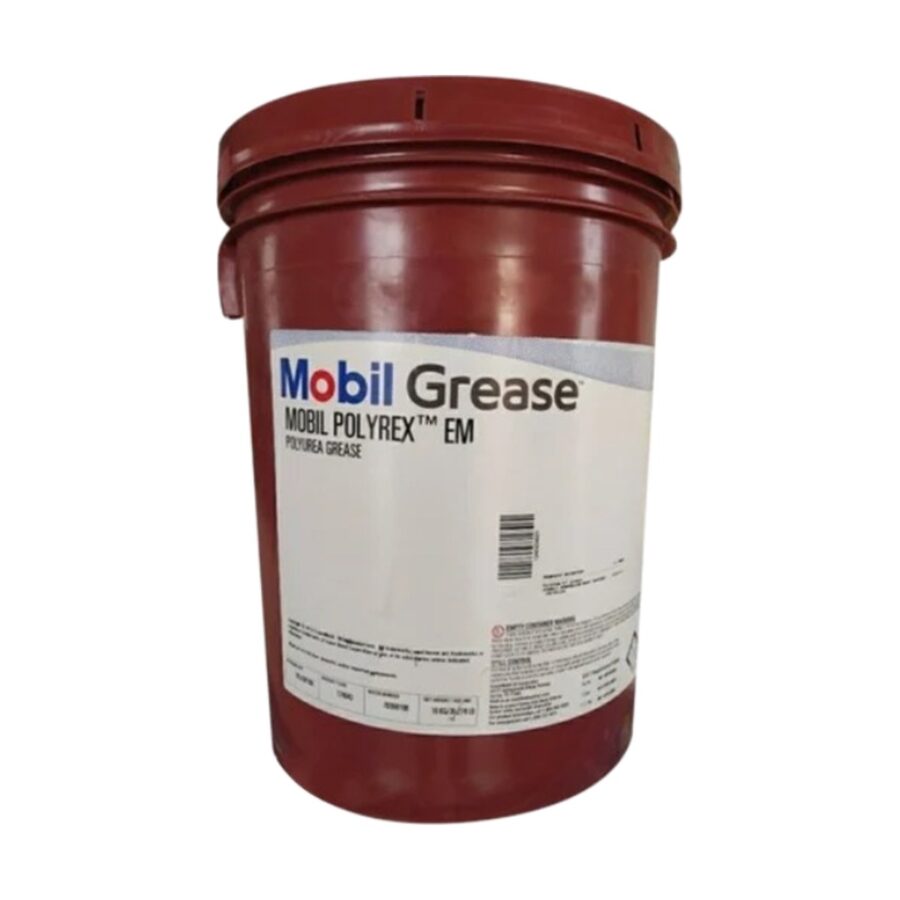
- Mobil Polyrex EM is a polyurea-thickened grease designed for electric motor bearings.
- Polyurea thickeners give long life at elevated temperatures and good resistance to leakage.
- It is a common choice for plants standardising on one motor grease.
- Polyurea and lithium greases can be incompatible: purge or clean when changing.
- Use the nameplate quantity and interval, open the drain plug and never over-grease.
Electric motors drive almost every machine in a plant, and bearing failures are one of the most common causes of motor failure. Many of those bearing failures come from lubrication: the wrong grease, too much grease, too little or mixed greases. Mobil Polyrex EM is a polyurea-thickened grease designed specifically for electric motor bearings, and it is a popular choice for maintenance teams that want one reliable motor grease across the plant. This guide explains why it suits motors and how to use it correctly. For general practice, see electric motor bearing grease.
What is Mobil Polyrex EM?
Polyrex EM combines a high-quality mineral base oil with a polyurea thickener and additives for oxidation and rust protection. According to the product data, it is designed for electric motor bearings and offers long grease life at high temperatures, good resistance to water and good shear stability. Check the current data sheet for the NLGI grade, base-oil viscosity and temperature range. We list Polyrex EM in a 16 kg pack.
Why polyurea for motors?
Electric motor bearings run at relatively high speeds, carry light to moderate loads and often run continuously for years at elevated temperatures. Under these conditions, oxidation is the main limit on grease life. Polyurea thickeners contain no metal soap that can catalyse oxidation, so polyurea greases typically last longer at high temperatures than conventional lithium greases. They also resist softening and leakage, which helps keep grease in the bearing and out of the windings. These properties are why many motor manufacturers fill motors with polyurea greases at the factory.
Where is Polyrex EM used?
| Equipment | Why it suits |
|---|---|
| Electric motors of all sizes, where the maker allows | Designed for motor bearings |
| Fans and blowers | Similar speeds and temperatures |
| Pumps with grease-lubricated bearings | Long life at moderate loads |
| Plants standardising on one motor grease | One product for most motors |
| Motors in hot plant rooms | Good high-temperature life |
Before you start: check the current grease
The most important step is to know what grease is already in the motor. New motors are often filled at the factory with a polyurea grease, and many motor nameplates state the grease type. If the current grease is polyurea, Polyrex EM is often a straightforward choice. If it is lithium, lithium complex or another type, compatibility must be checked first.
Compatibility with other greases
Polyurea and lithium greases can be incompatible. Mixing them in a bearing can soften the grease, cause it to leak out, or shorten its life. When changing to Polyrex EM from a different thickener, either clean out the old grease or purge thoroughly with Polyrex EM until clean grease appears from the drain, and then shorten the next interval. Check with the manufacturer if in doubt. See grease compatibility.
How do you relubricate a motor correctly?
- Check the motor nameplate or manual for the grease type, quantity and interval.
- Clean the grease nipple and the area around it.
- Open or remove the grease drain plug.
- With the motor running, if it is safe to do so, apply the nameplate quantity slowly.
- Let the motor run with the drain open so excess grease can escape, typically for 10 to 30 minutes.
- Close the drain, clean any purged grease and record the relubrication.
How much and how often?
Use the nameplate values where available. Where they are not, calculate the quantity with the formula 0.005 × D × B grams (D = outside diameter, B = width, in mm) and set the interval from the bearing size, speed and temperature. Hot running, vertical mounting and dirty environments shorten intervals. See how much grease a bearing needs.
The danger of over-greasing
Over-greasing is one of the most common causes of motor bearing failure. Too much grease causes churning, which raises bearing temperature and speeds up oxidation. Grease can also be pushed past the inner seal into the motor windings, where it damages insulation. Never grease “until it comes out” with the drain closed. See how to avoid over-greasing.
Monitoring motor bearings
- Record bearing temperatures during routine inspections.
- Use vibration analysis on critical motors.
- Use ultrasound-assisted greasing to apply only as much grease as is needed.
- Inspect purged grease: dark, hard or contaminated grease shows the interval is too long.
- Keep a record per motor of grease type, quantity and interval.
Ultrasound-assisted greasing
An ultrasound instrument listens to the bearing while grease is added. A dry bearing produces a higher noise level; as grease reaches the rolling elements, the noise drops. When it stops dropping, or starts to rise again, enough grease has been added. This lets technicians apply only what the bearing needs, rather than a fixed number of shots, and it reveals bearings that are already over-greased. Ultrasound-assisted greasing is especially valuable on motors, where over-greasing is a common cause of failures.
Vertical motors and special cases
Vertical motors, such as those on pumps and cooling towers, need extra care because grease tends to migrate downward away from the upper bearing. Intervals are usually shorter, and some designs need a firmer grease. Motors on variable-speed drives may run at very low speeds for long periods, which affects film formation, or at speeds above their nameplate rating, which raises temperature. Check the motor maker’s guidance for these cases, and monitor temperatures closely.
Storage and handling
Keep Polyrex EM in closed containers indoors, away from heat and dust. Use clean grease guns dedicated to the motor grease and labelled with its name. Cap grease nipples on motors so dust does not enter during the next relubrication. Use older stock first.
Standardising motor lubrication
Many plants have dozens or hundreds of motors with different greases, filled by different contractors over the years. Standardising on one motor grease, where the motor makers allow, reduces the risk of mixing incompatible greases and simplifies stock. Start by surveying motors and their current greases, convert motors to the standard grease one by one with proper purging, label each motor with the grease name, and train technicians.
Building a motor lubrication route
A lubrication route lists every regreasable motor in a logical walking order, with the grease name, quantity, interval and any special notes, such as vertical mounting or a variable-speed drive. Technicians follow the route, record each task and note abnormal temperatures, noise or purged grease condition. Over time, the records show which motors need shorter or longer intervals, and the route becomes the plant’s single source of truth for motor lubrication.
How does Polyrex EM perform in GCC conditions?
Motor rooms, pump houses and outdoor motors in the GCC often run at high ambient temperatures, which shortens grease life. A polyurea grease with good high-temperature life helps, but so do good ventilation, clean cooling fins and correct relubrication intervals. In dusty areas, keep grease nipples capped and clean them before greasing.
A worked example: a water pumping station
A water pumping station in Abu Dhabi has 40 motors greased with three different products by different contractors. Several bearings fail each year, and some motors show grease in the windings at rewinds. The station standardises on Polyrex EM after checking motor maker recommendations, purges each motor on conversion, labels them, introduces nameplate quantities with drain plugs open, and trains staff on ultrasound-assisted greasing. Over the following year, bearing failures fall and no new cases of grease in the windings are found.
What are the most common mistakes?
- Mixing Polyrex EM with an incompatible grease without purging.
- Greasing with the drain plug closed.
- Applying more grease “to be safe”.
- Greasing sealed-for-life bearings that are not designed to be relubricated.
- Not recording which grease is in each motor.
Frequently asked questions
Can Polyrex EM be mixed with lithium grease?
Polyurea and lithium greases can be incompatible. Check with the manufacturer, and clean or purge thoroughly when changing.
What pack sizes do you supply?
See the product page for the sizes we supply, including the 16 kg pack.
Should I grease motors while running?
Many motor makers recommend greasing while running, with the drain open, if it is safe. Follow the motor maker’s instructions and your site safety rules.
How often should motors be greased?
Follow the nameplate interval, or calculate it from bearing size, speed and temperature. Hot, vertical or dirty motors need shorter intervals.
Is Polyrex EM suitable for sealed bearings?
Sealed-for-life bearings are filled by the bearing maker and are not relubricated. Polyrex EM is for motors with regreasable bearings.
Does Polyrex EM work in high-temperature motors?
Polyurea greases generally offer long life at elevated temperatures. Check the service temperature on the data sheet against your measured bearing temperature.
Conclusion
Mobil Polyrex EM gives plants a reliable polyurea grease designed for electric motor bearings. Check the current grease, purge when changing, use the nameplate quantity with the drain open, avoid over-greasing and record every relubrication. See the Polyrex EM product page and our bearing greases.
Need help applying this to your plant? Send us the equipment details or the product you use now and we will recommend a suitable Kluber or Mobil grade: request a quote and we reply within one business day.