Key takeaways
- Measure the real bearing temperature; it can be very different from the oven or process temperature.
- Use the upper service temperature on the data sheet, not the drop point, to select a grease.
- Synthetic ester/PAO greases cover most applications to about 150–180 °C; PFPE/PTFE greases go well beyond 200 °C.
- PFPE greases must not be mixed with conventional greases; clean bearings completely before switching.
- At high temperature, small and frequent relubrication beats large, infrequent doses.
Hot bearings are among the hardest lubrication points in any plant. Ordinary grease oxidises, hardens and loses its oil within days or weeks at high temperature, and the bearing runs dry. Kiln cars, oven conveyors, dryers, tenter frames, hot fans and bearings near furnaces all fall into this category. High-temperature greases are designed for these conditions, but they differ widely, and choosing the wrong one wastes money and causes failures.
This guide explains how to measure what your bearings really see, how high-temperature greases are built, how to choose between them, and how to apply them. It draws on the product information published by manufacturers such as Kluber Lubrication, whose high-temperature ranges are among the best known in industry.
Why does ordinary grease fail at high temperature?
Three processes speed up as temperature rises. Oxidation: the base oil reacts with oxygen and forms acids, sludge and eventually hard, varnish-like deposits. Evaporation: lighter parts of the oil evaporate, so the grease dries out and stiffens. Thickener breakdown: some thickeners soften or lose their structure, so the grease runs out of the bearing. A widely quoted rule of thumb is that oxidation rates roughly double for every 10 °C rise, which explains why a grease that lasts months at 80 °C may last only days at 150 °C.
Step 1: Measure the real bearing temperature
The bearing temperature is what matters, and it can be quite different from the process temperature. A bearing mounted outside an oven wall with good insulation may run at 90 °C while the oven is at 250 °C. A kiln car bearing that passes through the hot zone may briefly see far more than its average. A fan in a hot gas stream may heat its bearing through the shaft.
- Use an infrared thermometer or contact probe on the bearing housing.
- Measure at the hottest point of the cycle and at steady running.
- Record summer and winter values; ambient heat in the GCC adds significantly.
- For critical points, fit temperature sensors and trend the data.
Step 2: Understand the temperature limits on the data sheet
| Value | What it means | Use it for selection? |
|---|---|---|
| Upper service temperature | Highest temperature for a useful grease life | Yes: the key value |
| Lower service temperature | Lowest temperature for reliable start-up | Yes, for cold starts |
| Drop point | Temperature at which grease drips in a lab test | No: it is usually far above the usable limit |
| Evaporation loss | How much oil evaporates at a test temperature | Helpful for very hot applications |
| Oxidation stability | Resistance to ageing | Helpful for long intervals |
Grease life at the upper service temperature is limited; the closer you run to it, the shorter the relubrication interval must be. Choosing a grease with some margin above your measured temperature gives much longer life.
Step 3: Match the grease type to the temperature
| Bearing temperature (approx.) | Typical grease type | Examples in our range |
|---|---|---|
| Up to about 120–150 °C | Lithium-complex or polyurea greases, mineral or synthetic oil | Mobil Polyrex EM, Mobilith SHC, Mobil Unirex N 3 |
| About 150–200 °C | Synthetic ester or PAO oils with polyurea or special thickeners | Kluber PETAMO, Kluberplex BEM 41-132, Stabutherm GH 462, ASONIC |
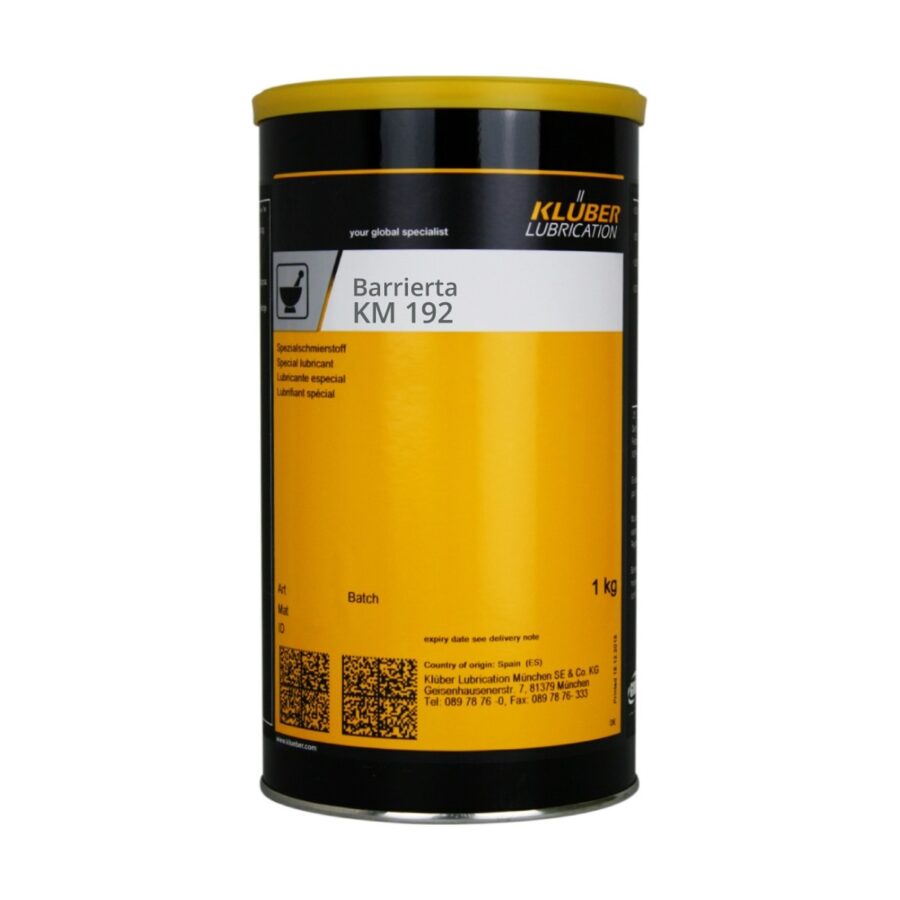
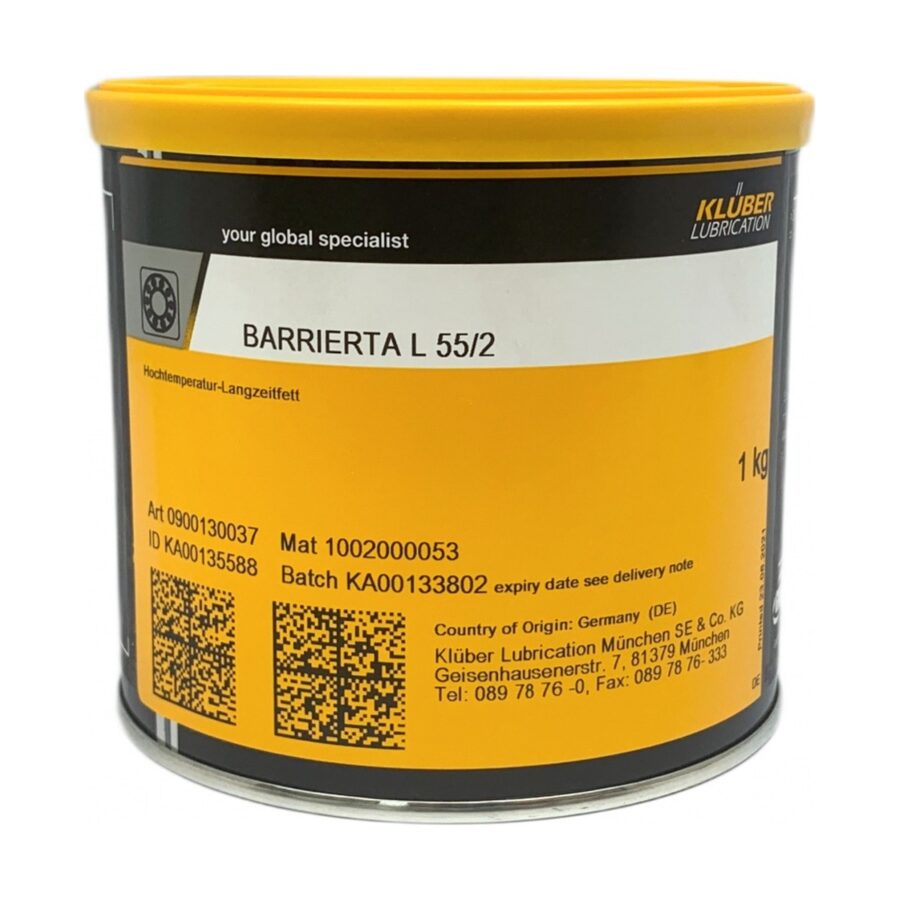
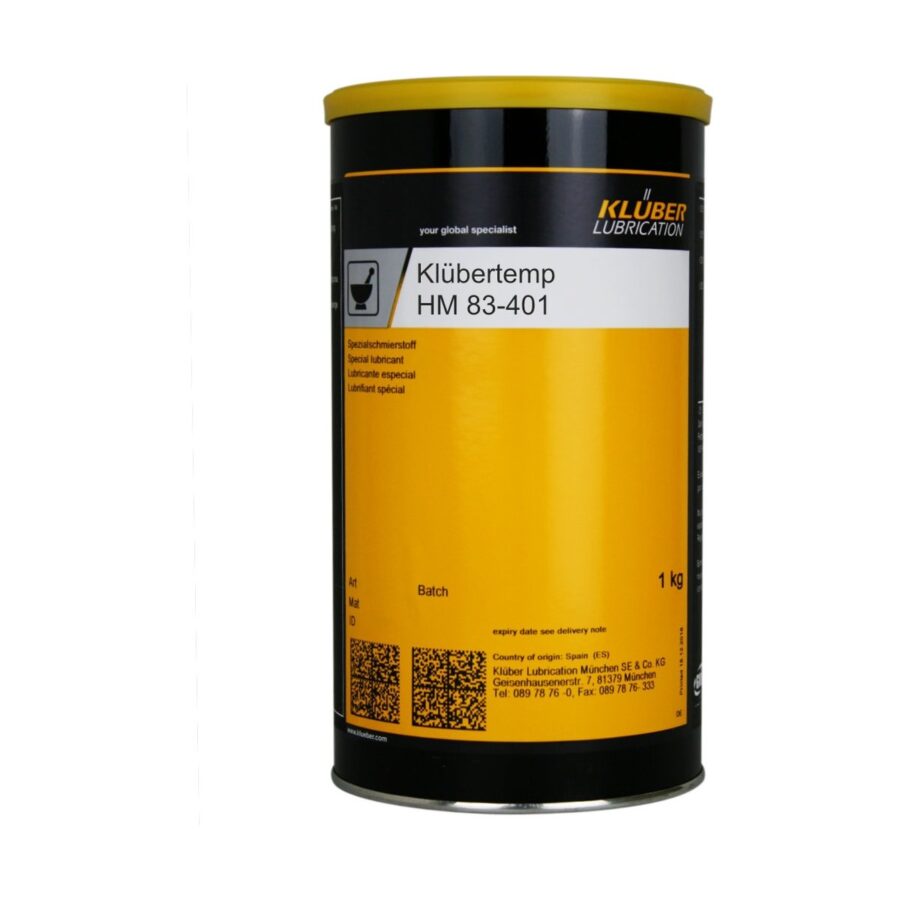
| Above about 200 °C | PFPE oil with PTFE thickener | Kluber BARRIERTA L 55, Klubertemp |
| Very high, slow or non-rotating contacts | High-temperature pastes with solid lubricants | WOLFRACOAT C, Kluberpaste HEL 46-450 |
These bands are a rough guide only. Speed, load and the required relubrication interval also affect the choice, so always check the upper service temperature and speed rating on the specific product’s data sheet.
Synthetic ester and PAO greases
Ester and PAO base oils resist oxidation much better than mineral oils and keep a more stable viscosity across temperature. Combined with heat-stable thickeners such as polyurea, they provide long-term lubrication at elevated temperatures. According to its product data, Kluber PETAMO GY 193 combines an ester oil with a polyurea thickener and has a service range of about −20 °C to 180 °C, suitable for electric motors, fans, carrier and guide rollers, chain wheels and sealed bearings depending on temperature.
PFPE greases
Perfluoropolyether (PFPE) oils thickened with PTFE are in a class of their own. They are chemically inert, non-flammable and resist oxidation and evaporation at temperatures where other oils break down, and they leave no carbon deposits. That makes them ideal for oven and kiln bearings, where carbon from burnt grease is a major problem, and for chemically aggressive environments. Kluber BARRIERTA L 55 is a well-known example; according to its product data, BARRIERTA L 55/0–3 are also NSF H1 registered, so they can be used in food and feed industries.
Two important points: PFPE greases do not mix with conventional greases, and some are stiff at low temperatures. Clean bearings completely before switching, and check the lower service temperature for cold starts.
High-temperature pastes
For very slow, oscillating or non-rotating contacts, and for bolts and fittings near furnaces, pastes with solid lubricants keep working after the oil has evaporated or burnt off. See our guide to assembly pastes vs anti-seize compounds for details.
How should hot bearings be relubricated?
Grease life shortens quickly as temperature rises, so relubrication strategy is as important as grease choice:
- Calculate the quantity for the bearing size; do not pack hot bearings full, as excess grease only adds heat.
- Apply small amounts more frequently rather than large amounts rarely.
- Purge old, aged grease with fresh grease where the design allows.
- Use automatic lubricators or centralised systems where access is difficult or dangerous.
- Check the purged grease: dark, hard or carbonised grease means the interval is too long or the grease is not suitable.
Application examples
| Application | Typical challenge | Typical solution |
|---|---|---|
| Kiln car wheel bearings | Repeated passage through very hot zones | High-temperature bearing grease or PFPE grease |
| Bakery oven conveyor bearings | Heat plus food-safety requirements | NSF H1 high-temperature or PFPE grease |
| Textile stenter chains and bearings | Heat and risk of staining fabric | Low-evaporation high-temperature lubricants |
| Dryer and hot-air fan bearings | Heat conducted through the shaft | Synthetic polyurea or ester greases |
| Bolts on furnaces and exhausts | Seizing after heat cycles | High-temperature anti-seize paste |
Speed and load at high temperature
Temperature is not the only factor. A hot, fast fan bearing needs a grease whose speed rating is high enough at temperature, while a hot, slow kiln car bearing under heavy load needs a high base-oil viscosity and good load capacity. Check both the speed factor (n × dm) rating and the base-oil viscosity on the data sheet, and remember that viscosity falls as temperature rises. A grease that is fine on temperature but wrong on speed or load will still fail early.
How does GCC heat add to high-temperature lubrication problems?
In the UAE and the wider GCC, ambient heat adds to process heat. Equipment in direct summer sun or in poorly ventilated plant rooms can push bearings 20 °C or more above their design temperature. Points that work well with a standard grease in winter may fail in summer. A pre-summer review of hot bearings, with temperature measurements and a move to synthetic or high-temperature greases where needed, prevents many seasonal failures.
What should you know before ordering a high-temperature grease?
- What is the measured peak and steady bearing temperature?
- What are the speed and load?
- Is food contact possible (NSF H1 needed)?
- What grease is in the bearing now, and is a full clean-out possible?
- How often can the point be relubricated?
What are the most common mistakes?
- Selecting by drop point instead of upper service temperature.
- Using the oven temperature instead of the bearing temperature.
- Topping up a PFPE grease with a conventional grease.
- Packing hot bearings full of grease.
- Keeping long intervals that worked in winter through the summer.
Browse our high-temperature grease range or use the lubricant finder to filter by maximum temperature.
Frequently asked questions
Why does grease turn black and hard in my oven?
It is oxidising and losing its oil at that temperature. Move to a grease rated for higher temperatures, reduce the quantity per shot and relubricate more often.
Can high-temperature grease be used in food plants?
Yes, if it is NSF H1 registered. Several high-temperature greases, including some PFPE greases, carry H1 registration according to their product data.
Is PFPE grease worth the price?
In hot applications, usually yes: its much longer life, fewer failures and lack of carbon deposits normally outweigh the higher price.
Can I use high-temperature grease at normal temperatures?
Often yes, if its low-temperature limit, speed rating and base-oil viscosity suit the application. Some PFPE greases are stiff when cold.
What is the difference between drop point and service temperature?
The drop point is a laboratory value at which the grease drips; the upper service temperature is the practical limit for a useful life, and is much lower.
Conclusion
Choosing high-temperature grease starts with measuring the real bearing temperature and reading the upper service temperature on the data sheet. Synthetic ester and PAO greases cover many hot applications; PFPE greases handle the hottest and most aggressive ones. Combine the right grease with small, frequent relubrication, and hot bearings stop being a constant source of failures.
Need help applying this to your plant? Send us the equipment details or the product you use now and we will recommend a suitable Kluber or Mobil grade: request a quote and we reply within one business day.