Key takeaways
- High-temperature pastes prevent seizure and allow dismantling of screws, bolts, flanges and fittings exposed to heat.
- The upper temperature limit of a paste comes from its solid lubricants; the base oil evaporates or burns off well below it.
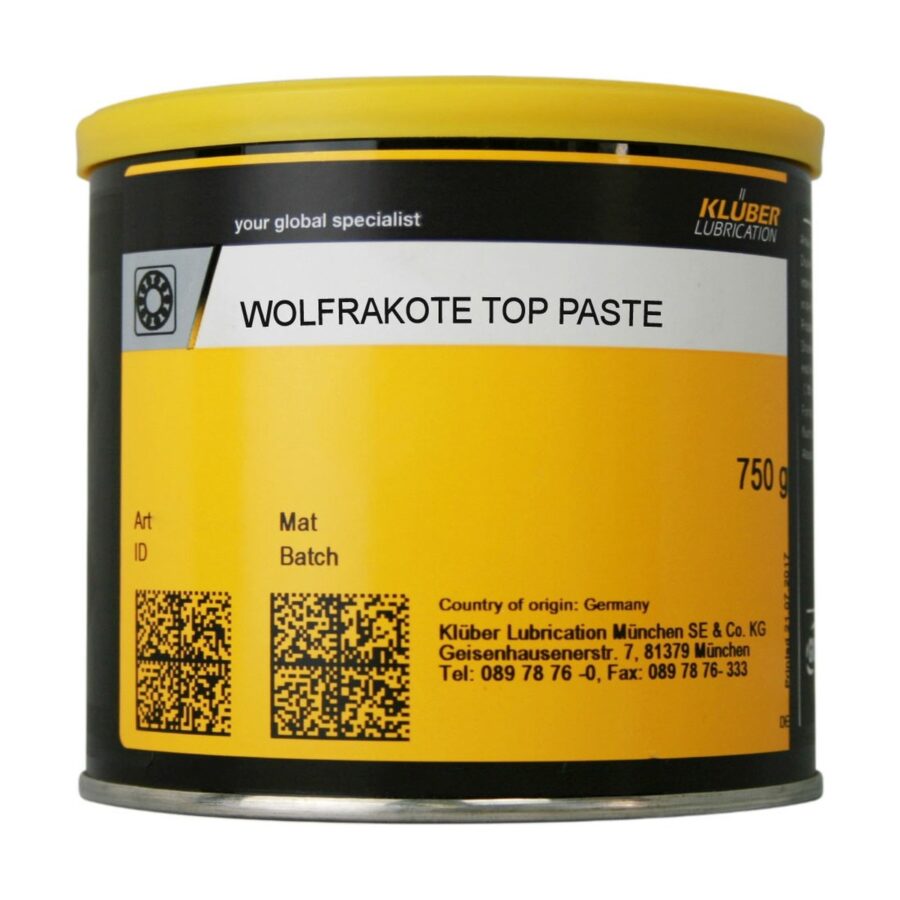
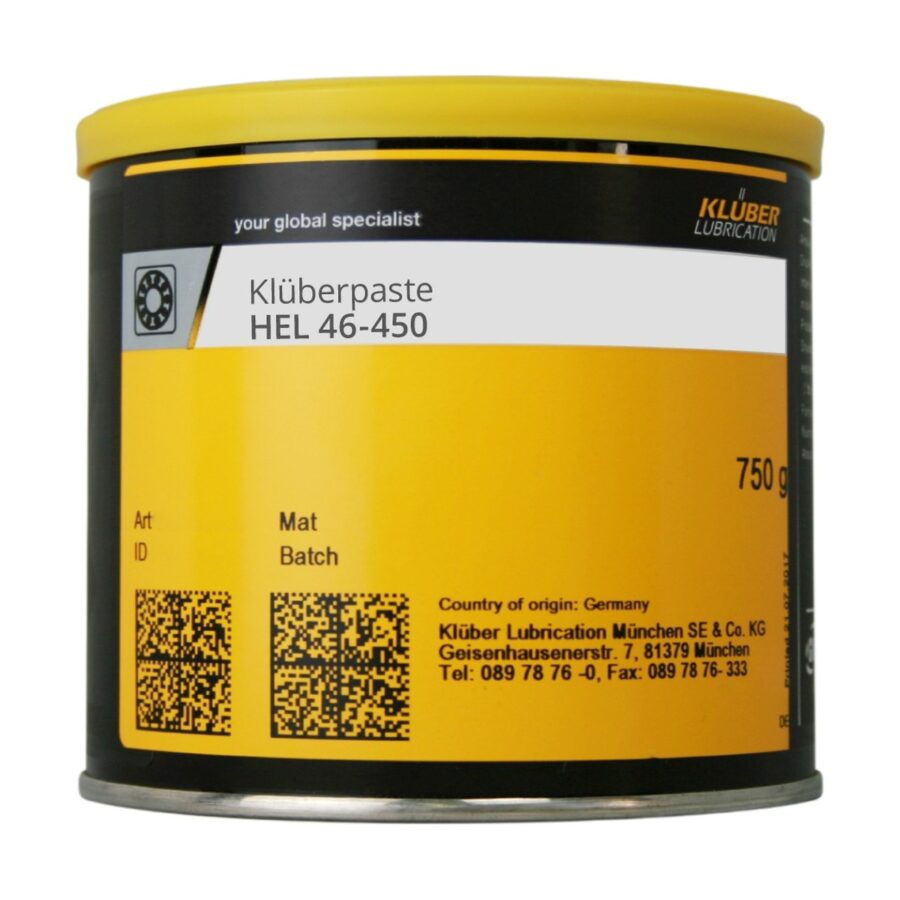
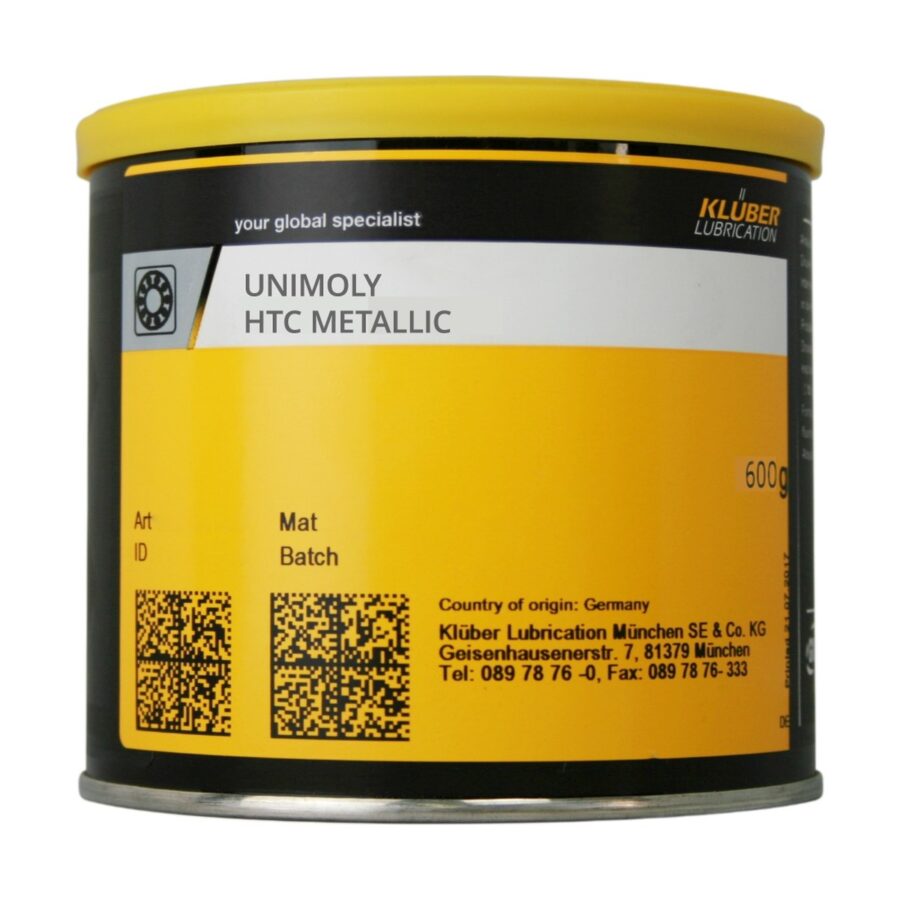
- Kluberpaste HEL 46-450 and Wolfrakote Top Paste are rated to 1000 °C; UNIMOLY HTC METALLIC and Wolfracoat C to 1200 °C.
- WOLFRASYN ULAF (graphite, up to 400 °C) suits lower-temperature hot applications; Kluberpaste UH1 96-402 is the NSF H1 option up to 1200 °C.
- Check the material (stainless steel, nickel alloys), the required tightening torque and any food-grade need before choosing.
Bolts on exhaust manifolds, turbine casings, kiln and furnace fittings, steam valves and hot dies are hard to remove after months of heat. A high-temperature paste applied at assembly prevents galling and seizure and keeps tightening torque consistent. This guide compares the Kluber high-temperature pastes we supply. For general assembly pastes and anti-seize, see assembly paste vs anti-seize.
How does a high-temperature paste work?
A paste is a base oil or grease carrying a high proportion of solid lubricants such as graphite, molybdenum disulphide, copper, ceramic or other metal particles. At assembly, the paste lubricates the thread so the specified preload is reached with consistent torque. At high temperature, the base oil evaporates or carbonises, but the solid lubricants remain as a separating layer that stops metal-to-metal welding. That is why pastes are rated to temperatures far above any oil.
Kluber high-temperature pastes at a glance
| Paste | Service temperature | Colour | Notes from the data sheet |
|---|---|---|---|
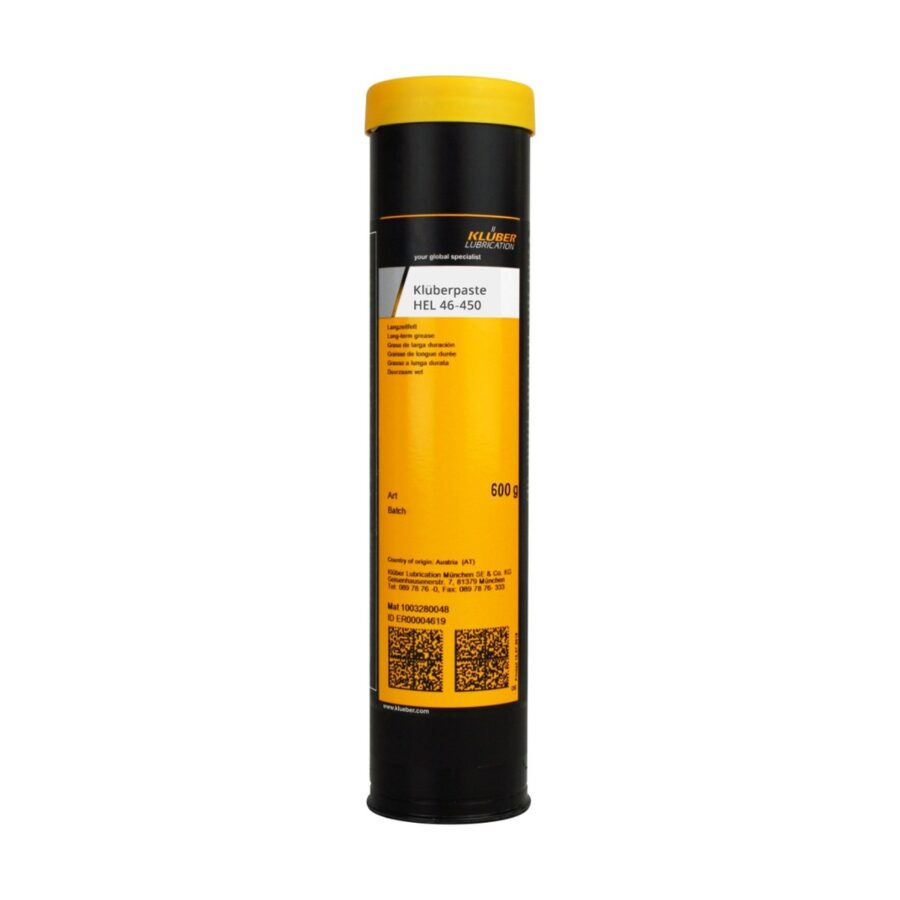
| Kluberpaste HEL 46-450 | −40 °C to 1000 °C | Black | Four-ball welding load ≥ 5,000 N; drop point ≥ 250 °C |
| Wolfrakote Top Paste | −25 °C to 1000 °C | Grey | Four-ball welding load ≥ 3,600 N |
| UNIMOLY HTC METALLIC | 25 °C to 1200 °C | Silver | Four-ball welding load ≥ 4,000 N |
| Wolfracoat C | −30 °C to 1200 °C | Grey | Silicate thickener; base oil about 110 mm²/s at 40 °C |
| WOLFRASYN ULAF | −30 °C to 400 °C | Black | Graphite paste; four-ball welding load ≥ 3,600 N |
| Kluberpaste UH1 96-402 | −30 °C to 1200 °C | – | NSF H1 registered, for food-processing equipment |
Values are from the manufacturer’s data as shown on our product pages. Temperature limits apply to the solid-lubricant layer; check the current TDS for your use.
Which paste for bolts above 1000 °C?
For the hottest fittings, such as furnace and kiln components, gas turbine and exhaust parts, choose a paste rated to 1200 °C: UNIMOLY HTC METALLIC or Wolfracoat C. Wolfracoat C is also available in a cartridge, which is convenient for applying to many fittings. Confirm the paste is suitable for the bolt material and any special alloy.
Which paste for general hot bolts up to 1000 °C?
For most hot screws, studs and flanges in plants, Kluberpaste HEL 46-450 and Wolfrakote Top Paste are the usual choices. HEL 46-450 is black, has a high four-ball welding load and is widely used on screw connections exposed to high temperature. Wolfrakote Top Paste is grey and also used for chains at high temperature and as a coating in foundries. Both are available in tubes and cans; see the product pages for the packs we supply.
When is a lower-temperature paste better?
Not every hot application needs a 1000 °C paste. For fittings that run up to a few hundred degrees, such as steam lines, hot water systems and many process valves, WOLFRASYN ULAF (up to 400 °C) or an assembly paste such as Kluberpaste 46 MR 401 (up to 150 °C) can be more suitable and give better lubrication during assembly. Choose the paste whose range covers the real operating temperature with a sensible margin.
Which paste is food-grade?
For food-processing equipment such as ovens, sterilisers and hot conveyors, use an NSF H1 registered paste. Kluberpaste UH1 96-402 is rated to 1200 °C and is H1 registered. For lower temperatures, Kluberpaste UH1 84-201 is a white H1 assembly paste rated from −45 °C to 120 °C. See Kluber food-grade UH1 lubricants.
Does the paste change the tightening torque?
Yes. The friction coefficient of a paste determines how much of the applied torque becomes bolt preload. A low-friction paste gives more preload for the same torque, so using the dry-thread torque value with a paste can overtighten the bolt. Use the torque values from the equipment maker for the specific paste, or the friction coefficient given in the paste’s data sheet. Apply paste consistently and to the thread and the bearing surface under the head or nut as the instructions require.
How should a high-temperature paste be applied?
- Clean threads and contact faces; remove old paste, rust and dirt.
- Apply a thin, even coat to the male thread and to the contact face under the head or nut.
- Do not apply so much paste that it fills blind holes; trapped paste can stop the bolt seating.
- Tighten to the torque specified for the paste.
- Record the paste used on the maintenance record so the same paste is used next time.
Copper, graphite or ceramic: which solid lubricant?
| Solid lubricant | Typical strengths | Watch out for |
|---|---|---|
| Graphite | High temperature, good separation | Can promote galvanic corrosion with some metals in damp conditions |
| Copper | Good anti-seize, electrically conductive | Not for stainless steel in some cases, or where copper is not allowed |
| Ceramic and metal-free | Suitable for stainless steel and nickel alloys | Check temperature and load ratings |
| MoS₂ | Excellent at assembly and under high load | Oxidises at high temperature in air |
Ask the equipment maker or contact us if you are unsure which type is allowed for your materials.
Where are high-temperature pastes used in GCC plants?
Typical applications in the region include exhaust and turbine casing bolts in power and desalination plants, burner and furnace fittings in steel and glass plants, kiln and cooler fittings in cement plants, flange bolts on steam and hot-oil lines in refineries and petrochemical plants, and oven and dryer fittings in food factories. Many of these bolts are opened only at shutdowns, sometimes years apart, so the paste must protect the thread through long periods of heat and then allow the bolt to be removed without damage.
What happens if no paste, or the wrong paste, is used?
Without a paste, threads exposed to heat can gall during tightening and fuse together over time through oxidation and diffusion. Removal then needs cutting, drilling or heating, which extends shutdowns and can damage expensive components. With a paste rated below the operating temperature, the solid lubricants may oxidise or burn off, leaving the thread unprotected. A paste with the wrong friction value can lead to bolts that are under- or over-tightened, which risks leaks or broken bolts. Matching the paste to temperature, material and torque procedure prevents these problems.
How do pastes behave on stainless steel and nickel alloys?
Stainless steels and nickel alloys are particularly prone to galling because their protective oxide layers break down under sliding pressure. They benefit most from a good paste. At the same time, some metals and metal compounds in pastes are not wanted on these alloys, for example where high-temperature contact could cause embrittlement or corrosion. Check the paste data sheet for statements about suitability for stainless steel and nickel alloys, and follow any restrictions from the equipment maker or your plant’s material standards.
Which pack size should you choose?
| Pack | Best for |
|---|---|
| Tubes (60–80 g) | Occasional use, toolboxes, small fittings |
| Cartridges (400 g) | Applying to many fittings quickly with a gun |
| Cans (600–750 g, 1.2 kg) | Workshop use and shutdown kits |
| Larger containers | Production assembly and frequent use |
Keep pastes closed between uses and stir before use if the solids have settled, so the paste applied has the designed solid content.
Checklist before choosing a high-temperature paste
- Maximum operating temperature at the fitting.
- Bolt and nut materials, including stainless steel and nickel alloys.
- Required torque or preload and the friction value to use.
- Food-grade requirement (NSF H1).
- Any restrictions on copper, graphite or other components.
- Pack size that suits how often the paste is used.
How much paste do you need for a shutdown?
Estimate from the number and size of the fittings to be assembled. A thin coat on a medium-sized bolt uses only a small amount, so a single 600–750 g can treats a large number of fittings. For major shutdowns, order the paste with the other shutdown materials so it is on site before work starts, and keep one type of paste per application to avoid mix-ups between crews.
Frequently asked questions
What is the highest-temperature Kluber paste?
UNIMOLY HTC METALLIC, Wolfracoat C and Kluberpaste UH1 96-402 are rated up to 1200 °C according to their data sheets.
Is Wolfrakote Top Paste the same as Kluberpaste HEL 46-450?
No. Both are rated to 1000 °C but they differ in composition, colour and properties. Use the paste specified by your equipment maker.
Can I use anti-seize paste on stainless steel bolts?
Yes, stainless steel is prone to galling and benefits from paste, but choose a paste approved for stainless steel; some makers avoid copper-containing pastes.
Which paste is approved for food plants?
Kluberpaste UH1 96-402 (up to 1200 °C) and Kluberpaste UH1 84-201 (up to 120 °C) are NSF H1 registered.
Conclusion
Choose a high-temperature paste by the real operating temperature, the bolt material and any food-grade requirement. Kluberpaste HEL 46-450 and Wolfrakote Top Paste cover most hot bolts up to 1000 °C; UNIMOLY HTC METALLIC and Wolfracoat C go to 1200 °C; WOLFRASYN ULAF suits lower temperatures; and Kluberpaste UH1 96-402 is the H1 choice. Apply thinly, tighten to the paste’s torque value and record what you used.
Need help applying this to your plant? Send us the equipment details or the product you use now and we will recommend a suitable Kluber or Mobil grade: request a quote and we reply within one business day.